

How to Trade on Hyperliquid: A Step-by-Step Beginner’s Guide (2026)





After years of slow decentralized exchange (DEX) development and incremental change, the DEX revolution is finally here. Hyperliquid changed the game with a standalone Layer-1 blockchain fully dedicated to trading – and in late 2025, it accounted for more than 50% of the total revenue brought in by all major Layer-1 blockchains.
Traders are streaming into Hyperliquid to take advantage of its incredible 200,000 transactions-per-second (TPS) capacity, fleeing older, slower platforms like Uniswap and even Binance in the process. While transitioning to Hyperliquid is a no-brainer for many traders in 2026, the real pro move is managing your Hyperliquid assets through a reward-optimized hub like Best Wallet or a regulated gateway like Bitpanda.
In this guide, we’ll explain everything you need to know about how to trade on Hyperliquid and help you set up a process for optimal trading and asset management. We’ll cover trading rewards, risk management, advanced features such as HyperEVM, and more.
What Is Hyperliquid and Why Is It Dominating DeFi?
Hyperliquid is a Layer-1 blockchain and DEX that first launched in 2023, but it came to prominence with the launch of its native HYPE token in November 2024. Hyperliquid is fundamentally different from other DEXs thanks to three key components:
- HyperBFT: a custom Byzantine Fault Tolerance (BFT) consensus mechanism that underlies the Hyperliquid blockchain. It only requires a majority (~75%) of validators to agree on transactions to reach finality. Thanks to HyperBFT, the Hyperliquid blockchain can process 200,000 TPS and achieve 0.07-second block times.
- HyperCore: Hyperliquid’s fully on-chain order book. Most DEXs keep their matching engines off-chain to improve speed while sacrificing transparency. HyperCore leverages Hyperliquid’s Layer-1 blockchain to achieve both.
- HyperEVM: a network layer designed to make the Hyperliquid blockchain fully compatible with the Ethereum Virtual Machine (EVM). That enables asset bridging across 30+ blockchains and supports the development of a full DeFi ecosystem around Hyperliquid.
These three architectural features give Hyperliquid unique capabilities compared to every other DEX, making the platform feel more like a CEX. As we explained in our Hyperliquid exchange review, we found that instead of moving its matching engine off-chain, Hyperliquid can keep HyperCore completely on-chain to achieve a level of order-book transparency typically reserved for centralized exchanges. The incredible speed of HyperBFT and the trading-specific design of the Hyperliquid blockchain enable Hyperliquid to match the execution speeds of CEXs.
Most importantly, Hyperliquid uses the same order-book model as CEXs for matching buy and sell orders, rather than the automated market maker (AMM) model favored by many DEXs. With an AMM, traders’ orders are sent to liquidity pools, and prices adjust automatically along a pre-calculated curve based on available liquidity. AMMs are simple and relatively computationally light to operate, but they result in high slippage that can wreak havoc on large orders and professional trading strategies.
With Hyperliquid’s order book model, buy and sell orders are matched directly to one another based on time-price priority. This is much more similar to the CEX experience and enables traders to specify exactly what prices they’re willing to pay for execution. The order book is also fully transparent, enabling traders to plan strategies around market depth.
Key Features
Hyperliquid has some additional features that have helped make it the most popular DEX and attract professional traders away from centralized exchanges:
- Sub-second finality: Hyperliquid averages a block speed of 0.07 seconds and a median finality time of 0.2 seconds. It’s still slightly slower than CEXs, but only by a little.
- No gas fees: Hyperliquid uses a maker/taker pricing scheme similar to CEXs. Unlike every other DEX, there are no gas fees for trading. (Gas is required for HyperEVM.)
- Self-custodial: Hyperliquid differs from centralized exchanges in a key way—it’s fully self-custodial. Traders maintain complete control over their wallets and assets at all times.
- Deep liquidity: Hyperliquid claims to be “the most liquid venue for crypto price discovery.” It controls 70% of decentralized perpetuals liquidity and has tighter BTC spreads than Binance.
How to Trade on Hyperliquid in the U.S. & Restricted Regions
Before we dive into how to trade on Hyperliquid, we have to address the elephant in the room: geo-restrictions.
Hyperliquid is a fully no-KYC crypto exchange, similar to many other DEXs. But the platform does geo-restrict IP addresses from certain countries to avoid violating strict regulations.
The most notable restricted regions include the entire U.S. and the province of Ontario in Canada. Sanctioned countries like Russia, North Korea, Iran, and Syria are also restricted.
The good news is that there is a way around Hyperliquid’s geo-restrictions. U.S. traders have successfully accessed Hyperliquid with a VPN. The network will freeze your wallet’s access to the Hyperliquid front-end if you get caught using a VPN, though, so it’s important to use one of the best VPNs for trading. U.S. users reported on Reddit that you can still withdraw your funds through the Hyperliquid API.
Global Access to Hyperliquid
Since Hyperliquid is a fully permissionless DEX, your only “account” information is your wallet address. This means you can return to the platform with a new wallet if you’re caught using a DEX and your current wallet access is restricted.
However, remember that complying with local laws remains your responsibility. If you’re not sure whether you can legally trade on Hyperliquid with a VPN, consult an attorney.
Setting Up Your Hyperliquid Command Center
Trading successfully on a decentralized perpetuals exchange like Hyperliquid requires the right supporting tools. Here’s how we recommend setting up your command center to maximize your trading power.
Choosing the Right Wallet (Best Wallet vs. Phantom vs. MetaMask)
Choosing the right crypto wallet is more important than ever in 2026, especially for trading on Hyperliquid. It’s no longer just about what tokens you want to store—you also need to think about cross-chain compatibility and ecosystem rewards that can boost your profitability.
That means it’s not enough to just pick any Hyperliquid-compatible wallet. You need a wallet that positions you for success and gives you flexibility to adapt as the DeFi landscape around Hyperliquid grows.
Let’s take a look at three top wallet options:
| Feature | Best Wallet | Phantom | MetaMask |
| Best for | Reducing swap fees & boosting rewards | Solana power users and Ledger users | Ethereum power users and DeFi natives |
| Hyperliquid network support | Hyperliquid Layer-1 + HyperEVM | HyperEVM | HyperEVM |
| Other supported blockchains | 60+ | Solana, Ethereum, Base, Polygon, Sui, Bitcoin | Ethereum, Solana, all EVM networks |
| Security | Self-custody (multi-party computation) | Self-custody (multi-party computation) | Self-custody (password and multi-party computation) |
| Fee discounts | Yes (with BEST) | No | No |
| Rewards | Boosted staking APYs for BEST holders | None | None |
Best Wallet
Best Wallet is the strategic choice for traders thinking about the future. It’s a highly secure hot wallet that supports 60+ blockchains, including Hyperliquid. It also supports USDC (required for deposits to Hyperliquid) across 11 different networks.

Best Wallet really stands out for its rewards ecosystem built around its BEST token. According to our Best Wallet review, holding BEST qualifies you for reduced transaction fees when swapping tokens within Best Wallet, like when converting to and from USDC. It also qualifies you for higher staking APYs on your assets in between Hyperliquid trades. Over time, those benefits can add up significantly and help compound your profits from Hyperliquid trading.
Phantom
Phantom is a popular Solana wallet that also supports Ethereum, Base, Polygon, Sui, Bitcoin, and HyperEVM. It’s best for Solana power users, but it can also be a good choice if you have a Ledger hardware wallet because of its native integration with all Ledger devices. Phantom supports in-app swaps to and from USDC (on Ethereum, Solana, Base, and Polygon) and seamless cross-chain bridging.
However, Phantom doesn’t have its own native token or a rewards program like Best Wallet. So over the long term, you could miss out by using this wallet.
MetaMask
MetaMask is a DeFi-focused wallet with an enormous library of dApps. It has strong EVM support and works with HyperEVM, but it doesn’t natively integrate with the Hyperliquid Layer-1. We recommend it if you’re primarily interested in decentralized finance, and trading on Hyperliquid is a secondary use case.

Like Phantom, MetaMask lacks a native token or rewards program. So, think carefully about whether this wallet offers the best long-term return for trading.
Tip: For high-volume traders, using Best Wallet and holding BEST is the way to go. You’ll get discounts every time you swap to and from USDC, and trading bonuses offered by Best Wallet effectively work like rebates on the spreads you pay when trading on Hyperliquid.
The Bitpanda Gateway: Regulated On-Ramping
Hyperliquid primarily supports deposits and withdrawals in the stablecoin USDC. Before you can start perpetual futures trading, you need a cost-effective, secure way to get USDC into your crypto wallet.
You can buy USDC directly through Best Wallet, but there’s a trick to help you get even more tokens. Bitpanda, a fully regulated crypto broker available in the EU, UK, and dozens of other countries, offers a USDC on-ramp with free deposits in USD, EUR, GBP, and more. USDC you hold on the platform can be staked for up to 7% APY. Even better, when you pick up Bitpanda’s new Vision (VSN) ecosystem token, you’ll qualify for a 20% trading fee discount on USDC and HYPE.

Think of Bitpanda like a safe harbor for your crypto funds. When the market gets wild, you can instantly retreat to a fully regulated ecosystem and stay safe from Hyperliquid’s 50x leverage—all while earning 7% APY on your USDC.
Step-by-Step Guide: Funding & Trading (The Action)
Now, let’s dive into how to trade on Hyperliquid and walk through the steps to execute your first trade.
1. Bridging USDC to Hyperliquid
The first thing you need to do is get USDC and move it to the Hyperliquid blockchain. Best Wallet and Bitpanda both make this process easy, since they offer fiat-to-crypto on-ramps and natively support the Hyperliquid blockchain. We recommend buying USDC with Bitpanda to take advantage of the 20% fee discount for VSN holders, then transferring your tokens to Best Wallet.
Hyperliquid supports USDC deposits from multiple blockchains, including Arbitrum, Ethereum, Solana, Plasma, and Monad. If your USDC isn’t already on one of these networks, you can use Best Wallet’s multi-chain bridge to move it for a small gas fee.
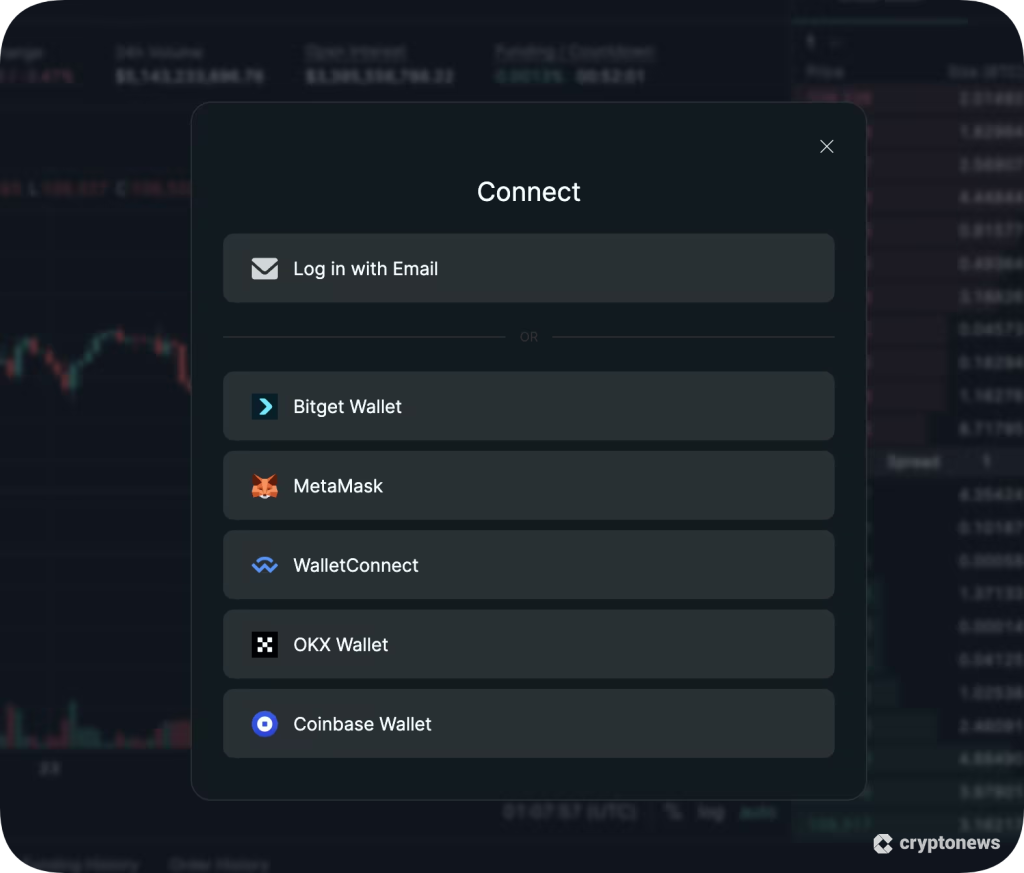
Once your USDC is in place, connect your wallet to Hyperliquid and click Deposit to bridge your tokens onto the Hyperliquid blockchain. Note that the minimum deposit is 5 USDC, and you’ll need a little bit of ETH, SOL, or the gas token for your origination network to facilitate the transfer.
2. Enabling “One-Click Trading.”
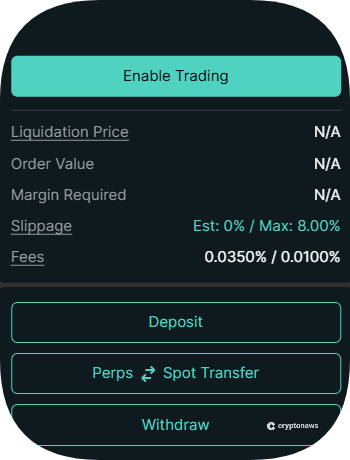
Hyperliquid is unique in that it offers “one-click trading,” meaning you can trade without being interrupted by wallet approval requests. Trading is completely gas-free when one-click trading is enabled since everything takes place on the Hyperliquid blockchain.
To activate this, click “Enable Trading” at the bottom of the order entry panel in Hyperliquid. In the pop-up, make sure “Stay Connected” is checked and then click “Establish Connection.” Confirm the connection in your wallet to allow Hyperliquid uninterrupted access during trading.
3. Executing Your First Perp Trade
Now you’re ready to place your first perp trade with Hyperliquid.
Choose which token you want to trade perps for, and decide whether to go long or short. Go long if you think the price of that token will go up, and short if you think the price of that token will go down.
Then select your desired leverage and use the slider to adjust the size of your position. Hyperliquid offers up to 50x leverage for perpetual contracts, meaning your position size will be 50 times larger than the funds you commit to it. High leverage magnifies profits from small price movements, but it also amplifies losses if a trade goes against you, so choose your leverage carefully.
When you’re ready, click “Place Order.” Then click “Confirm.” For true one-click trading, check the “Don’t show this again” box, and you won’t be asked to confirm trades in the future.
Liquidation Warning
Leverage trading carries significant risks and can result in your position being liquidated (closed) automatically if a trade goes against you. Liquidation occurs when the value of your position drops such that your equity falls below a required maintenance level. According to Hyperliquid’s leverage guide, the maintenance level varies from 1.25% to 16.7% depending on the asset and how leveraged your position is. When a position is liquidated, it will be exited for a steep loss.
Advanced Features: HyperEVM & HYPE Rewards
Hyperliquid is expanding beyond spot and perps trading, turning the DEX into a full-fledged DeFi ecosystem. Let’s take a look at some of the advanced features Hyperliquid traders need to know about.
HyperEVM: The 2026 Ecosystem Expansion
HyperEVM is Hyperliquid’s EVM compatibility layer. It was originally developed as a sidechain to enable Hyperliquid to accept deposits from more EVM-compatible blockchains, but it’s now expanding into a standalone blockchain with a wide range of applications.
HyperEVM is particularly noteworthy for DeFi. With HyperEVM, dApps from other blockchains can tap directly into HyperCore and collect data from Hyperliquid’s order books. Developers are already taking advantage of this to support on-chain lending. HyperLend and HypurrFi are two new lending protocols built on HyperEVM, and existing DeFi platforms like Euler Finance are expanding to HyperEVM.
HyperEVM has also launched the new HIP-1 token standard, enabling developers to build their own tokens on the chain. HypurrFun is taking advantage of this with a Pump.fun copycat for HyperEVM-based meme coin launches. This is likely just the beginning of an entirely new Web3 ecosystem built around HyperEVM.
Featured Apps
Some of the other top dApps already live on HyperEVM include:
- LoopedHYPE: A liquid staking protocol for the HYPE token
- KittenSwap: A liquidity mining DEX with its own KITTEN token
- Felix Protocol: Stablecoin protocol that mints feUSD against HYPE collateral
- HyperBeat: Rewards protocol for HyperEVM contributors
Staking HYPE for Protocol Revenue
Hyperliquid is a proof-of-stake blockchain, so anyone can stake HYPE tokens to earn rewards from the protocol. Staking HYPE also provides trading fee discounts up to 40%, making staking extremely attractive to high-volume traders.
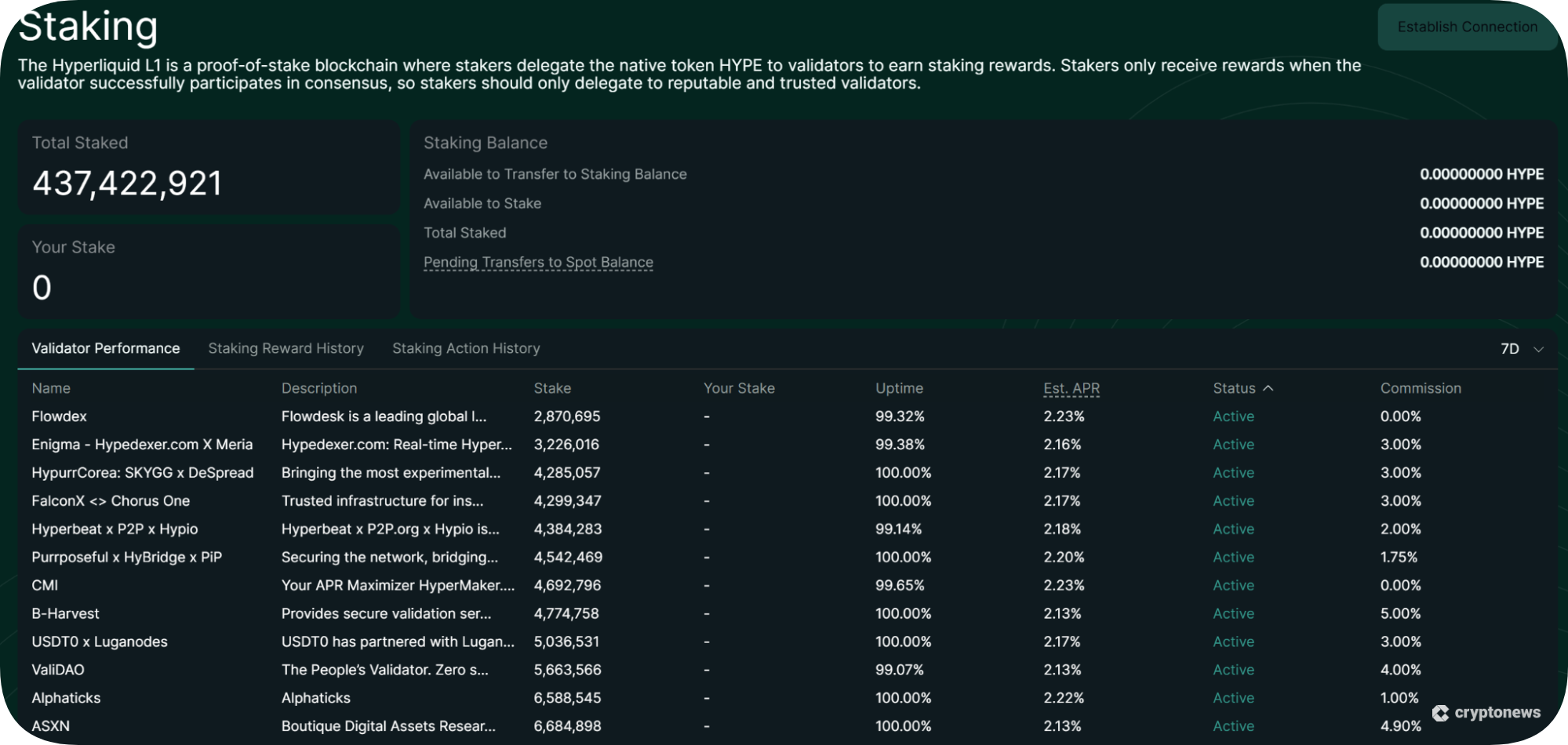
In 2026, the expansion of HyperEVM is offering even more opportunities around HYPE staking. The LoopedHYPE protocol, for example, now offers liquid staking around HYPE so that traders can put their tokens to work while earning rewards. HyperLend lets you lend HYPE and boost returns even further.
Look for HyperEVM to offer even more ways to make money with crypto in the near future. The HypurrFun meme coin launchpad, for example, could create hype-driven price rallies in new tokens that traders can profit from.
Survival Manual: Managing Risk on Hyperliquid
Hyperliquid is a fast-moving ecosystem, and while it can offer significant profits, trading also comes with big risks. It’s important to understand how to manage your risk to ensure your trading is successful.
HLP Vaults: Passive Income vs. “Being the House”
Hyperliquidity Providers (HLP) is a vault-style liquidity pool that aggregates capital from multiple providers and makes it available for trading within HyperCore. In essence, when you trade on Hyperliquid, you’re trading with HLP as the counterparty.
This matters because anyone can join HLP and contribute liquidity to the vault, offering a way to earn passive income. The majority of trading fee revenue on Hyperliquid is shared with HLP providers, and providers can also make money by taking over liquidated positions and closing them profitably. In theory, you can potentially profit from Hyperliquid without trading at all by acting as an HLP provider.
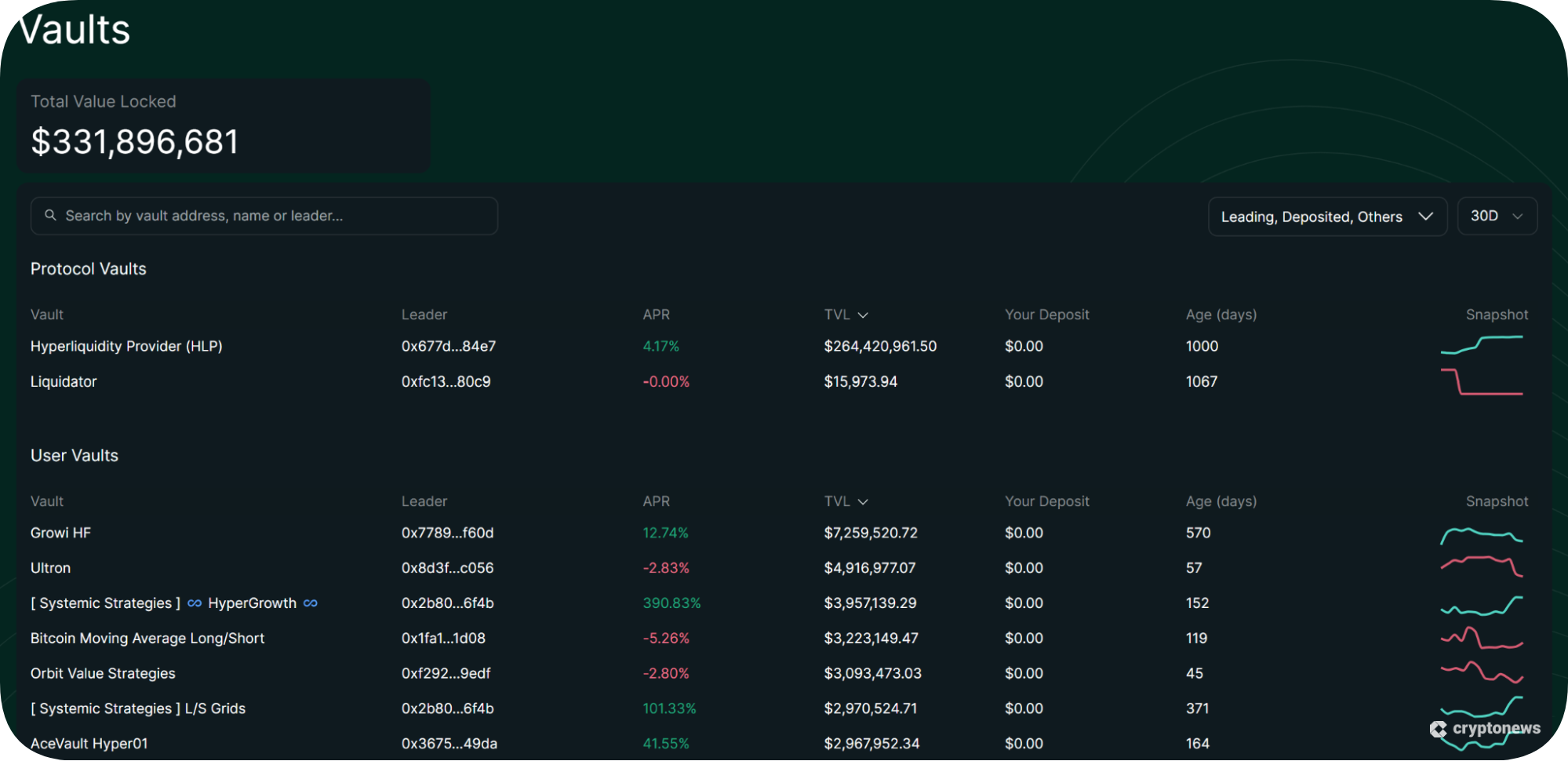
However, the Hyperliquid vaults guide indicates that HLP isn’t risk-free. When liquidated positions are closed for a loss, those losses are shared across providers in the vault. Big market moves can leave HLP providers with unusually large losses.
Liquidations
Liquidation is a major risk when trading on Hyperliquid. If a leveraged trade moves against you quickly, it can be liquidated before you have a chance to exit on your own terms. If the price recovers quickly, your position will already be gone, and your money will be lost.
There’s no surefire way to manage liquidations other than by limiting your leverage. While Hyperliquid offers up to 50x margin on perpetual futures contracts, it’s often better to trade with 5x-10x leverage to manage your risk.
Mark Price vs. Index Price (The “Scamsnick” Risk)
Hyperliquid sometimes displays a different price for perpetual futures contracts than the price that’s used to determine when a position is liquidated.
The index price is what you typically see on Hyperliquid. It’s a weighted average of a crypto token’s price across multiple exchanges.
The mark price is the price used to determine when your position will be liquidated. It takes into account liquidity on Hyperliquid, short-term market dynamics, and current bid and ask prices.
Most of the time, the index price and mark price are nearly the same. But in some low-liquidity markets, the mark price can differ significantly enough to force a liquidation. Liquidity providers can even remove liquidity to move the mark price, then restore liquidity to turn a profit on your liquidated position after they take control of it. Hyperliquid’s transparency is designed to prevent this, but beware that it is a possibility when trading in low-liquidity contracts.
Centralization & The Validator Set
Hyperliquid has a set of 24 validators who must reach consensus to approve transactions on the network. That’s a very small number of validators compared to other proof-of-stake blockchains; Ethereum, for example, has more than 970,000 validators, and raises concerns about centralization. When so few validators control the Hyperliquid blockchain, there’s a possibility they could collude to enrich themselves at the expense of traders.
Hyperliquid has been addressing this by requiring validators to qualify rather than being able to purchase seats. The project has also announced plans to open-source the code that validators use to process transactions.
Hyperliquid has also been hacked in the past due to leaked admin keys that control access to users’ linked wallets. While not directly tied to Hyperliquid’s validator practices, the incident further highlights the risks posed by its unusually high degree of centralization.
Smart Contract Security & Operational Hygiene
Traders need to be vigilant about wallet security and operational hygiene whenever trading with a decentralized exchange. Here’s a security checklist with tips to help you stay safe.
- Isolate your API wallets: Always use dedicated hot wallets for connecting to Hyperliquid. Don’t reuse these wallets for any other purpose or connect them to any dApps outside the Hyperliquid ecosystem.
- Use a hardware wallet: Only store the funds you need for active trading in your hot wallet. The remainder of your crypto should be held on a trusted cold storage wallet that’s disconnected from the internet.
- Limit your leverage: Leverage trading amplifies operational risks and increases the probability of liquidation. Limit your leverage as much as possible and stick to 10x leverage or less when trading altcoin perps.
- Always check smart contract addresses: HyperEVM’s expansion means that there are now many smart contracts built on Hyperliquid. Always carefully double-check contract addresses and legitimacy before connecting a wallet. Malicious smart contracts are one of the most common ways attackers steal funds.
Solving the Stakes: Pro Tips for Hyperliquid Success
Here are some additional tips based on our experience to help you succeed at Hyperliquid trading.
Scaling and Position Building
One of the most common rookie mistakes we see from new traders on Hyperliquid is entering positions all at once in a single, massive trade. That’s terrible for risk management because it exposes you to sudden price movements and the immediate liquidation of your entire position.
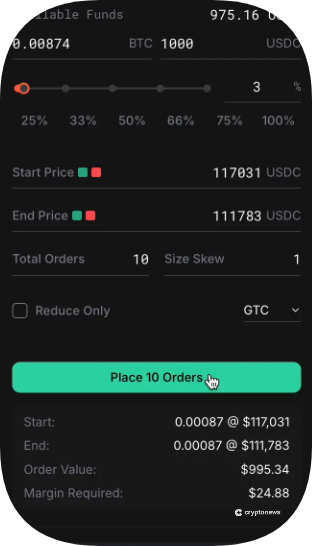
Instead of diving in all at once, use scale orders. With a scale order, you enter an initial price for your trade, and Hyperliquid will automatically create a series of buy or sell limit orders with incrementally higher or lower prices. As a trade moves in the direction you want, the limit orders will execute one by one, and your position size will grow. If a trade moves against you before the ladder is complete, only a portion of your total capital is at risk.
You can customize ladder orders on the Hyperliquid platform to perfectly suit your strategy and risk tolerance. Consider pairing them with trailing stop losses to further limit your risk and help you lock in gains in the event of a sudden turnaround.
The Funding Rate Cheat Sheet
Funding rates are a mechanism used by Hyperliquid and other top perpetual futures trading platforms to keep perp prices in line with spot crypto prices. You can think of them as “rent” you pay for keeping a perpetual futures position open.
In short, when the price of a perpetual futures contract exceeds the spot price of the crypto, long contract holders have to pay short contract holders. When the contract price is lower than the spot price, short holders have to pay long holders.
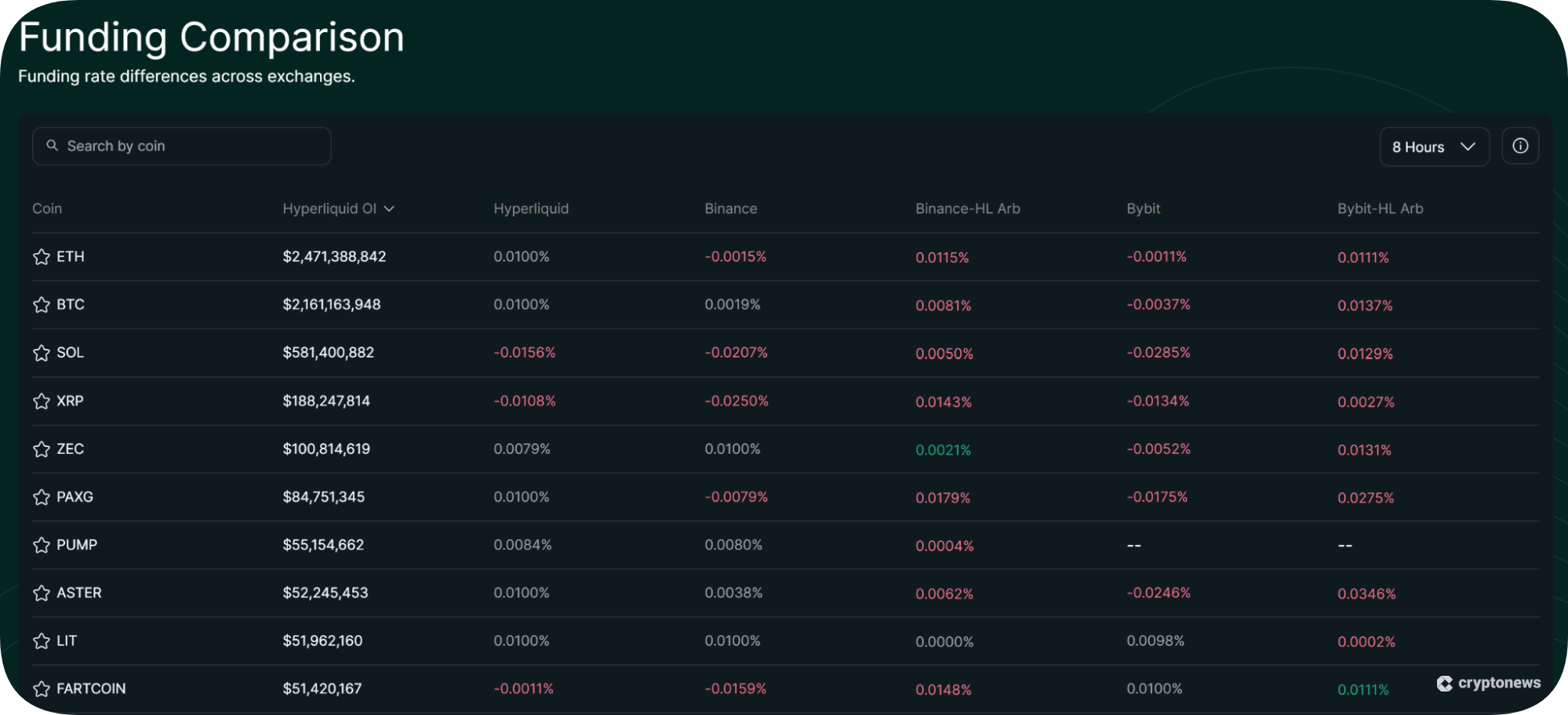
Funding rates are essential because perpetual futures, unlike traditional futures contracts, never expire, and contract prices can differ widely from spot prices over time. This mechanism incentivizes traders to arbitrage away any difference in perpetual and spot prices. On Hyperliquid, funding rates are applied every hour.
Pay close attention to funding rates when choosing and sizing your positions. If you have to repeatedly pay to hold a long or short position, that position could become a lot less profitable even if the direction of your trade proves correct.
Here’s our cheat sheet on funding rates to help you navigate the market:
| Scenario | Market Sentiment | Price Action | Who Pays Whom? | Strategy |
| Positive Funding | 🐂 Bullish | Perp > Spot | Longs pay Shorts | Avoid “camping” in longs for weeks since the daily “rent” can exceed your profit. |
| Negative Funding | 🐻 Bearish | Perp < Spot | Shorts pay Longs | Great for “basis trading”—you can earn passive income just by holding a long position. |
| Extreme Funding | 🌪️ Panic/FOMO | Divergence > 0.5% | Heavy Transfer | Warning: Extreme rates often precede a “Flash Crash” or short squeeze |
Conclusion: Mastering the Hyperliquid Era in 2026
Hyperliquid represents a transformative advance in crypto trading, combining the self-custody of DEXs with the transparency, speed, and seamless order-matching of centralized exchanges. It’s now well on its way to becoming the next DeFi hub, thanks to HyperEVM, and offers experienced traders a wide range of opportunities in perpetual trading, liquidity provision, staking, and more.
Whether you’re planning to trade on Hyperliquid, interested in earning passive income as a liquidity provider, or want to dive into the growing HyperEVM ecosystem, the key to success is having the right setup. Build your command center today with Best Wallet or Bitpanda, then bridge USDC to Hyperliquid to start trading.
FAQs
Is Hyperliquid safe for beginners?
How to use Hyperliquid without KYC?
Can I trade on Hyperliquid in the U.S.?
Can I earn VSN by trading Hyperliquid?
Can I trade Hyperliquid on Best Wallet?
Does Best Wallet use the same token as Bitpanda?
What is the best place to buy XRP for Hyperliquid liquidity?
References
- Hyperliquid and BNB Chain capture majority of L1 fees as Solana fades amid derivatives boom (The Block)
- AMM vs Order Book: Understanding the Core of Modern Crypto Trading (SNAP Innovations)
- Hyperliquid Is Now Crypto’s Most Liquid Platform, CEO Claims — How True Is It? (CCN)
- Understanding leverage and liquidation (MetaMask)
- Hyperliquid launches HyperEVM on mainnet to bring ‘general-purpose programmability’ (The Block)
- Hyperliquid Rallies on Tiered Staking System (The Defiant)
- Hyperliquid Addresses Validator Setup Transparency and Decentralization Concerns (BeInCrypto)
- Hyperliquid User Loses $21 Million to Hackers After Private Key Breach (FastBull)
2M+
250+
8
70







 in numbers

About Cryptonews
Our goal is to offer a comprehensive and objective perspective on the cryptocurrency market, enabling our readers to make informed decisions in this ever-changing landscape.
Our editorial team of more than 70 crypto professionals works to maintain the highest standards of journalism and ethics. We follow strict editorial guidelines to ensure the integrity and credibility of our content.
Whether you’re looking for breaking news, expert opinions, or market insights, Cryptonews has been your go-to destination for everything cryptocurrency since 2017.