Tether’s USDT and Chinese Blockchains Face Potential U.S. Government Ban



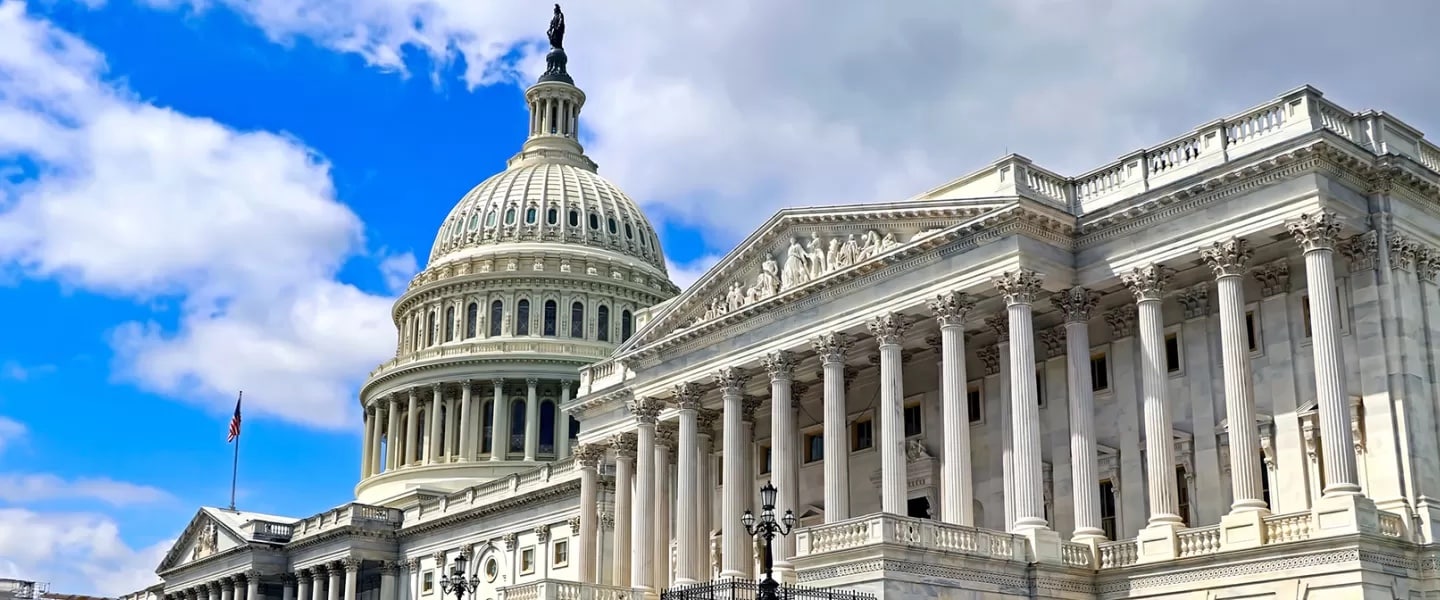
The U.S. lawmakers are proposing a bill aiming to prohibit the U.S. government officials from transacting with Tether’s USDT, China-based blockchain networks, and “other foreign adversaries.”
The U.S. Representatives Zach Nunn (R-IA) and Abigail Spanberger (D-VA) have introduced a bipartisan bill, the Creating Legal Accountability for Rogue Innovators and Technology (CLARITY) Act, to regulate government officials’ cryptocurrency transactions and the use of blockchain technologies.
The CLARITY Act Explained
The CLARITY Act is set “to prohibit certain actions and require reporting to defend against the economic and national security risks posed by foreign adversarial blockchain networks.” The representatives believe that China’s blockchain networks and those of “unregulated, self-proclaimed ‘supra-national’ companies” could “pose risks” to the U.S. national security and foreign policy interests.
The bill intends to ban the government use of the “covered distributed ledger technology and blockchain equipment or services,” as long as they are provided by the companies listed, including the USDT issuer Tether’s parent company iFinex, China’s Blockchain-based Service Network (BSN), Spartan Network, Conflux Network, and Red Date Technology.
My new bipartisan bill would make sure this doesn’t happen. Here’s what you need to know: pic.twitter.com/U80g9es1la
— Congressman Zach Nunn (@ZachNunn) November 9, 2023
“Within the next decade, every American will have sensitive, private data stored using blockchain technology,” Nunn said. “China’s heavy investment in this infrastructure poses a colossal national security and data privacy problem.”
Spanberger joined Nunn and shared her opinion. “As a former CIA case officer, I understand that the Chinese Communist Party’s investment in a state-controlled blockchain network poses significant risks to U.S. data security,” Spanberger said.
The Bill and The TikTok Ban
Representative Nunn compared the risks posed by the blockchain networks owned by adversaries to the “national security” risks posed by TikTok. “If we don’t act now, this will be a disaster 1,000 times worse than China’s ownership of TikTok.” Nunn said.
In 2022, President Joe Biden approved a bill banning the federal government employees’ use of TikTok. The app was also banned in 34 of the 50 states targeting state government agencies, employees, and contractors.
- Perplexity AI Predicts a Wild Finish to 2026 for XRP
- Bitcoin Price Rebounds Again, Peter Schiff Repeats His Crash Warnings
- Quant Crypto Soars 18% as QNT Charges Toward $250
- Sony Soneium Coin: PlayStation and GTA 6 Crypto Twist?
- Elon Musk’s Grok AI Predicts When Bitcoin Will Finally Hit its Ultimate Price Target
2M+
250+
8
70





- Perplexity AI Predicts a Wild Finish to 2026 for XRP
- Bitcoin Price Rebounds Again, Peter Schiff Repeats His Crash Warnings
- Quant Crypto Soars 18% as QNT Charges Toward $250
- Sony Soneium Coin: PlayStation and GTA 6 Crypto Twist?
- Elon Musk’s Grok AI Predicts When Bitcoin Will Finally Hit its Ultimate Price Target
More Articles

 in numbers