

JPYR Stablecoin Buy Guide & Review 2026: Is This The New Global Standard for JPY Pegs?
We believe in full transparency with our readers. Some of our content includes affiliate links, and we may earn a commission through these partnerships. However, this potential compensation never influences our analysis, opinions, or reviews. Our editorial content is created independently of our marketing partnerships, and our ratings are based solely on our established evaluation criteria. Read More






The Japanese Yen is no longer trapped in legacy banking systems. Following the FSA’s launch of a dedicated Stablecoin Division in early 2026, the market for JPY-pegged assets has exploded. But for global traders, access remains the bottleneck.
Domestic options like JPYC are heavily regulated, often requiring Japanese residency or strict KYC that alienates most DeFi users. This is where JPYR comes in.
This JPYR stablecoin review analyzes the token that bridges the gap between Japanese TradFi liquidity and global DeFi markets. We tested its peg stability, transaction speeds, and yield opportunities to see if it holds up against the competition.
What Is the JPYR Stablecoin?
JPYR is a Japanese Yen-pegged stablecoin designed for the global market. Unlike its competitors, which focus on domestic payments in Japan, JPYR targets the international crypto economy. It maintains a 1:1 peg with the Japanese Yen (JPY).
The demand for a Japanese stablecoin has surged since late 2025. Traders use these assets to hedge against USD volatility or to execute on-chain carry trades, borrowing low-interest yen assets to fund high-yield strategies elsewhere. JPYR wants to be the primary vehicle for these maneuvers.
The JPY Pegged Stablecoin Ecosystem
Most JPY stablecoins fall into two camps:
- Domestic and Regulated: Highly compliant, restricted to Japanese residents (e.g., JPYC).
- Global and Offshore: Accessible to anyone, optimized for DeFi integration.
JPYR falls firmly into the second category. It allows users outside Japan to hold Yen exposure without opening a Japanese bank account. This distinction is critical. If you are a trader in London or New York, JPYR is likely your only viable entry point into on-chain Yen liquidity.
How Does the JPYR Stablecoin Work?
JPYR operates on a collateralized model. For every 1 JPYR in circulation, the protocol holds equivalent value in reserves. This ensures that users can always redeem their tokens for the underlying value. Let’s explore how it all works:
- Minting: Users deposit fiat or approved crypto assets into the reserve smart contract. The protocol mints an equivalent amount of JPYR.
- Redemption: Users burn JPYR to unlock the collateral.
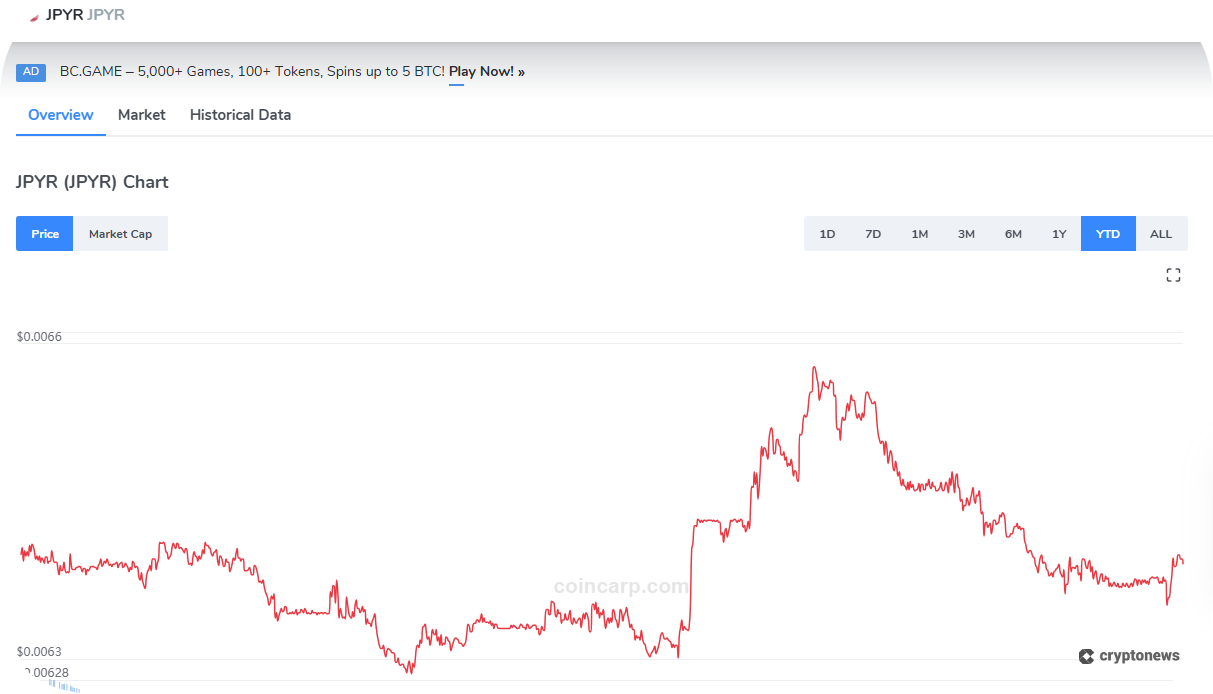
- Peg Maintenance: Arbitrageurs monitor the price. If JPYR drops to 0.99 JPY, they buy it cheap and redeem it for 1.00 JPY, pushing the price back up.
Is JPYR Safe and Legit?
Safety in crypto is a key element of investing in the crypto scene. If the peg breaks, the utility vanishes. JPYR addresses this through a specific structural approach outlined in its documentation such as website and whitepaper.
Reserve Transparency and Smart Contracts
The JPYR whitepaper explicitly claims a 100% reserve backing model. The protocol asserts that every token is backed by liquid assets to ensure redemption capability. The JPYR smart contracts are deployed on public blockchains, allowing anyone to verify the total supply and token movements in real-time. The whitepaper outlines the mechanism for collateral management, emphasizing a strict 1:1 issuance policy.
While the blockchain provides transparency on the liability side (how many tokens exist), users currently rely on the issuer’s stated adherence to the whitepaper for the asset side (the reserves). Unlike protocols with Chainlink Proof-of-Reserve feeds, JPYR requires a degree of trust in the issuer’s operational integrity. The code executes the mint/burn logic, but the off-chain reserves are the anchor.
Regulatory Positioning
JPYR operates in a gray zone that benefits the user. It complies with necessary anti-money laundering (AML) standards but avoids the stifling restrictions of Japan’s domestic FSA regulations that limit JPYC. This allows for deeper liquidity pools on decentralized exchanges (DEXs) and higher leverage caps on lending platforms.
Risk Warning: Regulatory frameworks change. While Japan is currently pro-crypto, a shift in the FSA’s stance could impact offshore issuers. Always monitor the regulatory climate.
Is JPYR a Good Investment?
Investing in a stablecoin like JPYR is fundamentally different than speculating on volatile crypto assets. The project’s whitepaper describes how JPYR is designed for stability and uses a collateralized reserve model to maintain its 1:1 peg to the Japanese yen. The investment case for JPYR, therefore, is based on its utility as a hedge and for diversification.
For traders to reduce their risk exposure from fluctuations in the value of the US dollar while still having their capital stored “on-chain,” JPYR is a digital cash equivalent for the Japanese economy, as most other stablecoins in today’s market are denominated or pegged to the US dollar.
The decision to add JPYR to your crypto portfolio will depend on your risk tolerance regarding liquidity and transparency. Although JPYR has access to decentralized finance (DeFi) yields that are not easily obtainable with fiat yen, the current order book depth shown in the market by Imex is still developing, which introduces slippage risk for large-volume sell/exits from JPYR.
Regarding consumer protection, JPYR has fewer consumer protections than fully regulated competition, but greater flexibility as far as regulation is concerned. Therefore, some investors may use JPYR for specific DeFi strategies rather than for holding it as a risk-free store of value, especially given that investors must rely on the issuer’s self-reported reserve levels.
JPYR’s Lending Options
This is where JPYR shines. Because it is integrated into the broader DeFi ecosystem, holders can deploy JPYR into liquidity pools or lending markets.
- Lending Yields: Supply JPYR to lending protocols to earn interest from traders looking to short the Yen.
- Liquidity Provision: Pair JPYR with USDT or USDC in liquidity pools. As volume shifts between the Dollar and Yen, liquidity providers capture trading fees.
Hedging USD Risk
The US Dollar has faced recent volatility as it hit a two-week high on Feb 4th. This comes after the GBP stumbled following the BoE’s decision to leave UK interest rates unchanged. Holding a portion of a portfolio in a JPY pegged stablecoin acts as a diversification tool. If the USD weakens against the Yen, your JPYR holdings preserve purchasing power relative to the USD.
What Does the Future Hold for JPYR?
The roadmap for JPYR is promising as well as uncertain given the current cryptocurrency market conditions. Furthermore, regulatory frameworks can change overnight, so keeping tabs on any updates from the FSA is key.
The project’s immediate focus is technical expansion. According to the official whitepaper, the roadmap prioritizes “expansion to additional blockchain networks.” This interoperability is necessary for survival.
Currently, JPYR faces a liquidity hurdle. Trading volumes on centralized exchanges like BTSE are modest, often under $30,000 daily across main pairs. This is typical for early-stage stablecoins, but it presents a challenge for large institutional entries.
The future of JPYR depends entirely on executing this multi-chain strategy. By moving onto networks with deeper DeFi activity, JPYR aims to bootstrap the liquidity it currently lacks on centralized order books.
With fintech giants like SBI Holdings entering the space, JPYR also has a first-mover advantage in the global sector.
How to Buy JPYR Stablecoins
Buying JPYR requires a specific setup to minimize fees and ensure asset security. We have tested multiple routes. The most efficient method involves the IZAKA-YA wallet and the BTSE exchange.
The Recommended Setup: IZAKA-YA Wallet
We recommend using IZAKA-YA for storing and managing JPYR. It stands out for its broad compatibility, allowing you to manage JPYR alongside standard assets like BTC and ETH without needing multiple apps. The interface is clean, flexible, and supports the lending protocols where JPYR holders can generate yield.
IZAKA-YA currently offers enhanced APY for users who utilize their lending feature.
Step-by-Step JPYR Buying Guide
Let’s explore the five simple steps to adding JPYR stablecoins to your crypto portfolio in 2026:
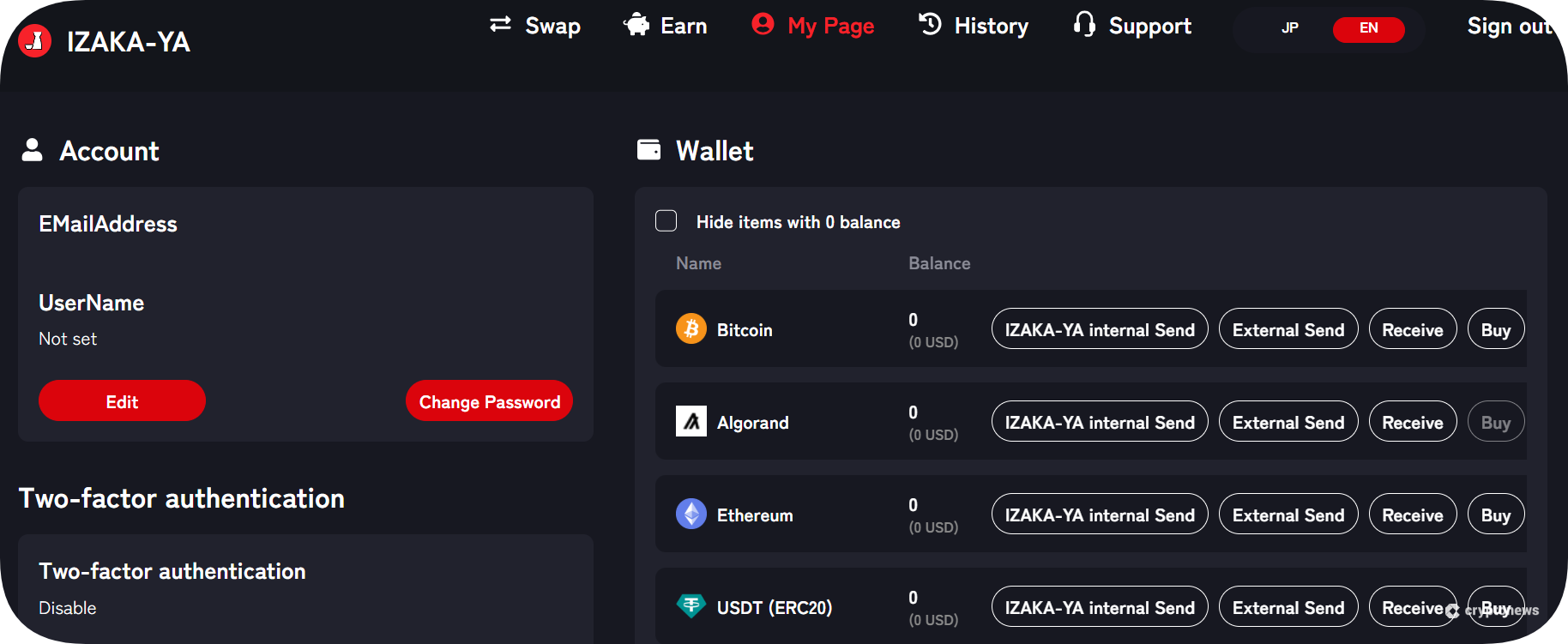
Step 1. Set Up Your Wallet: Register an account with IZAKA-YA (a secure DeFi ecosystem that supports JPYR and other popular altcoins.) Designed as a one-stop-shop for monitoring, swapping, and leding cryptos, IZAKA-YA offers a user-friendly, safe and high-yield trading experience. Serving as both a crypto wallet and DeFi trading platform, IZAKA-YA users can earn up to 12% interest via lending.
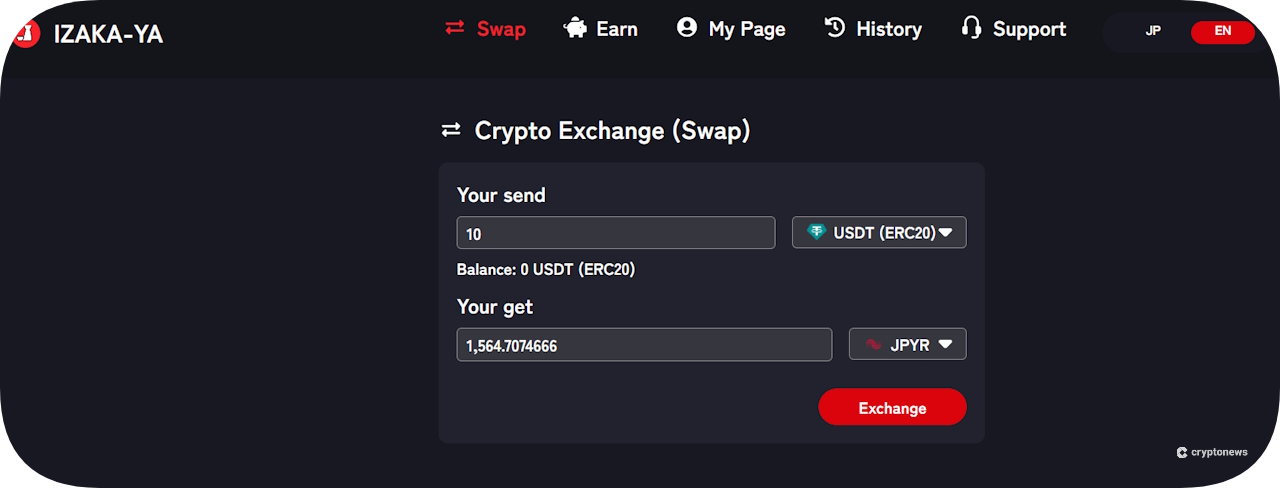
Step 2. Swap Altcoins For JPYR: Go to the Swap section of the IZAKA-YA ecosystem. In our example below we chose to swap USDT for JPYR. Once you’ve confirmed your choices tap on the ‘Exchange’ button.
Step 3. Consider Lending (Optional Step): Once the funds arrive in your IZAKA-YA wallet, rather than letting them sit, some users may choose to lend their holdings to earn interest. Navigate to the “Lend” tab.
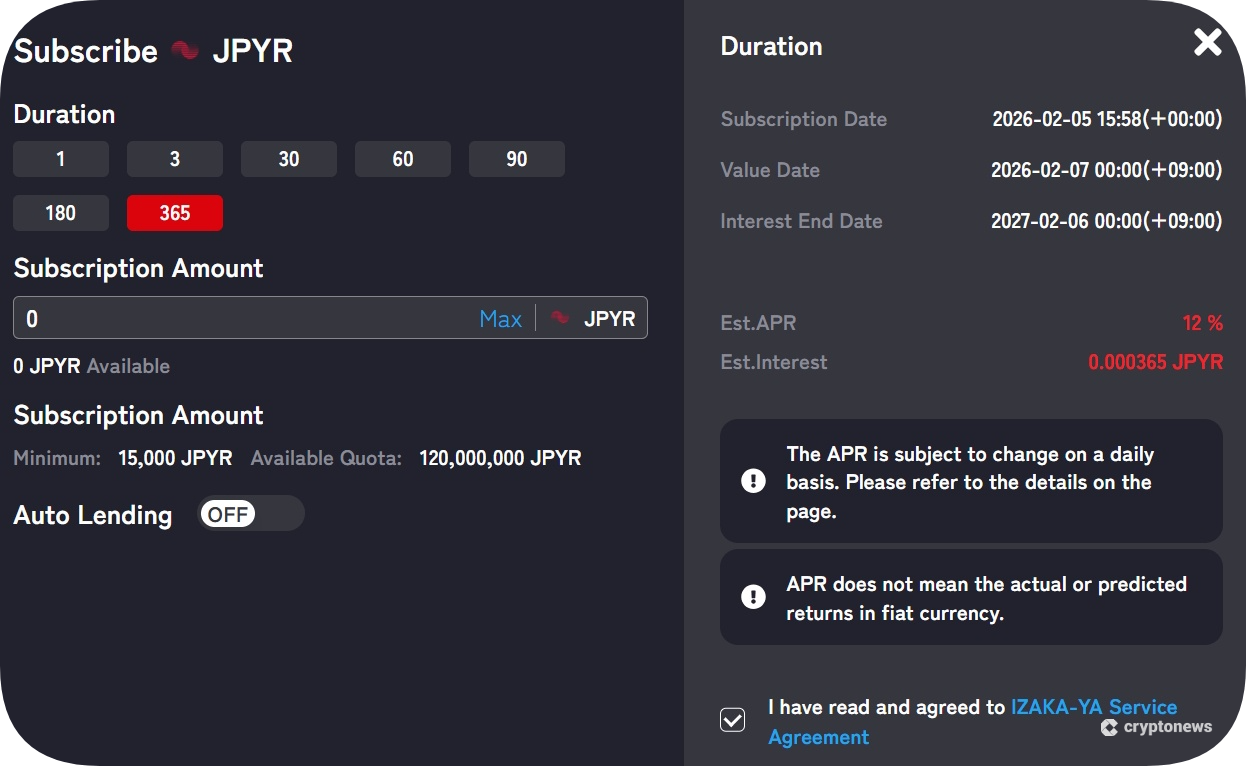
From here, users can deposit their crypto assets into IZAKA-YA and earn up to 12% daily interest. Lock-up durations are at least 30 days. This turns your stablecoin from a passive hold into an income-generating asset. Then click ‘Earn’, choose ‘New Lending’ next to JPYR, confirm the subscription amount and duration, and confirm the transaction.
JPYR Stablecoin Review: The Bottom Line
JPYR is currently the most viable option for international traders seeking exposure to the Japanese Yen. It solves the accessibility issues of domestic coins like JPYC while offering better transparency than alternatives.
JPYR has the potential to be recognized as the global standard for JPY-pegged assets worldwide before market giants fully consolidate the market. For traders looking to diversify out of the dollar or earn yield on yen assets, JPYR is likely the tool of choice in 2026.
Our Methodology: How We Reviewed the JPYR Token
We explored the JPYR whitepaper, roadmap, and project goals to determine the legitimacy of the stablecoin. We also tested JPYR by sending, receiving, and lending it via the popular DeFi ecosystem IZAKA-YA.
We reviewed JPYR’s liquidity, peg stability, accessibility, and DeFi utility by investigating the trading options offered at various crypto exchanges such as BTSE and Imex.io.
FAQs
Is there a JPY stablecoin?
Does Japan have a stablecoin?
What is JPYR stablecoin?
What is a JPY-pegged stablecoin?
References
- Japan Financial Services Agency – Stablecoin Regulations (FSA)
- Japan’s Stablecoin Unlikely to Affect Gov’t Demand (Asian Banking and Finance)
- JPYR Official Whitepaper (JPYR)
- BTSE Exchange – JPYR Trading Pairs (BTSE)
- World’s first yen-pegged stablecoin debuts in Japan (Reuters)
2M+
250+
8
70







 in numbers

About Cryptonews
Our goal is to offer a comprehensive and objective perspective on the cryptocurrency market, enabling our readers to make informed decisions in this ever-changing landscape.
Our editorial team of more than 70 crypto professionals works to maintain the highest standards of journalism and ethics. We follow strict editorial guidelines to ensure the integrity and credibility of our content.
Whether you’re looking for breaking news, expert opinions, or market insights, Cryptonews has been your go-to destination for everything cryptocurrency since 2017.