Best Zcash Exchanges (ZEC) in 2026: Buy, Trade & Swap Zcash Easily



Most exchanges that used to carry Zcash have gradually delisted ZEC over time. The delistings weren’t about ZEC’s technology, but about compliance departments deciding that a coin with optional transaction privacy was easier to drop than to defend.
What’s left is a smaller, more deliberate set of platforms where you can actually buy, trade, and swap ZEC without handing over a passport. This guide covers the 5 best Zcash exchanges in 2026, starting with the one that handles privacy coins most reliably.
Zcash is still listed on some centralized exchanges, but that doesn’t mean you can walk into any regulated exchange and buy ZEC with shielded address support enabled. For most users who want genuine privacy, the best approach is to use non-custodial swap services, and knowing which ones work reliably is important.
Our guide ranks five platforms currently supporting ZEC, focusing on no-KYC exchanges. We also cover what to look for in a wallet, how a typical swap works from start to finish, and what risks to look out for.
Why Zcash is Important for Crypto
Zcash is a privacy-focused cryptocurrency that uses zero-knowledge proofs called zk-SNARKs to ensure that transaction data remains confidential, while keeping the ability for transactions to be verified by the network.
Tokens can be sent in either transparent or shielded addresses, where transparent addresses work like Bitcoin (the sender, receiver, and amount are all visible on the public ledger).
Shielded addresses encrypt all of those details, and users can also generate “view keys” to selectively disclose transaction details to trusted parties, such as accountants or auditors, without exposing full wallet history.
Roughly 30% of ZEC’s supply now sits in shielded addresses, a record level. As noted by TheBlock, 30% of ZEC’s supply was in shielded addresses by 2026, up from 10% in 2024.
ZEC is also in the spotlight with an expected Grayscale spot ETF. But if centralized exchanges are hesitant to let you buy or exchange ZEC, how do you get it?
How We Chose the Best Zcash Platforms
Our criteria are narrow: a platform can make the list if it supports ZEC with no mandatory KYC, handles swaps non-custodially (or clearly discloses when it doesn’t), and has a documented track record. Platforms that advertise “no KYC” but trigger verification requests based on transaction size, coin type, or opaque internal flags were disqualified.
Fiat on-ramps are generally absent from this category of platforms. If you need to buy ZEC directly with a credit card, KYC requirements still appear. The strategies below assume you’re starting from crypto that you already hold.
The 5 Best Zcash Exchanges & Swap Platforms in 2026
1. GhostSwap: Best Overall for No-KYC ZEC Swaps
GhostSwap is the strongest option in this category, functioning as a dedicated no-KYC swap platform that is simple to use and has great rates. Look away if you want a dozen extra exchange features, but otherwise, GhostSwap does one thing – no-KYC swaps on more than 1,600 cryptocurrencies – extremely well.
In essence, GhostSwap is a decentralized-style swap aggregator that routes orders through multiple liquidity providers, finding competitive rates on the coins it offers. Funds never sit in a GhostSwap account, but move directly between user wallets (with a temporary, disposable deposit address in the middle).
There is no registration, no email, no identity verification of any kind, and no daily or monthly withdrawal limits. Users can swap any amount at any time without hitting the trading volume caps that centralized exchanges impose on unverified accounts.
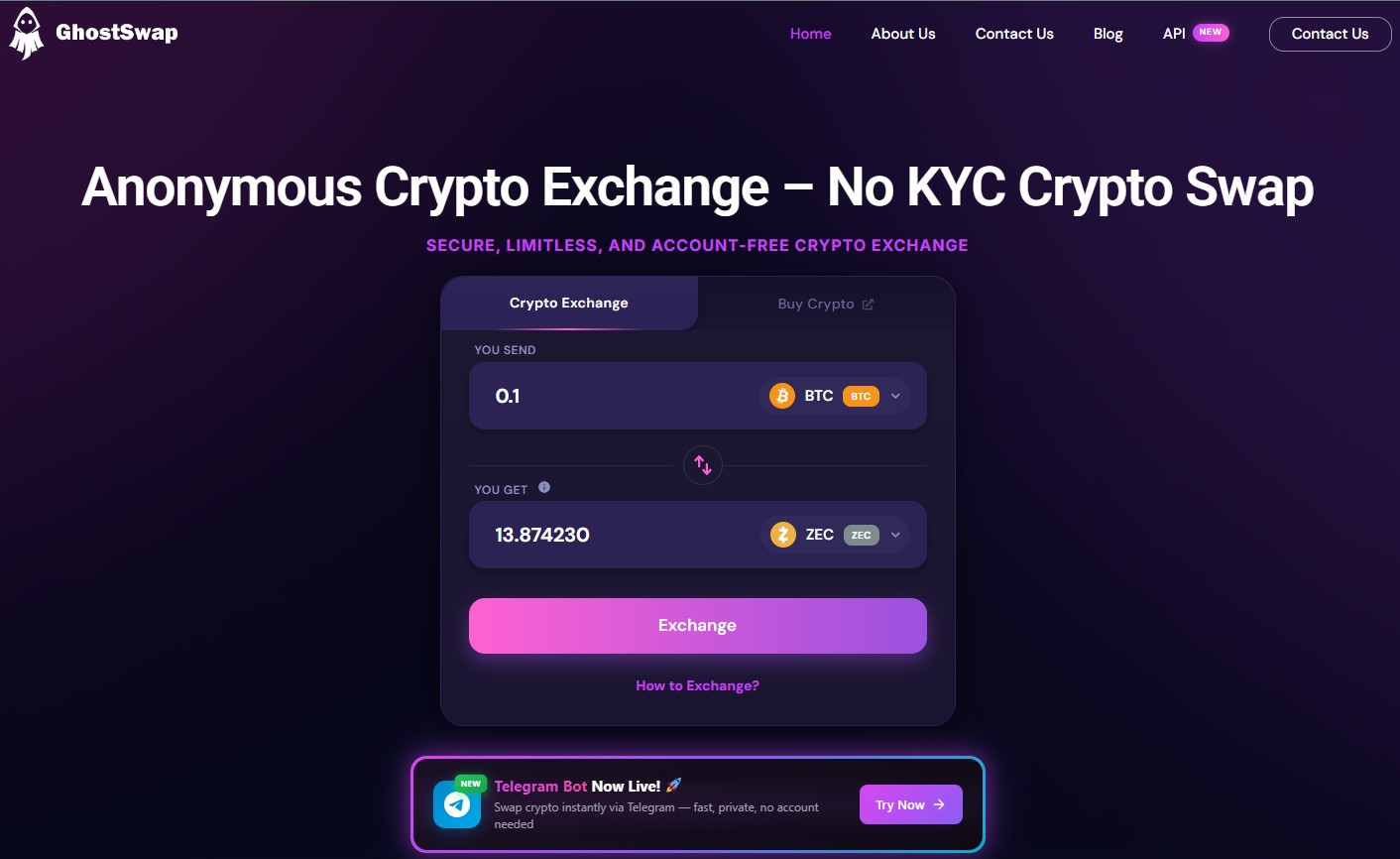
ZEC is fully supported, with popular privacy pairs including BTC to ZEC, ETH to ZEC, and ZEC to USDT. For Monero fans, there is also routes including BTC to XMR, ETH to XMR, and SOL to XMR. GhostSwap has maintained full support for privacy coins (including Dash) across the years. In short, it supports the coins that many traditional exchanges have delisted.
Because GhostSwap never holds user funds in platform-controlled wallets, the attack surface for hackers is extremely minimal. There are no user balances to drain, no hot wallets to compromise, and no centralized database of customer identities to leak. Each swap is an isolated transaction between the user’s sending wallet and receiving wallet.
The service has no upper limit on swaps (except for available liquidity), and you can swap small amounts, though we recommend swapping amounts above $20 to avoid fees eating up too much of your swap. We spotted GhostSwap setting minimum amounts when we tried to force it to go too low.
One feature worth noting for privacy-conscious users: the platform supports Tor and VPN usage without blocking or throttling, allowing users to further protect their network-level privacy during the swap process.
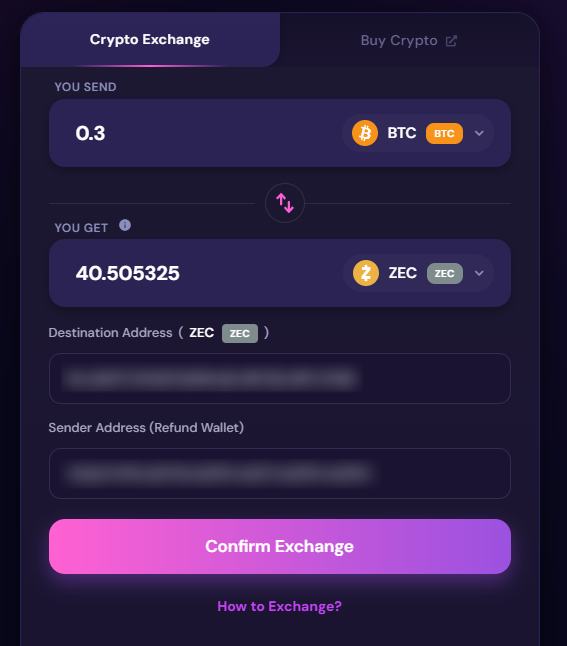
There is also a native Telegram bot that we tested, allowing users to initiate crypto swaps directly in the messaging app without opening a browser. The bot supports the exact same zero-registration, no-KYC model as the main web platform. In effect, it’s the same service with a different front-end.
When we compared swap rates on GhostSwap with those on centralized exchanges (for popular coins like BTC, ETH, and BNB), we found GhostSwap to be as cheap or even cheaper than CEX rates. All fees are included directly in the exchange rate displayed before you confirm your swap, and there are no hidden charges added at checkout.
The main limitation is the absence of fiat on- and off-ramps. GhostSwap is crypto-in, crypto-out, so if you need to exchange Zcash from fiat currencies, you’ll need to load some crypto from elsewhere.
Using GhostSwap is quick, low-fee, and safe. We can’t fault how easy it is to use: choose your pair, provide a receiving address, initiate your transaction, and the job is done. Transactions themselves operate at the speed of the chain you’re on. ETH usually completes within minutes, Bitcoin can take 10+ minutes. In practice, we found ETH to ZEC swaps took about five minutes, with a status bar giving updates as the transaction went through.
What GhostSwap does well:
- Consistent no-KYC enforcement regardless of amount
- All-in spread, non-custodial architecture
- Privacy coin depth along with 1,600+ supported crypto
- Tor support
- Telegram access
What it doesn’t:
- No fiat gateway
2. SwapRocket: Good for Fast No-KYC ZEC Swaps and Broad Coin Support
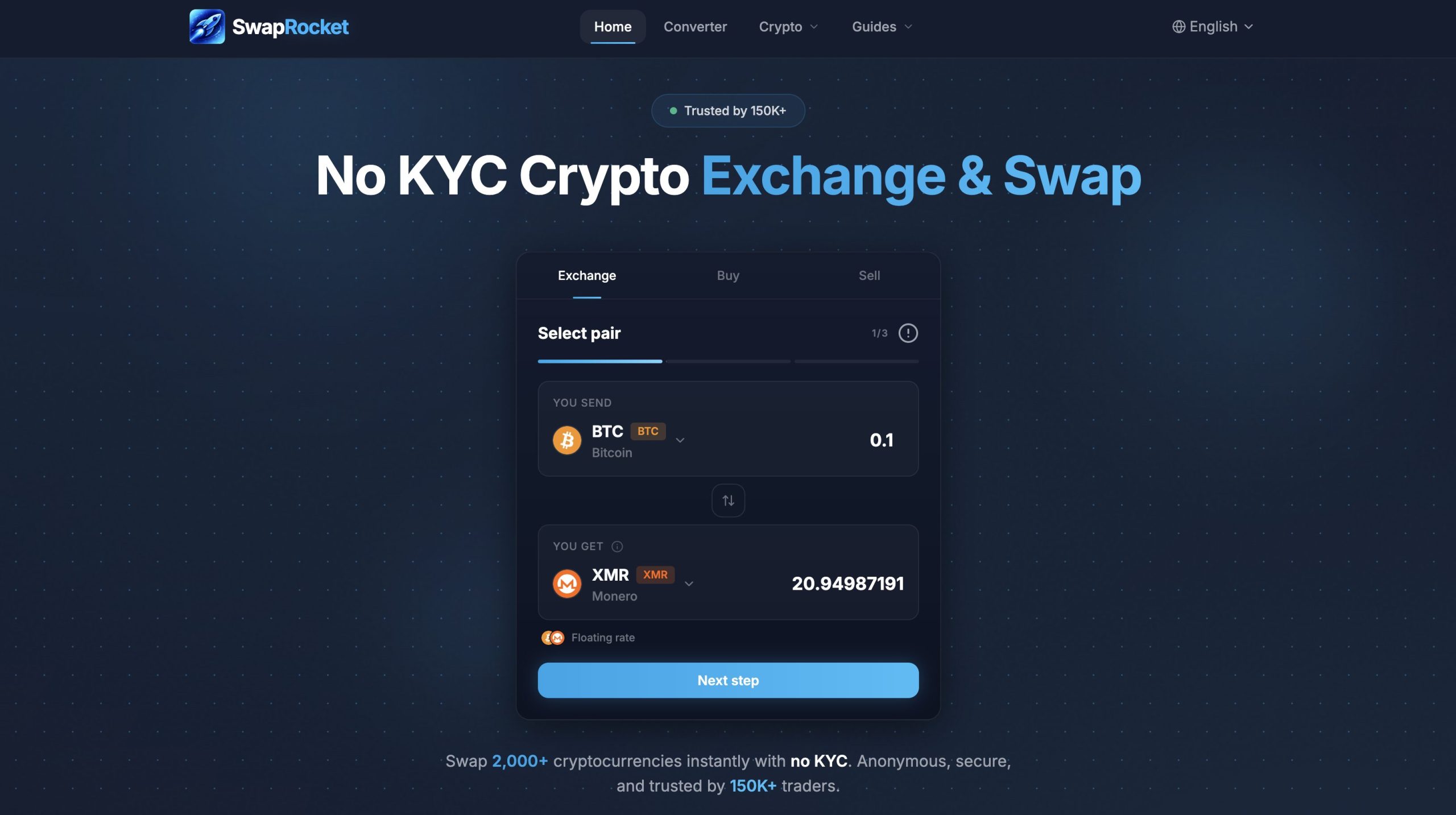
SwapRocket supports more than 2,000 cryptocurrencies and is fully focused on no-KYC crypto swaps, directly exchanging crypto from wallet to wallet without account registration.
The platform works in the familiar swap-service format: choose the coin you want to send, choose ZEC as the receiving asset, enter your wallet address, send funds to the generated deposit address, and wait for the exchanged coins to arrive.
We found most swaps completed within 5-10 minutes, although it can be chain-dependent (for instance, Bitcoin’s relatively slow block time usually adds 10 minutes).
SwapRocket’s aggregator-style model connects to multiple exchange services to find the best rates, and fees of about 0.5%-2% are built into the exchange rate, so users are not shown a separate charge at checkout.
With zero registration or KYC for crypto swaps and a non-custodial service, transactions move from the user’s sending wallet to the receiving wallet via a deposit address. Very simple and fuss-free.
SwapRocket’s privacy offering includes ZEC, XMR, and Dash, and its strongest use case is simple: crypto in, ZEC out, without creating an account.
What SwapRocket does well:
- No registration or KYC for crypto-to-crypto swaps
- 2,000+ supported cryptocurrencies
- ZEC, XMR, and Dash support
- Fees included in the quoted exchange rate
What it doesn’t:
- Fiat purchases use third-party payment providers
- Swap timing still depends on network congestion
3. Trocador.app: Rate Aggregator for ZEC
Trocador isn’t really a crypto exchange, but an aggregator. The service compares rates across other platforms, then sends your swap to the partner that offers the best deal.
The platform allows you to swap coins privately through its exchange aggregator, trading cryptocurrency without fingerprinting or JavaScript on the site. The service doesn’t hold funds or process the swap itself.
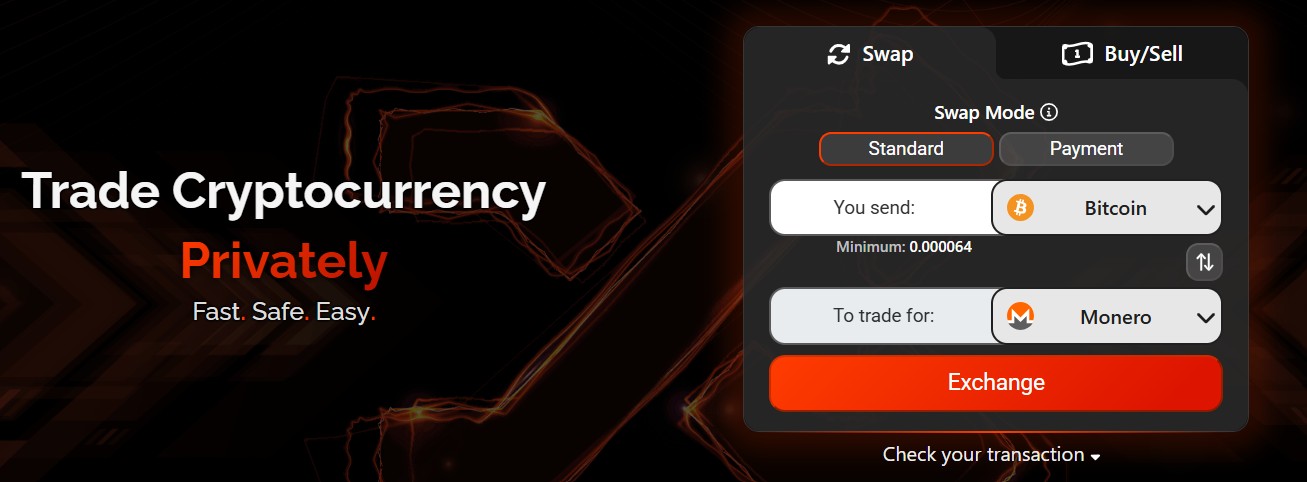
The aggregator guides the flow of transactions so that all steps take place on the same web page and provides a rating system for the provider’s KYC and AML policies. That KYC risk scoring for individual providers is genuinely useful, and we include the service on our list because it allows you to choose which exchange your swap will route through and how that exchange handles identity verification.
According to Trocador’s Terms of Use, the website has no regional restrictions. Bear in mind that Trocador doesn’t control who processes your swap, and if they route through a partner that suddenly demands verification, your funds are stuck until you comply.
Using Trocador’s KYC filter tools to specifically exclude high-risk providers before confirming a swap is the best way to manage that risk.
What Trocador does well:
- Rate comparison across multiple providers
- KYC risk scoring
- AML address checking
- No JavaScript on-site
- Tor-accessible
- No regional restrictions
What it doesn’t:
- You’re dependent on partner exchanges executing cleanly
- Swap failures or verification triggers are outside Trocador’s direct control
4. StealthEX: Deep Asset Breadth
StealthEX operates on a model similar to that of GhostSwap and SwapRocket: non-custodial, no registration, instant swaps, and its ZEC asset depth is great for users who need to route through less common pairs.
StealthEX supports over 2,000 cryptocurrencies for swapping without the need to sign up. The service is designed to be instant, and we found pairs for BTC to ZEC, ETH to ZEC, ZEC to BTC, ZEC to ETH, and ZEC to XMR (and dozens of others with good liquidity). You can opt for StealthEX fixed-rate swaps if you need an exact amount of crypto, or for floating-rate options if you don’t.
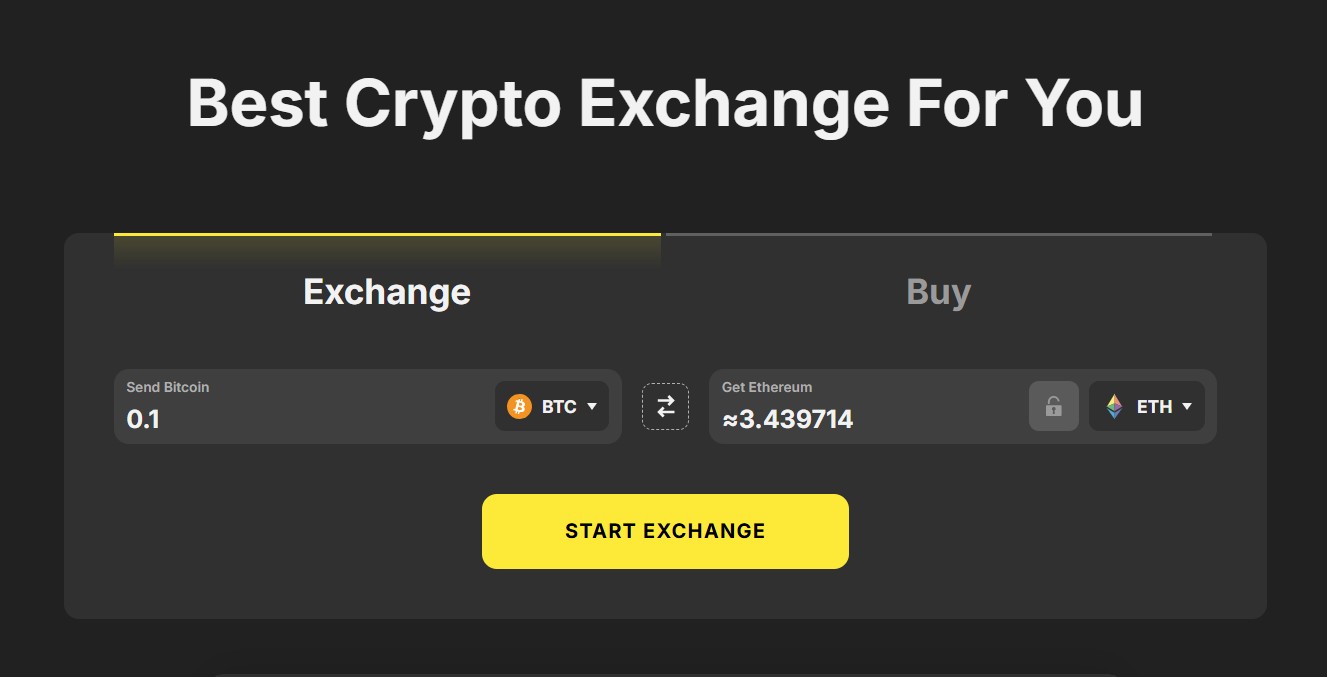
While standard crypto-to-crypto swaps remain KYC-free, transactions exceeding approximately $900 or those flagged by automated risk systems may trigger verification requests. We found the platform alerts users before completing any transaction requiring identification.
StealthEX is transparent about the policy, which is why we have included it in our list, but users moving larger ZEC amounts should factor it in.
StealthEX has an app on Google Play, making it one of the few swap services in this category with a native mobile application.
What StealthEX does well:
- 2,000+ coin support
- Android app
- Fixed/floating rates
- No registration for standard swaps
What it doesn’t:
- KYC threshold at approximately $900
5. Edge Wallet: Best for Wallet-Integrated Private Swaps
Edge is a self-custody mobile wallet that, as of December 2025, does something none of the other platforms on this list do: it executes ZEC swaps without ever leaving the wallet interface. Edge users can now perform private Zcash swaps through Maya Protocol’s decentralized cross-chain exchange, all within Edge – a way to move between ZEC and other crypto assets privately, without KYC, without centralized intermediaries, and without exposing transaction details to third parties.
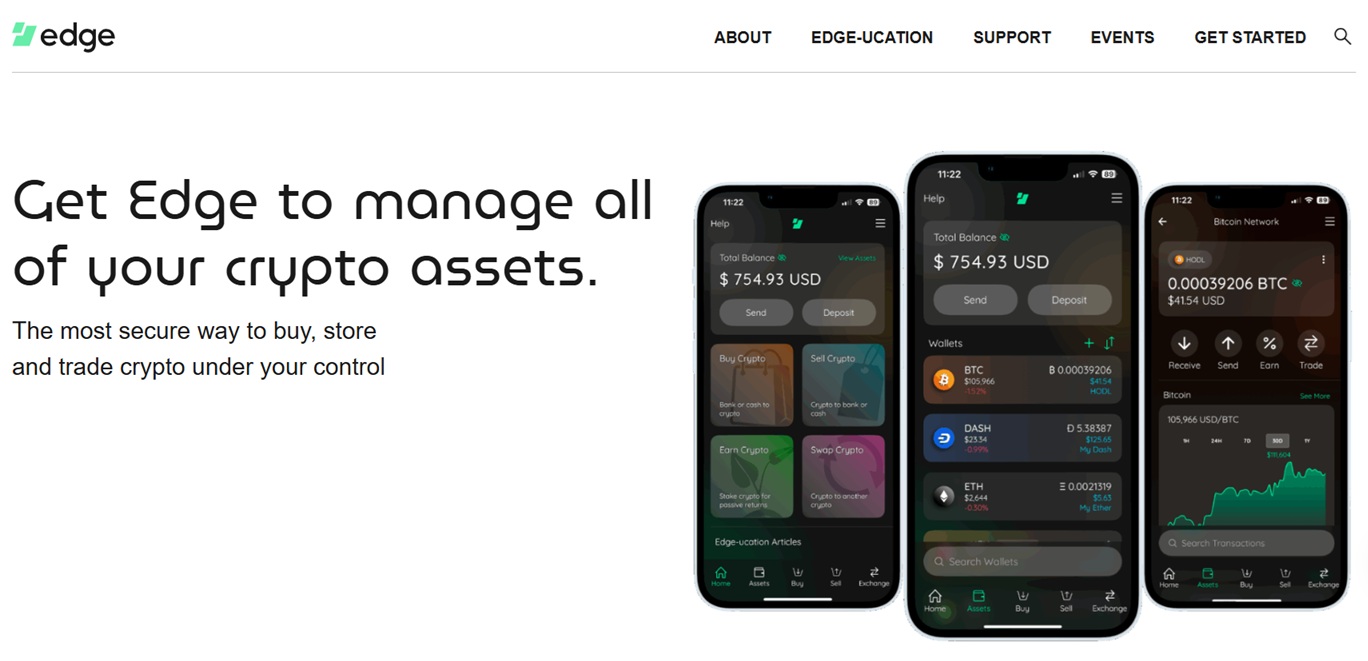
The architecture is worth understanding, even for experienced traders. By routing ZEC transactions through Maya Protocol, users gain access to a decentralized, non-custodial liquidity network that processes trades without relying on user accounts or persistent identifiers. The swap is executed by Maya, not by a centralized exchange. Your information remains yours, and the infrastructure involved does not have access to personal details or transaction metadata.
Critically for this list, shielded addresses work end-to-end. Combined with Edge’s existing support for Zcash shielded transactions, this creates an environment where your ability to transact and your ability to remain private reinforce each other rather than compete.
What Edge does well:
- Shielded ZEC support throughout
- No KYC, non-custodial
- Swap and hold in a single app
- No browser required
- Maya Protocol’s decentralized routing
What it doesn’t:
- Swap rates are set by Maya Protocol’s liquidity pools, not aggregated
- Asset breadth is narrower
- New service, so long-term reliability data still to come
ZEC Exchange Comparisons
| Platform | Type | All-in Fees | Speed | ZEC Shielded | US Access | Fiat |
| GhostSwap | Direct swaps | ~0.30% (estimate) | 5–15 min | Yes | Yes | No |
| SwapRocket | Direct swaps | ~0.50%-2% | 5–15 min | Yes | Yes | No |
| Trocador.app | Rate aggregator | Varies by provider | 5–15 min | Provider-dependent | Yes | Fiat gateway aggregator |
| StealthEX | Swap service | Undisclosed | 5–15 min | Yes | Yes | No (crypto-to-crypto) |
| Edge Wallet | Wallet with Swap | Low, variable | 5-15 minutes | Yes | Yes | Via third-parties |
How to Buy, Trade & Swap Zcash: Step by Step
Using our top choice, GhostSwap, as a walkthrough, here’s how to get Zcash.
1: Have a Zcash Wallet
Zashi is one easy way to use Zcash. It’s a self-custody, Zcash-only, shielded wallet that lets you send, receive, and spend ZEC and is recommended by the Zcash ecosystem. Certain hardware wallets like Trezor also support shielded addresses, but check carefully.
The receiving address you provide to any platform should be yours – not an exchange deposit address.
2: Order a swap on GhostSwap
Head to GhostSwap and select the cryptocurrency you want to send and the one you want to receive. The interface instantly displays the current exchange rate and the estimated output based on live market data.
You provide the Zcash wallet address where you want to receive the swapped cryptocurrency. This is the only piece of information GhostSwap asks for. There is no prompt for an email address, name, or sign-up.
Consider a small test transaction first. ZEC network fees are low, and new blocks are mined every 75 seconds with transaction fees typically only a fraction of a cent, so the peace of mind is worth it.
3: Execute your order
When you’re ready, GhostSwap generates a one-time deposit address. You send your crypto to this address from your personal wallet. Once the sending chain confirms, the swap executes, and ZEC lands in the receiving wallet address you provided.
You’ll receive a transaction ID upon initiating the exchange. You can use this ID to monitor the transaction status on the blockchain explorer of the respective network.
Bonus tip: Privacy maximization
If you’re swapping into ZEC for privacy reasons, the receiving address is as important as the platform. Use a shielded z-address as your destination rather than a transparent t-address. If you receive into a t-address, your transaction is visible on the blockchain.
Risks, Best Practices & Security
The mechanics of swaps on these platforms are straightforward, but there are risks worth noting.
Wrong addresses are permanent: Crypto transactions don’t reverse. Make sure to copy and paste the receiving address and verify it before confirming. Be aware of address-poisoning malware that replaces clipboard contents with attacker-controlled addresses.
No-KYC doesn’t mean no risk: Regulatory frameworks are uneven globally. In most countries, holding and trading ZEC remains legal. Exchanges delist privacy coins for regulatory compliance reasons, not because the coins themselves are banned. But that can change, and what’s accessible today in your jurisdiction may not be tomorrow.
Tax obligations exist regardless of platform: None of the platforms on this list collect your identity, but your local tax authority’s interest in your transactions exists independent of what the exchange knows or doesn’t know. Consult a tax professional familiar with cryptocurrency in your jurisdiction.
Custodial vs. non-custodial: Non-custodial platforms can experience issues such as a failed swap, delayed confirmation, or a rate that moved during execution. Custodial platforms have all of those plus the possibility that the exchange itself fails, freezes withdrawals, or gets seized.
KYC exchanges sometimes freeze withdrawals or request extra documentation, especially when dealing with privacy coins.
If privacy at the network level matters to you, running your swap over a VPN or Tor reduces metadata exposure. GhostSwap explicitly supports both without throttling. Trocador’s no-JavaScript architecture is also designed for compatibility with Tor Browser.
Conclusion
The practical case for ZEC is more obvious in 2026 than at any point in recent memory. CoinDesk Research published in March 2026 that Zcash had reached “encryption supremacy” as new risks emerged, such as AI tools that can de-anonymize users on transparent blockchains and quantum computing emerging as a credible threat to current wallet cryptography.
Whether that analysis proves correct in the long term is a separate question from which platforms let you operate with ZEC. GhostSwap is the most reliable entry point: non-custodial, no KYC at any transaction size, Tor-compatible, and low fees.
Remember to start small, verify addresses, and use a shielded z-address as your destination.
Frequently Asked Questions
Can I buy Zcash without KYC?
What’s the best Zcash wallet for privacy?
What’s the difference between shielded and transparent ZEC?
What happens if a swap fails?
Is Zcash legal?
How long do Zcash swaps take?
Do these platforms work in the US?
2M+
250+
8
70




 in numbers