Tether Market Cap Rises by 10% Following Stablecoin Meltdown – Can it Maintain the Lead?


The market capitalization of the popular stablecoin tether (USDT) has risen as other stablecoins, including Circle’s USD coin (USDC) and MakerDAO’s DAI briefly lost their pegs over the weekend.
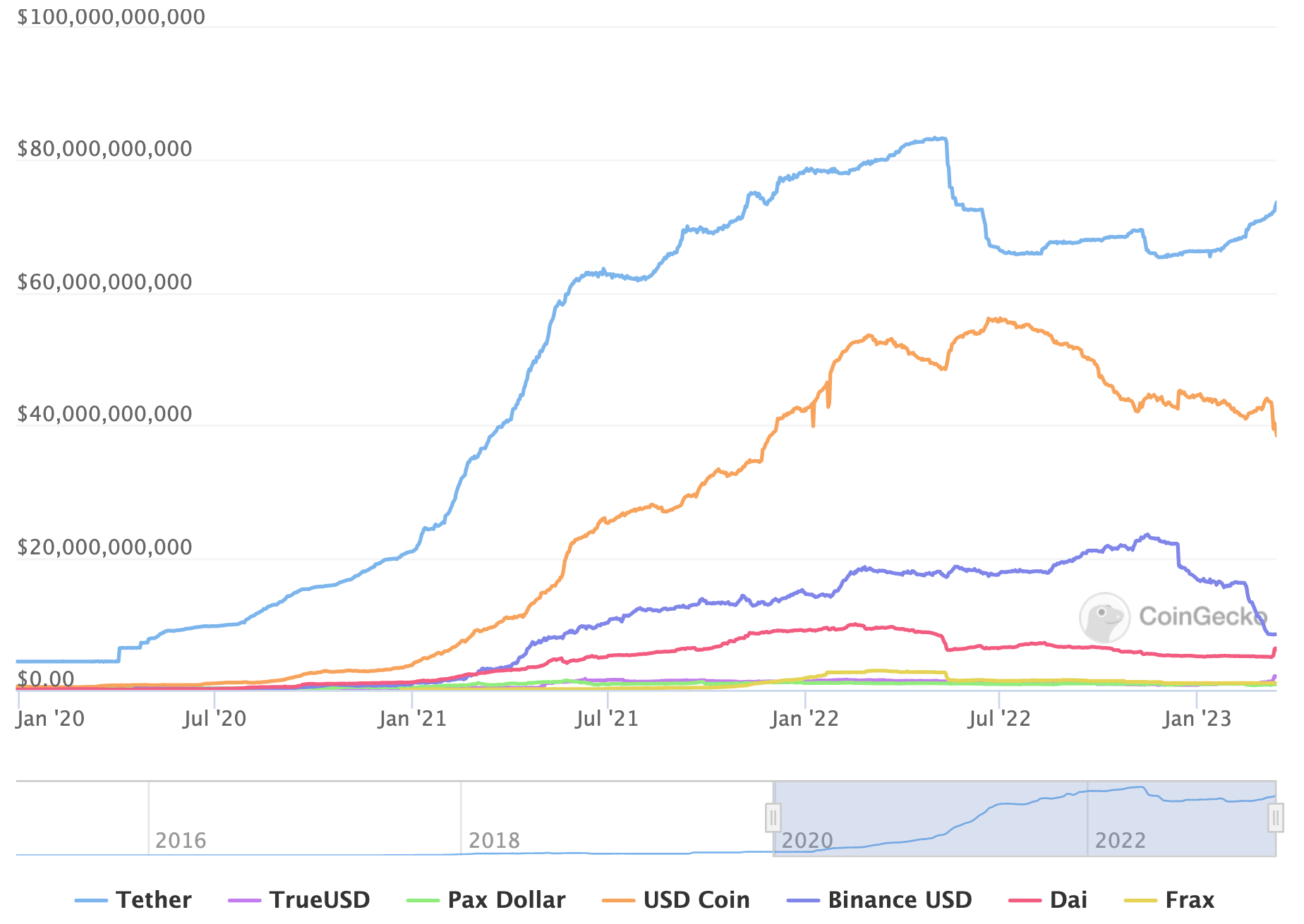
As a result of the increase in marketshare for tether, Binance USD (BUSD), a stablecoin issued by US-based Paxos Trust Company for Binance, USD coin, and other major stablecoins have seen their share of the stablecoin market go down.
So far in 2023, BUSD has lost almost half of its market cap to come in at around $8 billion, while USDC has fallen 11% to $39 billion.
Tether’s market cap, on the other hand, has risen 10% this year to $73 billion, making it almost twice as large as USDC, the second-largest stablecoin in the market.
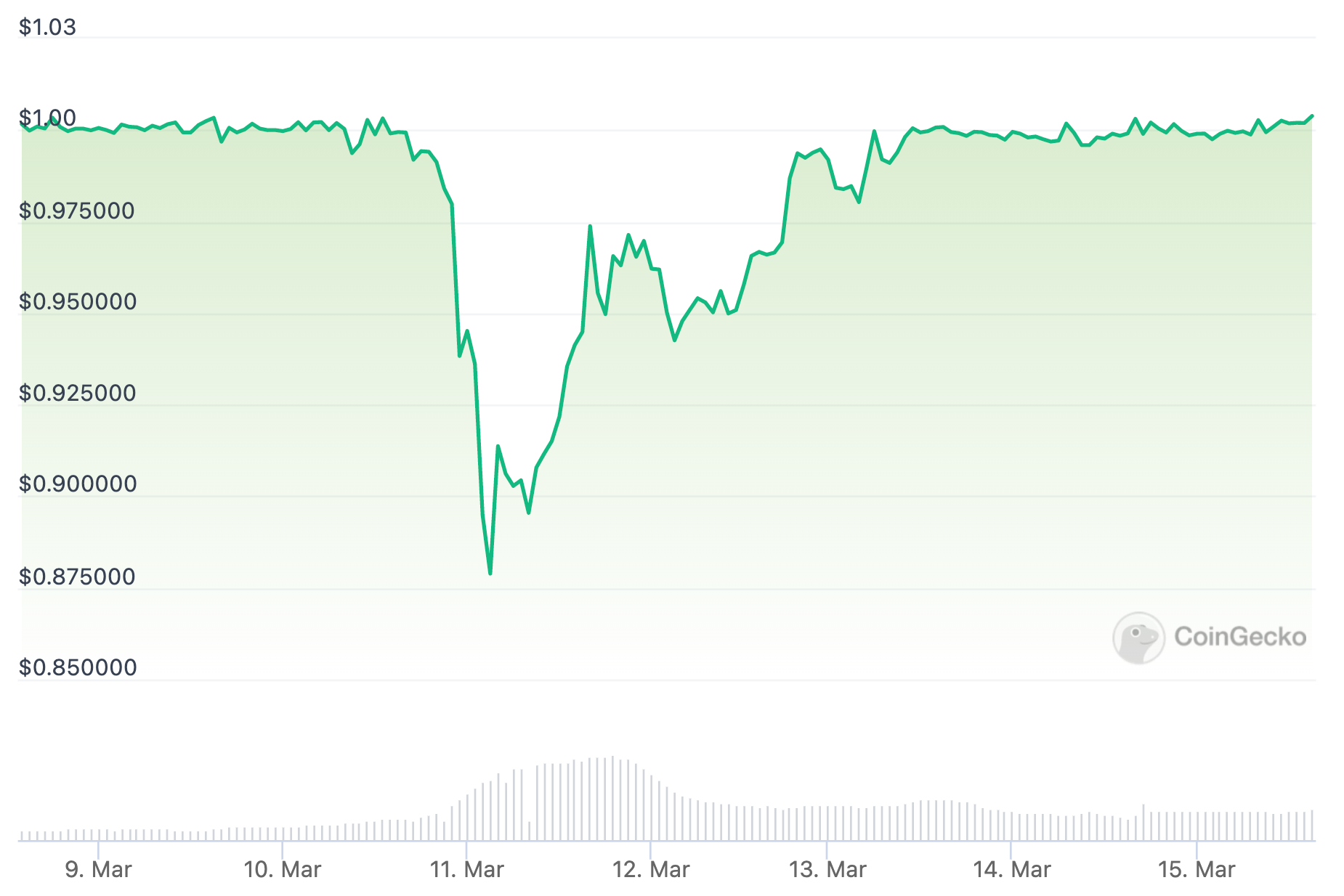
The latest surge in tether’s market cap comes after its main competitor USDC this weekend lost its peg. The de-peg happened as news broke that Circle, the company that issues USDC, had $3.3 billion out of $40 billion in reserves for USDC deposited in Silicon Valley Bank (SVB).
SVB collapsed on March 10, but the US Government later came to the rescue and guaranteed that all depositors would regain access to their money. The government bailout effectively saved USDC, which later traded back to its $1 peg price.
“A lot of sell pressure”
Commenting on the situation to the Wall Street Journal on Tuesday, Kevin March, co-founder of the trading firm Floating Point Group, said his firm was among the many market players that moved funds from USDC to USDT when the de-peg happened.
“Many of our customers chose to do the same, putting a lot of sell pressure on the USDC-USDT trading pair,” March said.
Interestingly, it could be tether’s status as one of the least regulated, and according to some, least transparent stablecoins, that is now working in its favor.
“This is a validation of what we know about money and things that try to be money—which is when you provide too much information, you are susceptible to runs,” Steven Kelly, a researcher at Yale University’s financial stability program, told the Wall Street Journal, before finally adding:
“We knew Circle had exposure to SVB, we found out what it was and there was a run. We don’t really know as much about tether, and it just seems safer for that reason alone.”
- Perplexity AI Predicts a Wild Finish to 2026 for XRP
- Bitcoin Price Rebounds Again, Peter Schiff Repeats His Crash Warnings
- Quant Crypto Soars 18% as QNT Charges Toward $250
- Sony Soneium Coin: PlayStation and GTA 6 Crypto Twist?
- Elon Musk’s Grok AI Predicts When Bitcoin Will Finally Hit its Ultimate Price Target
2M+
250+
8
70





- Perplexity AI Predicts a Wild Finish to 2026 for XRP
- Bitcoin Price Rebounds Again, Peter Schiff Repeats His Crash Warnings
- Quant Crypto Soars 18% as QNT Charges Toward $250
- Sony Soneium Coin: PlayStation and GTA 6 Crypto Twist?
- Elon Musk’s Grok AI Predicts When Bitcoin Will Finally Hit its Ultimate Price Target
More Articles

 in numbers