

How to Stake Bitcoin on Stacks in 2026
We believe in full transparency with our readers. Some of our content includes affiliate links, and we may earn a commission through these partnerships. However, this potential compensation never influences our analysis, opinions, or reviews. Our editorial content is created independently of our marketing partnerships, and our ratings are based solely on our established evaluation criteria. Read More


Bitcoin has spent over a decade earning its reputation as digital gold: an asset you hold, not one that works for you. That’s changing. Stacks, a Bitcoin layer, is preparing to launch real BTC-denominated yield that allows users to earn while keeping their coins under their own control.
This creates some understandable confusion. For years, “stacking” STX to earn Bitcoin rewards was the only game on Stacks. Now, true Bitcoin staking, where you lock BTC itself, has arrived through a network upgrade called PoX-5.
This guide breaks down the three main ways to earn Bitcoin-related yield on Stacks today, and walks through exactly how to get started with each one.
What Is Stacks, and Why Does It Matter for Bitcoin Holders?
Stacks is a Bitcoin layer that adds smart contracts and decentralized apps on top of Bitcoin, without changing Bitcoin’s own protocol. It uses Clarity, a purpose-built smart contract language, and settles its activity back to the Bitcoin blockchain.
The mechanism that makes Bitcoin yield possible is called Proof of Transfer, or PoX. Miners on Stacks compete for the right to produce blocks by spending real BTC rather than burning electricity. That BTC doesn’t disappear. Instead, it gets distributed to STX holders who lock their tokens to participate in the network.
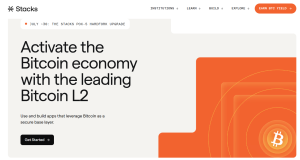
This isn’t a new or unproven idea. PoX has run since January 2021 with over 99.9% uptime, and it has already distributed more than 4,200 BTC in rewards to participants. That track record matters, because it means the Bitcoin yield question on Stacks isn’t theoretical. It’s a system with years of live, verifiable history behind it.
Stacks also underpins a growing Bitcoin DeFi ecosystem, including lending, borrowing, and decentralized exchange liquidity, much of it built around sBTC, a 1:1 Bitcoin-backed asset that moves BTC value into these applications. That ecosystem matters for this guide because two of the three yield methods below, Dual Stacking and pooled Native Bitcoin Staking, rely on sBTC or Stacks’ broader DeFi infrastructure to work.
The Three Main Ways to Earn Bitcoin Yield on Stacks
Bitcoin yield on Stacks isn’t one product. It’s three distinct mechanisms, each with a different relationship between your BTC, your STX, and the reward you earn. Here’s how they compare.
1. Traditional Stacking: Lock STX, Earn BTC
Traditional Stacking is the original mechanism, live since Stacks’ PoX consensus launched. STX holders lock their tokens for a reward cycle, roughly two weeks based on Bitcoin’s block timing, and earn a share of the BTC that miners commit during that cycle.
There are three practical ways to participate. Solo stacking means locking your own STX and running your own signer software, but it requires a large STX balance, since the minimum is dynamic and tied to total network participation. Pooled stacking, offered through pool operators, lets you delegate any amount of STX without running infrastructure yourself, and it’s the most common route for smaller holders. Liquid stacking, through protocols like StackingDAO, removes the minimum entirely: you deposit STX and receive a liquid token such as stSTX in return, which keeps accruing value while remaining usable elsewhere in DeFi.
Reward rates fluctuate with network participation and miner activity, and gross yields have recently sat in the high single digits to low double digits annually, paid out in BTC. None of this requires wrapping your STX or handing custody to a third party in the solo or pooled models; only liquid stacking involves trusting a protocol’s smart contracts.
2. Dual Stacking: sBTC Paired With STX
Dual Stacking is built for people who hold Bitcoin itself, not just STX. It works by minting sBTC, a 1:1 Bitcoin-backed asset secured by a decentralized signer network using threshold signatures, and then pairing it with stacked STX to boost the BTC-denominated reward.
The mechanics are straightforward: the more STX you stack alongside your sBTC, and the more sBTC you hold, the higher your reward multiplier. According to Stacks, this pairing can boost Bitcoin rewards by up to 5% APY on top of standard Stacking yield. All forms of Stacking, solo, pooled, and liquid, qualify for the boost.
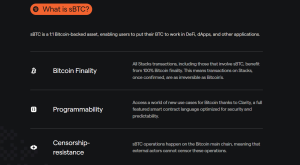
Dual Stacking also solves a problem other reward models don’t: your sBTC isn’t locked away doing nothing. You can deploy it into Stacks DeFi protocols and earn yield there simultaneously, while it’s still counted toward your Dual Stacking multiplier. Rewards are paid in sBTC, which can be redeemed 1:1 for BTC at any time.
This makes Dual Stacking the best fit for holders who want flexibility and composability: your Bitcoin keeps working across the ecosystem instead of sitting idle in a single locked position.
3. Native Bitcoin Staking via Protocol Bonds (PoX-5)
This is the newest and most direct route to Bitcoin yield on Stacks, and it’s the one this guide focuses on. Native Bitcoin Staking arrived with the PoX-5 upgrade, a consensus-level hard fork that Stacks activated in late July 2026 at Bitcoin block 960,230.
Unlike Stacking or Dual Stacking, Native Bitcoin Staking doesn’t require minting sBTC or bridging anything. You lock actual BTC on Bitcoin’s own base layer using a timelock mechanism, under your own keys, and pair it with a smaller amount of STX (a minimum of roughly 5% of your BTC’s value) locked on Stacks. Stacks calls this structure a protocol bond.
Because the BTC never leaves Bitcoin’s own chain, there’s no bridge risk and no custodian in the loop. The whitepaper behind this design, published by Stacks, describes a “waterfall” reward structure: protocol bond holders are paid their target yield first, currently aimed at around 3% APY in BTC, before any remaining miner revenue is split between STX-only stackers and a protocol reserve fund.
Rollout is happening in two phases. PoX-5 is a managed bootstrap period, expected to run about 12 months, during which the Stacks Endowment sets capacity and yield parameters directly. Initial capacity is capped at roughly 3,000 BTC. The second phase, PoX-6, is expected to remove that permissioning entirely, opening capacity, rate, and pairing decisions to a permissionless, on-chain auction, pending community approval.
The first institutional protocol bond, called the Genesis Bond, is expected in late August 2026, with broader community access through sBTC-based pools following afterward.
Step-by-Step: How to Stake Bitcoin on Stacks (Protocol Bonds Focus)
- Get set up with a compatible wallet. Native Bitcoin Staking requires a wallet that supports both Bitcoin and Stacks addresses and can generate the signatures protocol bonds require. Leather and Xverse are the two wallets most closely integrated with Stacks staking products today.
- Decide which participation path fits your holdings. If you hold BTC directly and want the most direct exposure, native Layer 1 staking through a protocol bond is the option to pursue. If you already hold sBTC or would rather stay liquid, Dual Stacking or a pooled sBTC option may suit you better, especially early on while bond capacity is limited.
- Understand the lock-up before committing. Protocol bonds run on a roughly six-month bonding period. Your BTC is timelocked on Bitcoin’s base layer for that duration, and your paired STX is locked on Stacks for the same window, so this isn’t a position you can exit on a whim.
- Create the protocol bond. In practice, this means depositing your BTC into the timelock contract on Bitcoin’s Layer 1 and simultaneously locking the required STX pairing amount through the Stacks staking interface. Because capacity is capped during the bootstrap phase, early access may prioritize institutional participants before opening more broadly to individual stakers.
- Monitor your rewards and unlock timing. Once your bond is active, BTC-denominated yield accrues according to the waterfall structure described above. Track your position through the staking dashboard to see when your bonding period ends and your BTC and STX become available again.
- Know your early exit option. If you need to leave a bond before the lock-up ends, an early exit path exists, but it comes at the cost of forfeiting remaining yield on that position (this applies only to BTC, not STX). Treat this as a last resort rather than a routine option.
If you’re already Stacking STX under the previous PoX-4 contract, note that the PoX-5 upgrade requires existing stackers to restake through the new contract to keep receiving BTC rewards without interruption.
Visit StacksRequirements and Practical Considerations
Capacity during the bootstrap phase is deliberately limited. The initial cap sits at around 3,000 BTC network-wide, and Stacks has signaled that early participation may favor institutional partners before opening more broadly, so individual stakers should expect a gradual rollout rather than instant access.
The STX pairing ratio is set at a minimum of roughly 5% of your BTC position’s value. This creates a real, if modest, STX requirement on top of your Bitcoin holdings, and it means the amount of STX you need scales with how much BTC you’re staking.
Lock duration sits at roughly six months per bond, which is materially longer than a standard two-week Stacking cycle. That’s a meaningful liquidity trade-off to weigh against the higher, BTC-native yield on offer.
For wallets, Leather and Xverse are currently the most Stacks-native options and are the ones to check first for direct protocol bond support as the feature rolls out. Fees will vary by wallet and by whether you’re staking crypto solo or through a pool, so confirm the specifics with your chosen provider before committing funds.
It’s also worth tracking network status directly rather than relying solely on a wallet’s interface. Stacks publishes staking parameters, including current capacity used and yield targets, through its own documentation and staking dashboards, and these figures are expected to shift as the bootstrap phase progresses toward the more open PoX-6 model.
Risks to Understand
No yield is free, and Bitcoin yield on Stacks is no exception. Before locking BTC into a protocol bond, weigh these factors alongside the target APY.
STX price exposure. Because a portion of your position must be held in STX, you’re taking on STX price risk alongside your Bitcoin position, even though your yield is paid in BTC.
Yield variability. Rewards are sourced from miner spending under Proof of Transfer, so the target APY is not a guarantee. It moves with network participation, miner economics, and overall demand for block space.
Smart contract and design risk. Protocol bonds are new. The underlying contracts and timelock mechanism haven’t had years of live use the way traditional Stacking has, so treat this as newer, less battle-tested infrastructure.
No slashing, but no free lunch either. Unlike many proof-of-stake systems, Stacks’ model doesn’t slash your principal for downtime or misbehavior. That’s a genuine point in its favor, but it doesn’t remove the smart contract, liquidity, or market risks above.
Conclusion
Stacks now offers three distinct paths to Bitcoin yield: Stacking for STX holders, Dual Stacking for those who want their sBTC working across DeFi while it earns, and Native Bitcoin Staking for holders who want to lock BTC directly and keep full custody throughout. What ties them together is the source of the yield itself: real Bitcoin, spent by real miners, distributed through a consensus mechanism with years of on-chain history behind it.
Native Bitcoin Staking is still in its early, capacity-limited bootstrap phase, so patience and careful research matter more than speed. Early access is likely to favor institutional participants at first, with broader community options, including sBTC-based pools, expected to widen access over the months ahead.
Before staking, review the official Stacks documentation, confirm wallet support through Leather or Xverse, and check current capacity and yield parameters, since these are expected to evolve as the network moves toward a more open, permissionless model with PoX-6. To learn more about the platform, check out our Stacks review.
Visit StacksFrequently Asked Questions
Can I stake Bitcoin on Stacks without giving up custody?
Yes. Native Bitcoin Staking locks your BTC on Bitcoin’s own base layer using a timelock under your own keys. There’s no bridging and no custodian holding your coins.
Do I need STX to stake BTC on Stacks?
For Native Bitcoin Staking, yes. Protocol bonds require pairing your BTC with a minimum STX amount, currently around 5% of your BTC’s value, locked on the Stacks side.
What happens if I want to exit early?
An early exit option exists, but it forfeits your remaining yield on that bond. It’s designed as an escape hatch, not a routine withdrawal method.
Is Stacks Bitcoin staking yield sustainable?
Yield comes from real BTC that miners spend under Proof of Transfer, a mechanism with over four years of live history and more than 4,200 BTC already distributed. That said, target rates like the current 3% APY are projections tied to network conditions, not fixed guarantees.
What’s the difference between Stacking and Bitcoin Staking on Stacks?
Stacking locks STX and pays BTC rewards; it’s been live since 2021. Bitcoin Staking, introduced with PoX-5, locks actual BTC on Bitcoin’s base layer alongside a smaller STX position, giving Bitcoin holders a more direct route to the same underlying yield source.
2M+
250+
8
70





 in numbers

About Cryptonews
Our goal is to offer a comprehensive and objective perspective on the cryptocurrency market, enabling our readers to make informed decisions in this ever-changing landscape.
Our editorial team of more than 70 crypto professionals works to maintain the highest standards of journalism and ethics. We follow strict editorial guidelines to ensure the integrity and credibility of our content.
Whether you’re looking for breaking news, expert opinions, or market insights, Cryptonews has been your go-to destination for everything cryptocurrency since 2017.