

8 Best Decentralized Crypto Wallets for 2026
We believe in full transparency with our readers. Some of our content includes affiliate links, and we may earn a commission through these partnerships. However, this potential compensation never influences our analysis, opinions, or reviews. Our editorial content is created independently of our marketing partnerships, and our ratings are based solely on our established evaluation criteria. Read More


According to our research, Best Wallet is the best decentralized wallet in 2026 for its privacy-focused, multi-chain software, while Ledger is our top hardware wallet for long-term crypto storage.
Finding the right decentralized wallet is challenging, as many providers claim top-tier security and broad compatibility with DeFi and Web3 but lack independent audits, true self-custody, or cross-chain support. So, we tested and analyzed over 40 wallets to find those that excel in the above criteria.
A decentralized crypto wallet helps you retain full control over your assets, as you own your private keys, eliminating third-party risk. On the other hand, centralized platforms, like exchanges, manage your private keys on your behalf, which makes your funds more vulnerable to hacks, freezes, or regulatory seizures.
For this reason, choosing the right decentralized wallet is critical. Security, multi-chain support, gas fee controls, and dApp compatibility vary across wallets. And a poor choice can result in lost funds, high fees, or limited functionality. Read on to avoid those pitfalls and choose the right decentralized wallet for you:
What Is a Decentralized Wallet?
A decentralized wallet is a cryptocurrency wallet that gives you control over your assets rather than handing custody to an exchange or other third party. The wallet provider doesn’t control your funds, and transactions are authorized using private keys or key shares under your control.
That’s in contrast to centralized wallets, which are often provided by cryptocurrency exchanges or brokers that don’t give you the private keys. With centralized wallets, you must trust the provider to keep your assets safe.
Importantly, when setting up a decentralized wallet, you’ll usually receive the private keys in a simplified form. This is often a 12 or 24-word seed phrase that you need to enter in the correct order to reconstruct the private key and regain access to the wallet. Nevertheless, the wallet provider never has access to your seed phrase or private keys, as the seed is generated on your device. So, you’re solely responsible for safeguarding your funds.

The 8 Best Decentralized Crypto Wallets Compared
Choosing from so many options can be difficult, so we’ve created a head-to-head comparison table to help you understand what makes the top wallet picks on our list stand out. Here’s an overview of the best decentralized crypto wallets in 2026:
| Wallet | Wallet Type | Asset / Network Support | dApp Integration | Best for |
| Best Wallet | Software | 1,000+ assets, 60+ blockchains | Excellent | Overall best decentralized wallet in 2026 |
| Ledger | Hardware | 15,000+ assets | Excellent | Long-term crypto storage |
| Trezor Safe 5 | Hardware | 9,000+ assets | Good | Open-source security |
| Ellipal Titan 2.0 | Hardware | 10,000+ assets, 50+ blockchains | Good | Air-gapped security |
| Tangem | Hardware | 16,000+ assets, 95 networks | Good | Card-style hardware storage |
| Zengo | Software | 1,000+ assets, 14 blockchains | Good | Backup and recovery |
| OKX Wallet | Software | 70+ networks | Excellent | Multi-chain Web3 and DeFi |
| Binance Wallet | Software | 60+ blockchains | Excellent | Seedless self-custody |
ℹ️ This table is updated monthly.
Best Decentralized Crypto Wallets: Full Reviews
We tested over 40 decentralized crypto wallets to find those that meet our strict criteria, which include security measures, self-custody, supported assets and networks, ease of use and user experience, backup and recovery options, and smart contract and DeFi integration.
After a deep analysis, we shortlisted the 8 best decentralized crypto wallets for 2026 that stand out for their security, usability, and functionality. In this section, we’ll review each wallet to help you find the one that best suits your needs:
1. Best Wallet – Overall Best Decentralized Wallet
We rank Best Wallet as the top decentralized wallet of 2026 due to its full self-custody, built-in decentralized exchange (DEX), multi-chain functionality, and privacy-first approach. It’s an all-in-one crypto solution for traders, stakers, and DeFi users who value control over their assets. It supports 1,000+ tokens, including Bitcoin and all Ethereum ecosystem tokens, as well as 60+ blockchains, allowing you to buy, sell, stake, and swap assets within a single app. With no KYC or ID verification requirements, it provides a high level of privacy.
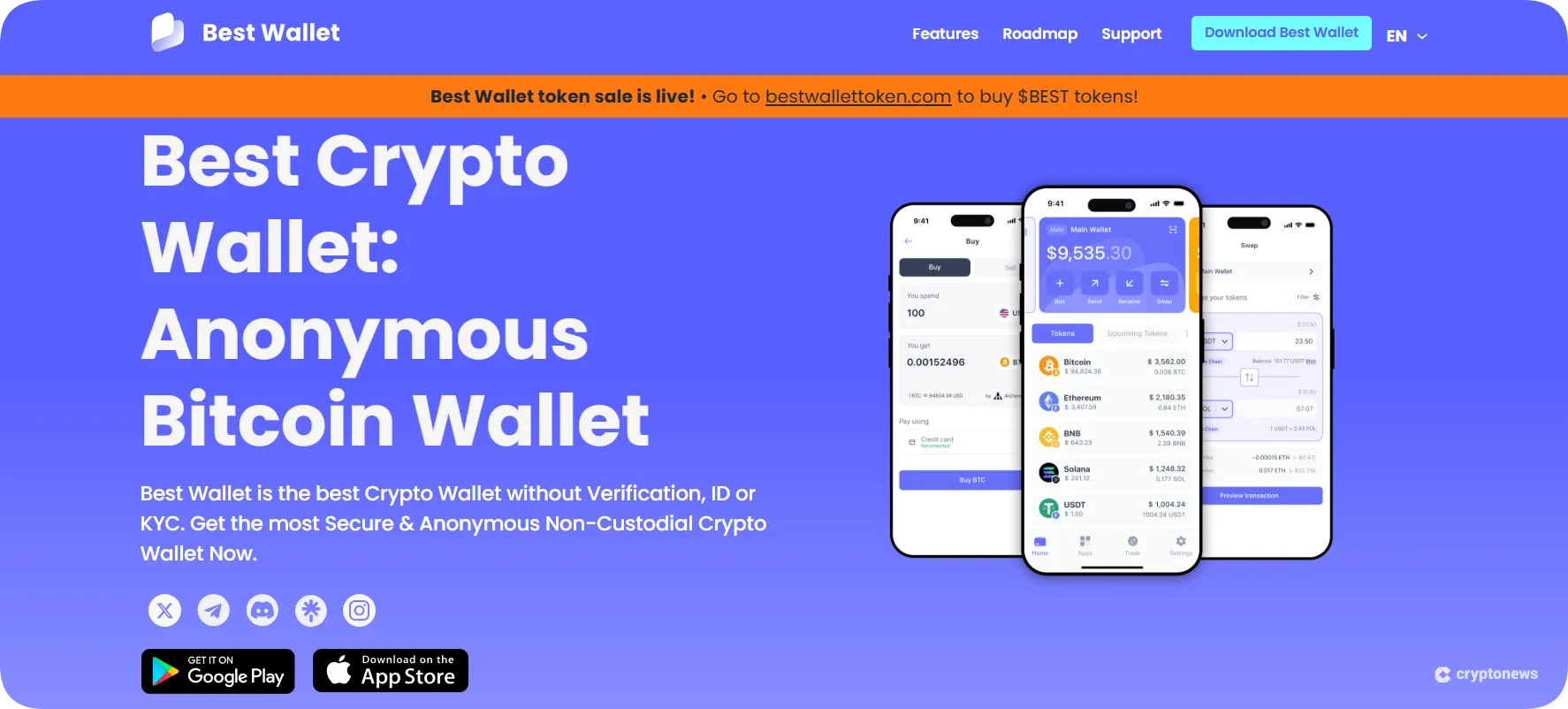
As one of the top Web3 wallets available, Best Wallet offers DEX trading, staking, and portfolio management. In addition, it offers early access to new crypto projects via its presale dashboard and seamless integration with decentralized applications (dApps). You can connect to staking providers, such as Rocket Pool and Lido, DeFi platforms like Dex Screener, and analysis platforms like CoinGecko and CoinMarketCap. In September 2025, Best Wallet also added support for top crypto tax apps, such as Blockpit and CoinTracking, to help you easily sort out your crypto taxes.
Best Wallet uses MPC technology to encrypt your private keys and back them up on your device and on the cloud. While this is highly secure, as it eliminates seed phrase vulnerability, it does introduce an element of centralization as you rely on Best Wallet’s servers to sign transactions. However, you can freely export your private keys whenever you decide, so you’re not locked into the provider’s ecosystem, and you’ll still have access to your funds, even if Best Wallet shuts down.
Best Wallet Key Features
- Wallet type: Software (non-custodial)
- Supported blockchains and assets: Bitcoin, Ethereum, and all ERC-20 tokens
- Supported devices: Mobile app (browser extension coming soon)
- Transaction fees: Network-dependent (no markup); holding $BEST tokens reduces fees
- Is it beginner-friendly? Yes. Simple UI, but privacy-focused features may confuse new users
- Security audit: by CertiK
Pros
- No KYC or identity verification
- Built-in DEX for on-chain swaps
- Multi-chain & multi-wallet support
- Biometric & multi-factor authentication
- Offers access to top crypto presales
- Integrated market insights & portfolio tools
Cons
- Desktop app and browser extension still in development
2. Ledger – Best Decentralized Wallet for Crypto for Long-Term Storage
Ledger offers hardware wallets that store private keys offline, protecting your funds against online threats, such as phishing and malware. It’s ideal for long-term holders due to its cold storage, PIN protection, and recovery options. In addition, its Secure Element chip is designed to last between 20 and 30 years.
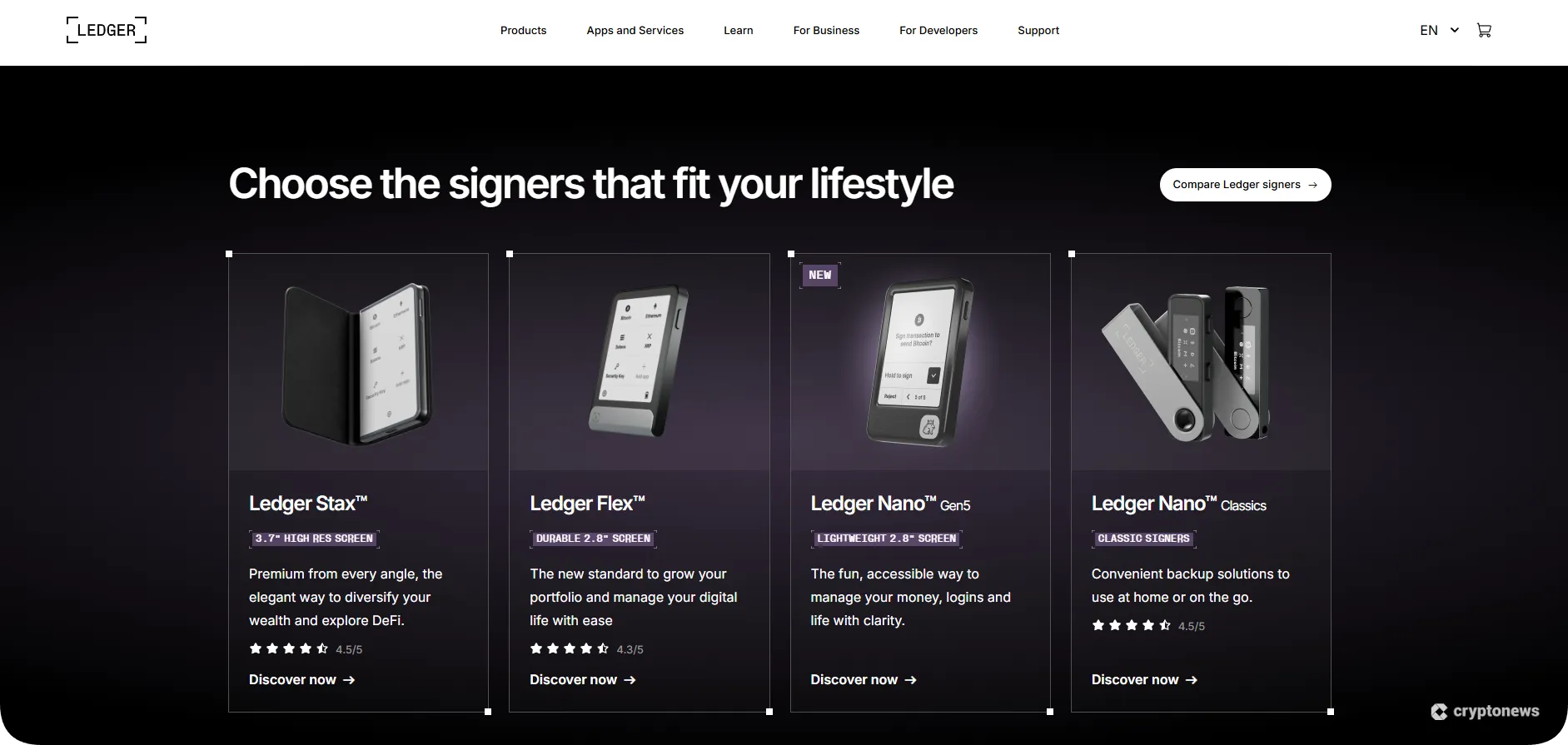
Ledger’s frequent firmware updates make it a future-proof solution, but the Secure Element code it uses is closed-source, which requires a degree of trust in a third-party. Models include the Nano S Plus ($79), Nano X ($149), Nano Gen5 ($179), Flex ($249), and Stax ($399), each with varying security, screen size, and connectivity features. The companion Ledger Live app enables portfolio management and diversification, staking, and secure transactions on desktop and mobile.
Ledger wallets support 15,000+ cryptocurrencies, but they have separate apps for different blockchains, which require manual installation. And while we liked its Bluetooth connectivity (Nano X, Flex, Stax), which enhances usability, the relatively complex setup may deter beginners. Furthermore, Ledger Recover ($9.99/month, optional) has raised concerns over privacy and security, as it works by backing up private keys on the company’s servers, which is against the ethos of decentralized, cold storage wallets.
Ledger Key Features
- Wallet type: Hardware
- Supported blockchains and assets: 15,000+ coins, including BTC, ETH, SOL, and ERC-20 tokens
- Supported devices: Desktop (Windows/macOS/Linux), mobile (iOS/Android)
- Transaction fees: Only network fees; no extra Ledger charges
- Is it beginner-friendly? No. The setup requires firmware updates, PIN creation, and secure recovery phrase storage
- Security audit: by Kudelsky Security
Pros
- Functional for 20 to 30 years
- Offline security, immune to hacks
- Ledger Live app for easy management
- Staking and NFT support
- Durable, compact design
Cons
- Expensive, especially Stax and Flex
- Complex setup process
3. Trezor Safe 5 – Best Open-Source Decentralized Wallet
The Trezor Safe 5 is a hardware wallet designed for maximum security and ease of use. As an open-source wallet, it offers unmatched transparency. The community can audit its security features, ensuring constant updates and protection. Unlike closed-source competitors like Ledger, Trezor’s code is fully accessible, reducing the risk of hidden vulnerabilities and, more importantly, allowing you to verify security claims yourself instead of having to trust the provider.
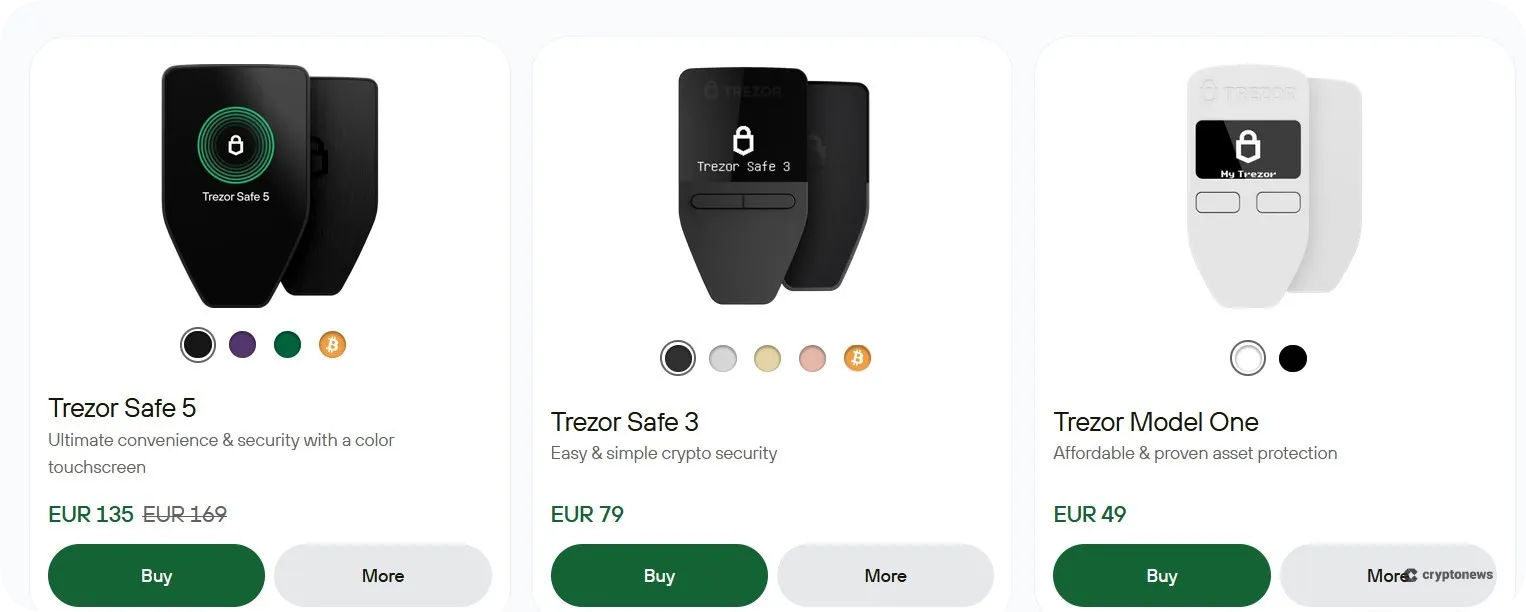
The wallet features an EAL 6+ Secure Element chip and allows you to connect your own full Bitcoin node. This eliminates the need to rely on Trezor’s servers, ensuring your IP address and transaction history remain 100% private. Keep in mind, however, that while this feature strongly improves decentralization, setting it up requires advanced know-how.
The Trezor Safe 5 supports 9,000+ cryptocurrencies, and you can integrate it with the Trezor Suite app to manage your transactions. Its $169 price tag makes it a premium option for both novice and advanced crypto traders. Unlike Ledger, it lacks Bluetooth connectivity but compensates with Shamir Backup, an advanced wallet recovery system. However, it doesn’t support air-gapped transactions like the Ellipal Titan 2.0.
Trezor Safe 5 Key Features
- Wallet type: Hardware
- Supported blockchains and assets: 9,000+ cryptos, including BTC, ETH, ADA, and ERC-20 tokens
- Supported devices: Desktop, browser extension, mobile app (view-only on iOS)
- Transaction fees: Network fees only
- Is it beginner-friendly? Yes – Touchscreen and Trezor Suite make it easy for all users.
- Security audit: Open-source; regular audits by independent researchers
Pros
- Open-source, fully auditable security
- EAL 6+ Secure Element protection
- Shamir Backup for secure recovery
- Intuitive color touchscreen navigation
- Trezor Suite app for portfolio management
Cons
- No Bluetooth or mobile-only option
- The small screen is inconvenient for complex operations
4. Ellipal Titan 2.0 – Best Air-Gapped Decentralized Cryptocurrency Wallet
The Ellipal Titan 2.0 is a fully air-gapped hardware wallet that keeps your private keys offline at all times. This eliminates risks from WiFi, Bluetooth, or USB-based attacks, as the wallet only communicates via QR codes, which keeps your private keys away from online threats. Its CC EAL5+ Secure Element chip and offline firmware updates make the Ellipal Titan 2.0 one of the most secure hardware wallets available.
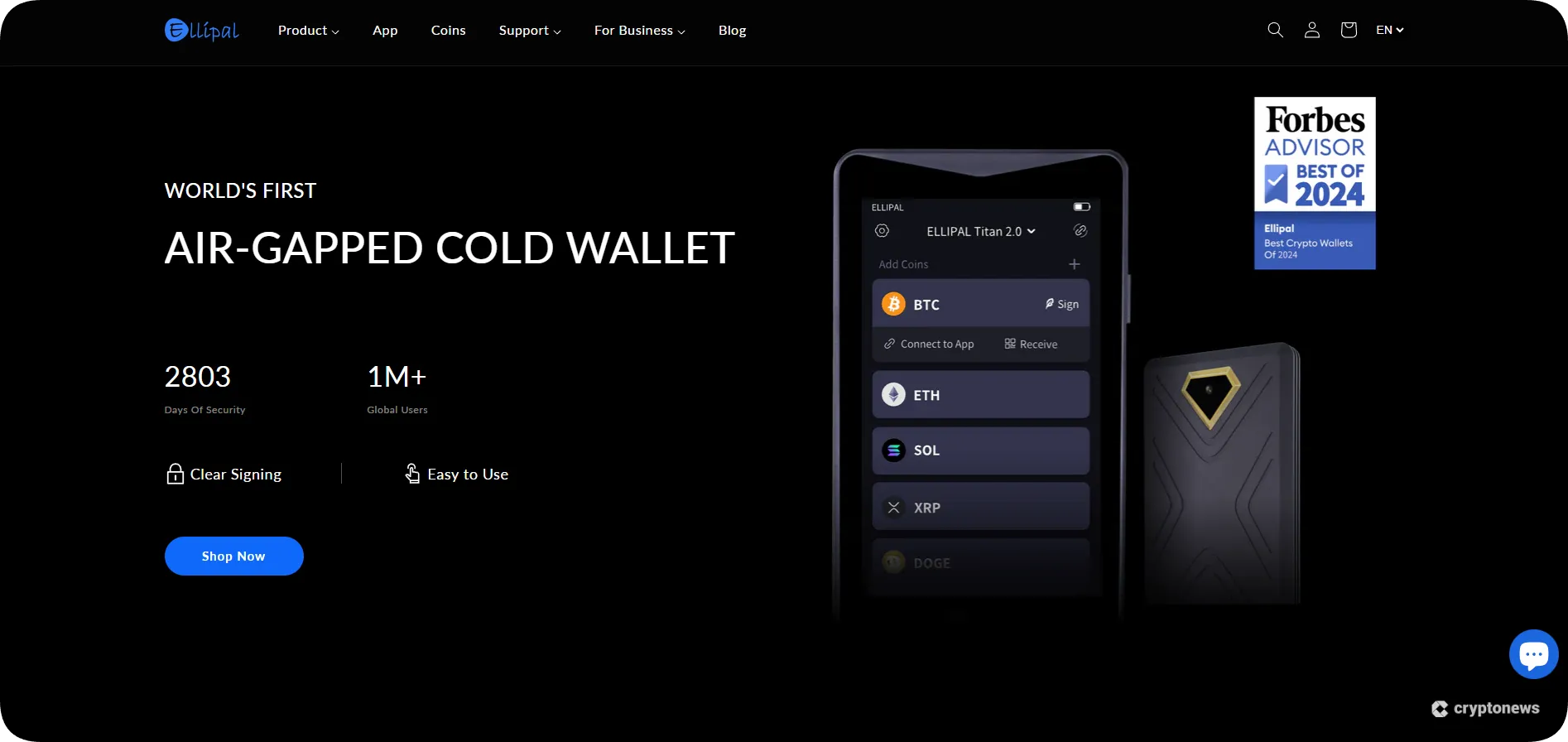
Ellipal supports over 50 blockchains and 10,000+ assets, including Bitcoin, Ethereum, and Solana. Its 4-inch touchscreen and aluminum alloy body provide durability and ease of use, while its QR code transactions are a big time saver.
We tested both the Ellipal Titan and the Ellipal Titan 2.0 models. What we liked about the Titan 2.0 model is its auto-shutdown feature, which saves battery, and its HD IPS display, which offers better color consistency and sharpness than Ellipal Titan’s LCD display. On the downside, both Ellipal models use closed-source code, which means you can’t verify their security yourself. While the wallet has never been hacked and hasn’t leaked user data, it requires you to trust that the provider will maintain robust safety measures.
Ellipal 2.0 Key Features
- Wallet type: Hardware
- Supported blockchains and assets: 50+ blockchains, 10,000+ assets (BTC, ETH, SOL, etc.)
- Supported devices: Mobile app (Android & iOS)
- Transaction fees: Network fees only
- Is it beginner-friendly? Yes. Touchscreen and companion app integration make it easy to use
- Security audit: CC EAL5+ certified chip; no formal audit, but has an ongoing vulnerability bounty program
Pros
- Air-gapped security (QR-based transactions)
- Supports 10,000+ assets
- Durable, anti-tamper design
- Long battery life
- dApp and staking support
Cons
- No multi-sig support
- Limited native third-party integrations
5. Tangem – Best Card-Style Hardware Wallet
Tangem is a self-custodial hardware wallet that stores your private keys inside a physical card or ring rather than on your phone or computer. Its Secure Element chip is EAL6+ certified, and private keys are generated and stored within the chip, without exposure to Tangem or its servers. You can set up the wallet without a seed phrase and use two or three Tangem devices as backups, or create a traditional 12- or 24-word seed phrase if you prefer. It’s a very novel way to handle key management.
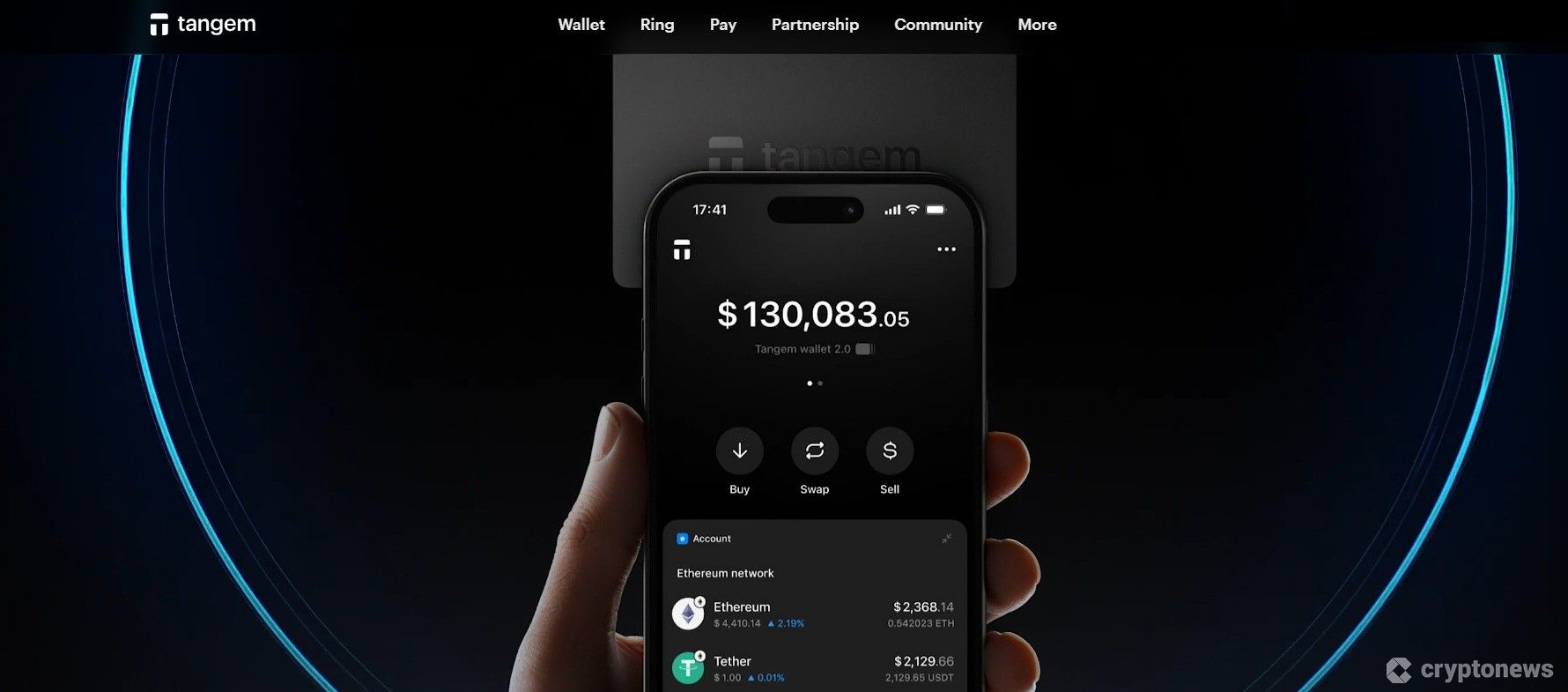
Tangem supports thousands of cryptocurrencies across 95 blockchain networks, including Bitcoin, Ethereum, Solana, XRP Ledger, BNB Smart Chain, Cardano, Base, Arbitrum, and TON. The accompanying mobile app also supports token swaps, crypto purchases, staking services, and NFT management. For Web3 users, WalletConnect provides access to dApps across Solana and a broad range of EVM networks.
Security is one of Tangem’s biggest selling points – its firmware has undergone independent reviews by Kudelski Security and Riscure, while Cure53 audited the Tangem Mobile Wallet in 2026. The card-based design is also considerably simpler than traditional hardware wallets with small screens and physical controls: you authorize transactions by tapping the Tangem device against an NFC-enabled smartphone. However, users choosing the seedless setup need to take particular care of their backup devices.
Tangem Key Features
- Wallet type: Hardware (self-custodial)
- Supported blockchains and assets: Thousands of cryptocurrencies across 95 networks
- Supported devices: Mobile app (iOS and Android) with NFC-enabled smartphone
- Transaction fees: Network fees only for transfers; third-party fees may apply to swaps and purchases
- Is it beginner-friendly? Yes. Tap-to-sign transactions and card-based backups simplify hardware wallet management
- Security audit: Audited by Kudelski Security and Riscure; mobile wallet audited by Cure53
Pros
- EAL6+ Secure Element chip
- Supports 95 blockchain networks
- Seedless and seed phrase setup options
- Two or three physical devices can provide backup access
- WalletConnect support for dApps
Cons
- Requires an NFC-enabled smartphone
- Seedless users must securely retain their backup devices
6. Zengo – Safest Decentralized Crypto Wallet for Backup and Recovery
Zengo is a non-custodial, MPC-based crypto wallet that eliminates seed phrase vulnerabilities by splitting your private keys into two parts, storing one on your device and the other on Zengo’s servers. It earned its spot on our list for its recovery kit, which lets you recover your wallet even if you delete the app. The recovery kit consists of two mandatory authentication factors: email authentication and a recovery file stored in the cloud. You can also use the 3D FaceLock option to further protect your account.
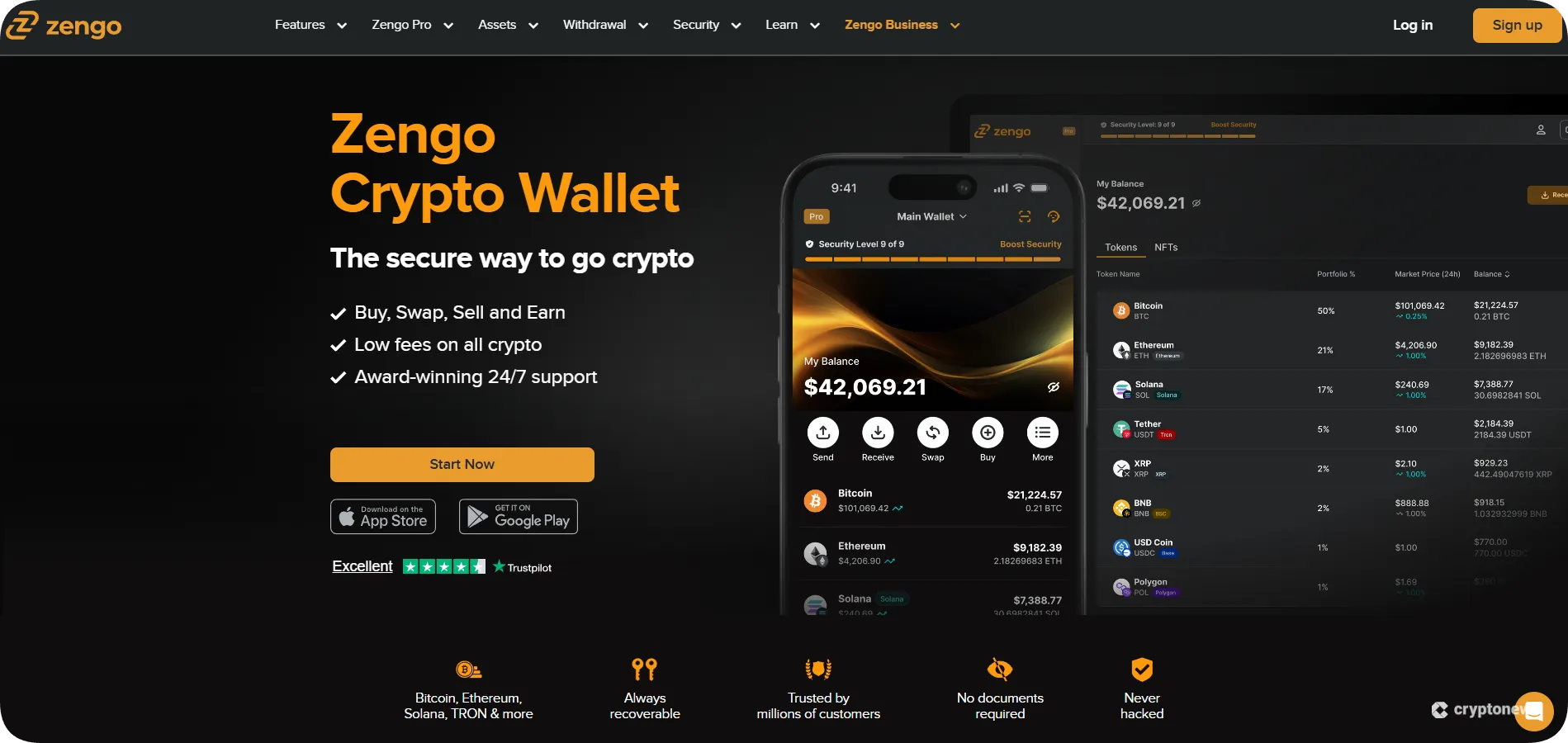
Zengo supports 1,000+ assets, including Bitcoin, Ethereum, Solana, and stablecoins on 14 blockchains while offering three-factor authentication (3FA) and biometric security. In November, Zengo also received its ISO 27001 certification, which means its safety features are now verified by one of the world’s leading security auditors. You can buy, sell, and swap assets directly within the mobile app or the recently launched desktop version.
Unlike traditional wallets, you can’t extract the private keys, which Zengo claims reduces hacking risks. While it lacks native DeFi and dApp integration, its support for WalletConnect enables external Web3 access. In March 2025, the provider added Ripple to its list of natively supported networks and is now among our top picks for the best XRP wallets. Keep in mind, however, that Zengo’s MPC technology introduces a centralized element. While the provider never has access to your funds, an issue with its servers may prevent you from signing transactions.
Zengo Key Features
- Wallet type: Software (non-custodial, MPC-based)
- Supported blockchains and assets: 1,000+, including Bitcoin, Ethereum, Polygon, and stablecoins across 14 blockchains
- Supported devices: Mobile app (iOS, Android) and Desktop via web app
- Transaction fees: Variable network fees; additional fees for swaps and purchases
- Is it beginner-friendly? Yes. Lack of seed phrase, biometric security, and an intuitive UI make it easy for newcomers
- Security audit: by Kudelski, Certik, Scorpiones, and AppSec
Pros
- No seed phrase required
- MPC technology enhances security
- 3FA recovery system
- User-friendly mobile and web app interface
- Reliable customer support
Cons
- No private key extraction
- Depends on Zengo’s servers for operation
7. OKX Wallet – Best Multi-Chain Decentralized Wallet for Web3
OKX Wallet is a non-custodial software wallet designed for users who regularly move between different blockchains and Web3 applications. Unlike assets held in an OKX exchange account, funds in OKX Wallet remain under your control. Private keys and seed phrases are stored locally on your device, and OKX cannot access or recover them.
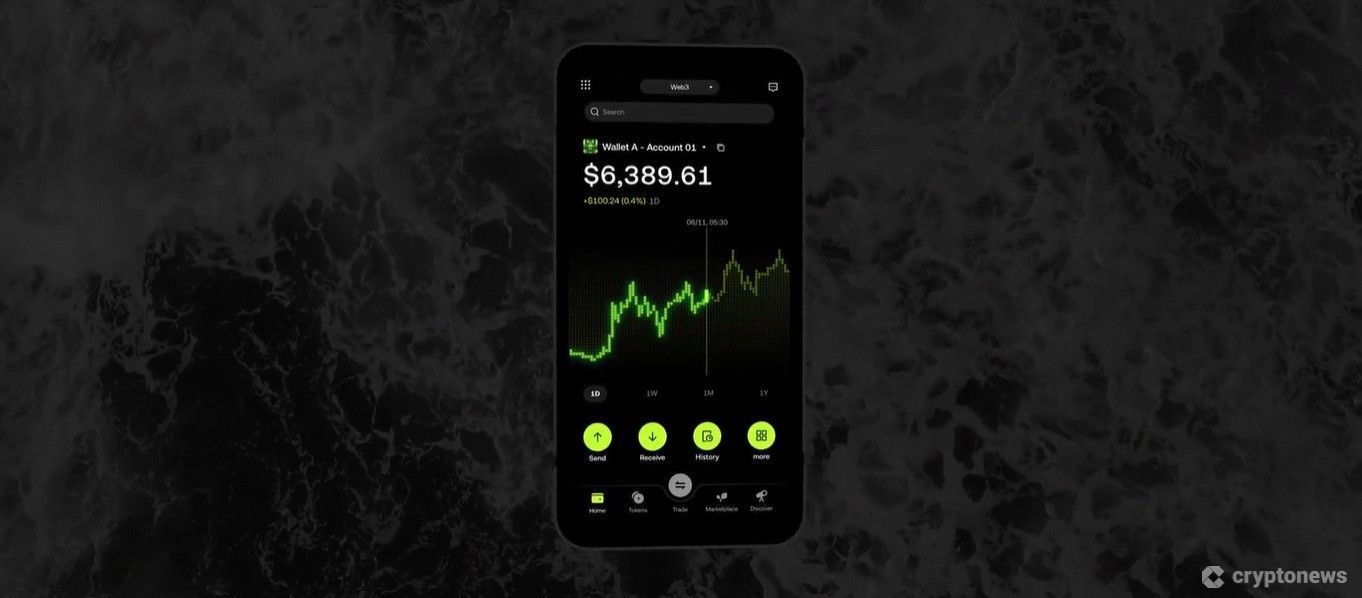
The wallet supports 70+ blockchain networks, including Bitcoin, Ethereum, Solana, BNB Smart Chain, Polygon, Avalanche, Tron, and Arbitrum. It can automatically recognize different networks rather than requiring you to switch between them manually. OKX also integrates a multi-chain and cross-chain DEX, Web3 yield tools, NFT functionality, and access to more than 1,000 dApp protocols from the same wallet.
That makes OKX Wallet particularly useful for active DeFi and Web3 users who would otherwise need several wallets and interfaces. The software itself currently has no OKX service fee, although blockchain gas and third-party protocol fees still apply. Its wallet components have also undergone third-party security audits from CertiK and SlowMist.
OKX Wallet Key Features
- Wallet type: Software (non-custodial)
- Supported blockchains and assets: 70+ networks, including BTC, ETH, SOL, BNB Smart Chain, Polygon, and Arbitrum
- Supported devices: Mobile (iOS and Android) and browser extension
- Transaction fees: No current OKX Wallet software service fee; network and third-party protocol fees apply
- Is it beginner-friendly? Yes for basic wallet functions, although its extensive DeFi and Web3 tools have a learning curve
- Security audit: Audited by CertiK and SlowMist
Pros
- Non-custodial private key storage
- Supports 70+ blockchain networks
- Access to 1,000+ dApp protocols
- Built-in multi-chain and cross-chain DEX
- Independent security audits
Cons
- Large range of Web3 tools may overwhelm beginners
- No provider recovery if you lose your seed phrase or private keys
8. Binance Wallet – Best Keyless Decentralized Wallet
Binance Wallet is a self-custodial wallet built into the Binance ecosystem, but it operates separately from the custodial balances held on the Binance exchange. Its mobile version uses multi-party computation (MPC), splitting the credentials needed to sign transactions into separate key shares rather than relying on a conventional seed phrase stored in one place.
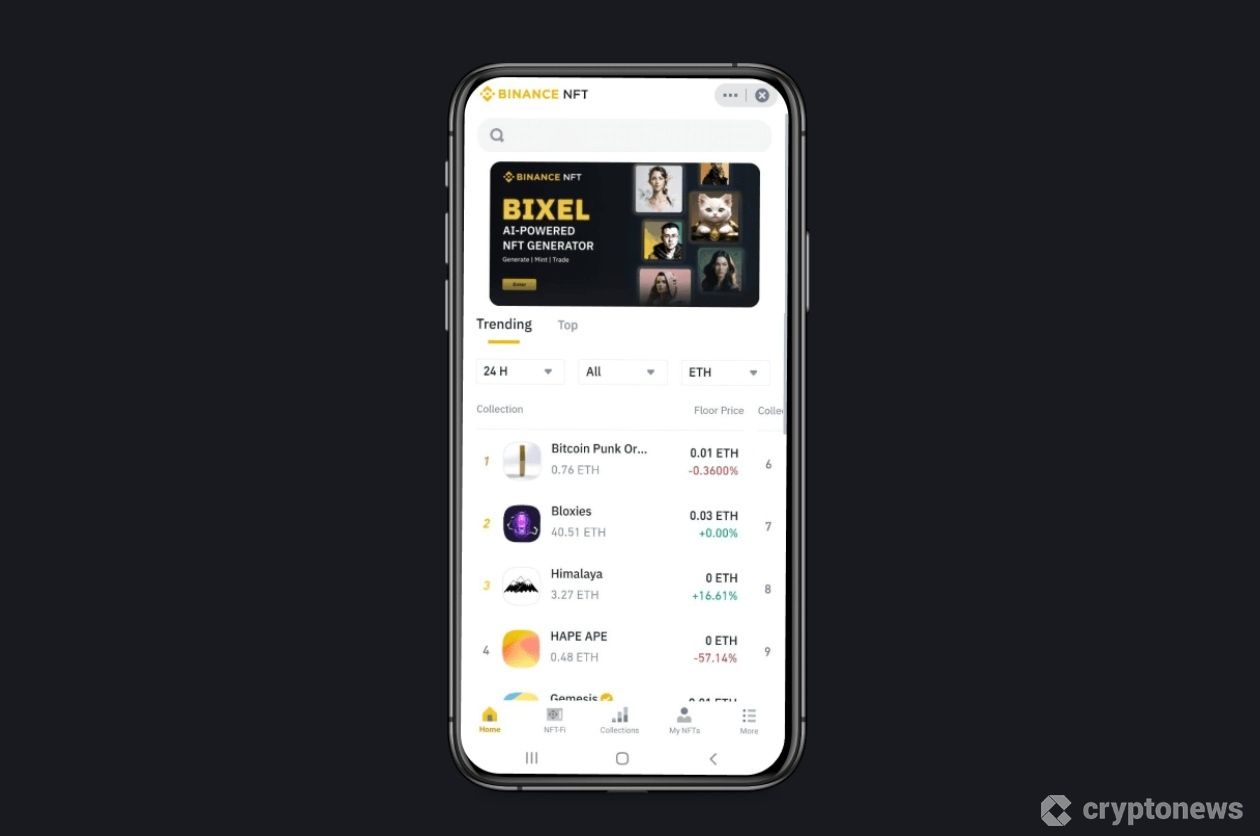
The wallet supports 60+ blockchain networks, including Ethereum, Solana, BNB Smart Chain, Polygon, and Arbitrum. Users can swap assets across chains, connect to decentralized applications, access DeFi services, and manage an on-chain portfolio from the same interface. Binance Wallet is available inside the Binance mobile app, while a web version provides a desktop-focused interface for on-chain trading.
The seedless MPC setup lowers one of the biggest barriers for new self-custody users, although it introduces a different backup process from traditional seed-phrase wallets. Binance Wallet also includes security checks designed to flag suspicious addresses, tokens, and smart contracts. Its browser wallet has undergone an independent SlowMist audit in 2026. Transfers incur standard blockchain costs, and Binance also charges service fees for some wallet swaps, depending on the assets and interface used.
Binance Wallet Key Features
- Wallet type: Software (self-custodial, MPC-based)
- Supported blockchains and assets: 60+ networks, including Ethereum, Solana, BNB Smart Chain, Polygon, and Arbitrum
- Supported devices: Mobile through the Binance app and web/desktop interface
- Transaction fees: Network fees apply; some swaps carry Binance Wallet service fees
- Is it beginner-friendly? Yes. Its keyless MPC setup removes the need to manage a conventional seed phrase
- Security audit: Binance Wallet browser extension audited by SlowMist in 2026
Pros
- Self-custodial MPC architecture
- No traditional seed phrase required on mobile
- Supports 60+ blockchain networks
- Cross-chain swaps and extensive dApp access
- Available on both mobile and desktop
Cons
- MPC backup is less familiar than a traditional seed phrase
- Service fees apply to some in-wallet swaps
What Are the Different Types of Decentralized Wallets?
There are two types of decentralized cryptocurrency wallets: software, which come as desktop, mobile, and browser applications, and hardware, which are physical devices. Let’s explore them in more detail:
Software (Hot) Wallets
Most crypto investors opt for a software-based decentralized wallet. Software wallets are often referred to as ‘hot storage’. This is because the funds remain online at all times, increasing both convenience and risk.
Software wallets come in many forms, but mobile apps are particularly popular. Providers like Best Wallet, Zengo, and OKX Wallet offer mobile apps for managing crypto on iOS and Android devices.
Mobile wallets are very convenient for actively managing crypto portfolios. At the click of a button, you can send, receive, and trade crypto right from your smartphone.
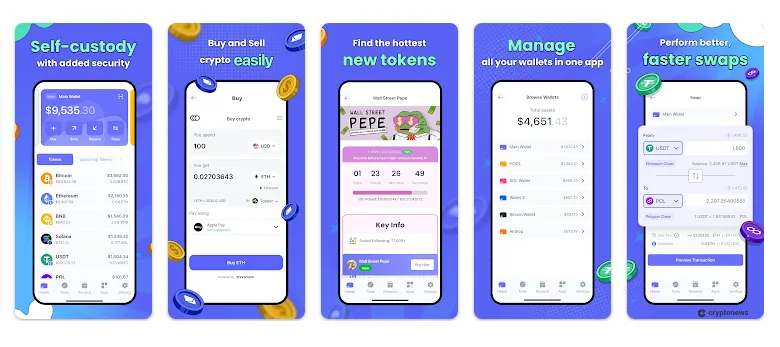
Software wallets also come with browser extensions. For example, OKX Wallet offers a browser extension alongside its mobile app, giving users another way to access Web3 applications from a desktop browser.
Some decentralized wallets also offer desktop or web-based access. Binance Wallet provides a desktop-focused web interface, while hardware wallets such as Ledger use companion software for managing assets and transactions.
Hardware (Cold) Wallets
Hardware wallets allow you to store your private keys on a physical device, which keeps them offline at all times. To transfer crypto to another wallet, you must enter a PIN on the hardware device, scan a QR code, or use biometrics, which offers an ultra-secure way to store large amounts of crypto.
However, cold wallets are far from convenient for active crypto traders. That’s because making quick trades is cumbersome, considering you need access to the physical device.
The hardware wallets featured in our rankings include Ledger, Trezor, Ellipal, and Tangem. Each uses a different approach to offline key storage, ranging from traditional hardware devices to air-gapped QR signing and card-based storage.
However, keep in mind that you’ll need to provide some personal and financial information when buying a hardware wallet online.
Centralized vs. Decentralized Wallets
The main difference between centralized and decentralized wallets is who holds the responsibility of ‘custodianship’. Centralized wallet providers are tasked with keeping your cryptocurrencies safe. Conversely, decentralized wallets give you full control – meaning you’re responsible for looking after their private keys.
In the case of centralized wallets, private keys are secured by the provider. This is often a crypto exchange or broker. As such, you don’t have access to your private keys. In turn, if the custodian is hacked or goes bankrupt (like FTX), your crypto funds are at risk.
Decentralized crypto wallets, on the other hand, give you direct control over your funds and the credentials used to authorize transactions. This means that you’re not relying on a third-party custodian. You can send and receive funds without needing approval from another person or entity.
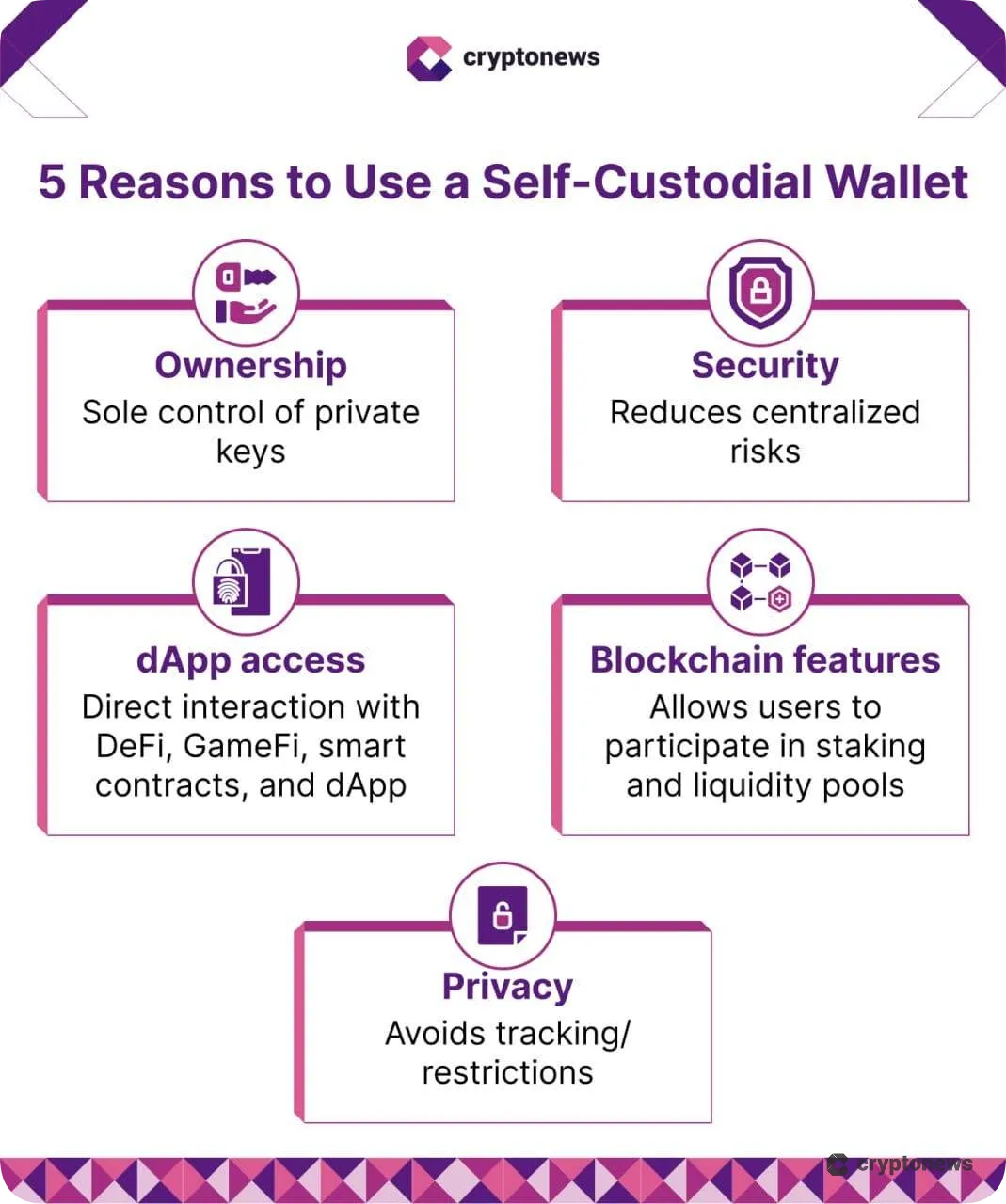
However, there’s nowhere to turn if your wallet is hacked or you lose your private keys. Therefore, while the best decentralized wallets give you control of your wealth, you should take the appropriate security measures.
This means keeping the private keys offline at all times, preferably written down on a sheet of paper. In doing so, you can recover your wallet if you forget your password or if the device you use your wallet on is lost or stolen.
Decentralized and Centralized Wallets: Head-to-Head Comparison
If you’re still wondering if a decentralized wallet will suit your needs, here’s a side-by-side comparison with centralized wallets that will help you make an informed decision:
| Decentralized Wallets | Centralized Wallets | |
| Control of Funds (Custody) | You have full control over your private keys and true ownership of your funds. | The wallet provider controls the private keys and, by extension, the funds. |
| Security | High, if private keys are stored safely. You’re responsible for key management. | Depends on the provider’s safety measures; vulnerable to hacks or mismanagement. |
| Ease of Use | Can be complex for beginners; requires understanding of key management and backups. | User-friendly, often with simple interfaces and customer support. |
| Backup and Recovery | Recovery via seed phrase or private key; no third-party assistance. | Recovery is available through provider support (e.g., password reset); no seed phrase is provided. |
| Privacy | Higher privacy; no KYC required. | Often requires KYC, which means providing personal data. |
| DeFi/ dApp Integration | Seamless integration with dApps and DeFi platforms. | Limited or no direct integration with DeFi; often restricted to platform services. |
| Risks | Loss of private keys or seed phrase results in permanent loss of funds. | Risk of provider hacks, asset mismanagement, or regulatory issues; less user control. |
| Best For | Users who prioritize control, privacy, and flexibility. | Beginners or those who value convenience and customer support. |
How Secure Are Decentralized Crypto Wallets?
Decentralized wallets are secure, but their non-custodial approach puts more responsibility on the user. Instead of an exchange controlling your funds, you control the private keys, key shares, or other credentials needed to authorize transactions. With traditional wallets, losing or exposing a seed phrase can mean permanently losing access to your crypto.
Decentralized software wallets are at risk from remote hacking attempts and theft. As such, you must ensure that you follow sensible security practices to keep your crypto funds safe.
For example, those using a mobile wallet should ensure that they’ve enabled PIN or biometric protection. This should be in addition to a smartphone’s lock screen password. If someone is able to bypass these security measures, they’ll have access to the wallet. This is also the case for desktop and browser extension wallets.
Another way for hackers to access a decentralized wallet is through phishing links. For example, a scammer might impersonate the wallet’s support team and send a link for you to click.
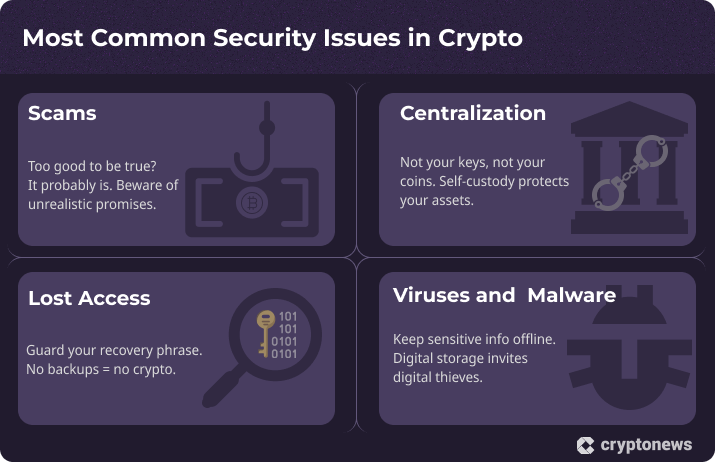
Unwittingly, the link might install a virus or keylogger, enabling the scammer to access the wallet remotely. The safeguard here is to never click links from unknown sources, whether on social media or in emails.
The safest option is to keep the crypto wallet offline at all times. For example, consider installing the wallet on a cheap smartphone that you never connect to the internet.
Hardware wallets are more secure than software ones because they store your private keys offline. However, this doesn’t make them impenetrable. For example, on Dec. 14, 2023, Ledger detected an exploit using the Ledger Connect Kit. Fortunately, the vulnerability was quickly spotted and resolved.
This is why you should always use reputable wallet providers that implement robust security measures, such as providing regular firmware updates and security audits. Moreover, you should never share your private keys or recovery phrases.
Ultimately, decentralized wallets are safe, but you must also take responsibility. You need to consider that increased convenience often leads to reduced security.
Can a Decentralized Wallet Be Traced?
Yes, decentralized wallets can be traced, but linking the wallet to your identity is much more difficult than with centralized wallets. While wallet transactions on public blockchains are visible to anyone, decentralized wallets are private by default, as they don’t require personal information through KYC procedures.
Should I Move My Crypto to a Decentralized Wallet?
Whether you should move your crypto to a decentralized wallet depends on how much risk you’re comfortable with and how confident you are managing security yourself.
When your crypto is on a centralized exchange, the exchange holds the funds on your behalf. You don’t control the private keys; you only have an account balance and a legal claim to your assets. This means you’re exposed to risks like the exchange going bankrupt, freezing accounts, misusing funds, or being forced by regulators to seize assets.
With a decentralized (a.k.a. self-custodial) wallet, you control your crypto directly. Transactions are approved using your private key on your own device and sent straight to the blockchain. No third party can move or freeze your funds without your permission.
The trade-off is responsibility. When you self-custody, you are fully in charge of security. Most wallets use a recovery phrase (often 12 or 24 words) to generate your private keys. If that phrase is lost, stolen, or exposed through phishing or malware, your funds can be permanently lost with no way to recover them.
More advanced setups can reduce some risks. For example, multi-party computation (MPC) wallets split control across multiple key shares, so there’s no single private key to steal. Hardware wallets store keys in a separate physical device, keeping them isolated from your computer or phone and protecting against many online attacks.
You should consider moving to a decentralized wallet if:
- You plan to hold crypto long term (a “cold storage” use case).
- You want full control and resistance to account freezes or censorship.
- You’re comfortable learning how backups and key security work.
You may prefer keeping some funds on an exchange if:
- You trade often and need fast access to liquidity.
- You’re not ready to manage recovery phrases, device security, and phishing risks.
- You rely on easy connections to bank accounts and fiat on/off-ramps.
A common best practice is a hybrid approach. Keep smaller amounts on trusted exchanges for trading and convenience, and store long-term holdings in a self-custodial wallet, ideally one that’s hardware-based or uses MPC.
What Fees Do Decentralized Wallets Charge?
Decentralized wallets typically don’t charge fees for storing or holding crypto, but you may come across several types of fees when interacting with blockchains or decentralized applications, including:
- Network fee
- Token swap or fiat on-ramp fee
- DEX liquidity fee
- Routing or service fee
- Third-party fees
The most common cost is the network fee (also known as “gas fee”). This fee is paid to blockchain validators or miners for processing transactions, such as sending tokens, swapping assets, or interacting with smart contracts.
Gas fees vary depending on the network and congestion levels. For example, Ethereum transactions can be relatively expensive during high demand, while networks like Solana or Polygon usually have much lower fees.
Many decentralized wallets also integrate token swaps or fiat on-ramps, which can include additional charges. When swapping tokens inside the wallet, you may pay a DEX liquidity fee, often around 0.1%–0.3%, and sometimes a small wallet routing or service fee for finding the best trading route.
If you buy crypto with a credit card or bank transfer through the wallet, a third-party payment processor fee may apply, too. These fees often range from 1% to 5%, depending on the provider and payment method.
What Are the Benefits of Using a Decentralized Crypto Wallet?
Some of the core benefits decentralized wallets offer include sole custody of the private keys, access to dApps, and faster transaction times.
Still not sure if a decentralized wallet is the best option? Here are some of the benefits of using one.
🔑 True Ownership of Your Crypto Tokens
The main attraction of decentralized wallets is that you control your funds. That’s because only you can authorize outgoing transactions, and there’s no third party that could block them or misuse your funds.
Moreover, entities, whether that’s the wallet provider or the government, cannot access your crypto assets. This allows you to store wealth outside of the conventional financial system.
In other words, you don’t need to trust decentralized wallet app providers as you do with centralized exchanges. The best options are also open-source, so you can verify that the provider has no access to your funds.
📦 Store a Large Number of Coins
When using a centralized wallet, the number of supported tokens is often limited, as you can only store tokens that the exchange supports. In comparison, the best decentralized providers support thousands, sometimes millions, of cryptocurrencies.
They also let you add custom tokens – as long as the wallet supports a blockchain network, you can manually add any token on that network by simply pasting its contract into the wallet.
🌐 Access Web3 Decentralized Applications (dApps)
The best decentralized crypto wallets provide seamless access to Web3 dApps. Some of the most commonly supported dApps include:
- Uniswap — the most popular DEX within the Ethereum ecosystem
- SushiSwap — a Uniswap fork that offers token swaps, liquidity provision, and yield farming
- PancakeSwap — a Binance Smart Chain-based DEX, popular for its low fees
- OpenSea — a marketplace for buying, selling, and trading NFTs
- Compound — a decentralized lending protocol that allows you to borrow and lend crypto assets while earning interest
- Yearn.Finance — a platform that automatically moves your crypto across various DeFi protocols to maximize interest returns
But there are hundreds more. Crucially, these dApps offer access to decentralized finance tools, such as token swaps, staking, yield farming, and dual investments.
⚡ Use Decentralized Exchanges
Unlike centralized platforms, decentralized crypto exchanges require you to connect a wallet and trade with the funds in it, instead of depositing with a credit card or a bank transfer. DEXs are an excellent option for users who want to trade anonymously or access niche tokens that aren’t usually available on major exchanges.
Popular options you can access with a decentralized wallet include Hyperliquid (for high-volume trading), Uniswap (for Ethereum ecosystem tokens), PumpSwap (for meme coins), and Raydium (for Solana-based coins).
👤 Anonymity
Another popular feature of decentralized crypto wallets is anonymity. This means you can create a wallet without providing any personal information or contact details. Depending on the wallet, access may be secured through private keys, recovery credentials, hardware devices, biometrics, or other authentication methods.
Keep in mind, however, that transactions on public blockchains are visible to anyone, so if anonymity is a top priority for you, you should avoid sending funds from your decentralized wallet to a centralized exchange that has your personal data.
What Are the Drawbacks and Risks of Using a Decentralized Wallet for Crypto?
Although the advantages of decentralized, self-custody wallets are plenty, the main drawbacks you need to consider are the increased responsibility for your assets’ security, the usual complexity of decentralized wallets, and the lack of some quality-of-life features. Let’s unpack that in more detail:

Furthermore, decentralized wallets tend to be complex. Setting up, managing, and securely storing private keys or seed phrases may prove challenging if you lack the know-how. Interaction with various dApps, setting up gas fees and slippage, and executing cross-chain swaps is also usually difficult for beginners.
Finally, even the best decentralized wallets often lack the extensive features of centralized platforms. In many cases, you’ll find limited fiat on and off-ramp options, a lack of integrated trading capabilities (especially derivatives trading), and spotty customer support.
How to Use a Decentralized Crypto Wallet: Step-by-Step Guide
Before wrapping up this guide, let’s go over the steps to download and start using a decentralized wallet. Our recommended choice is Best Wallet, a user-friendly, free mobile app available on iOS and Android.
Follow these simple steps to set up Best Wallet and begin managing your crypto today:
Step 1: Download the Best Wallet App
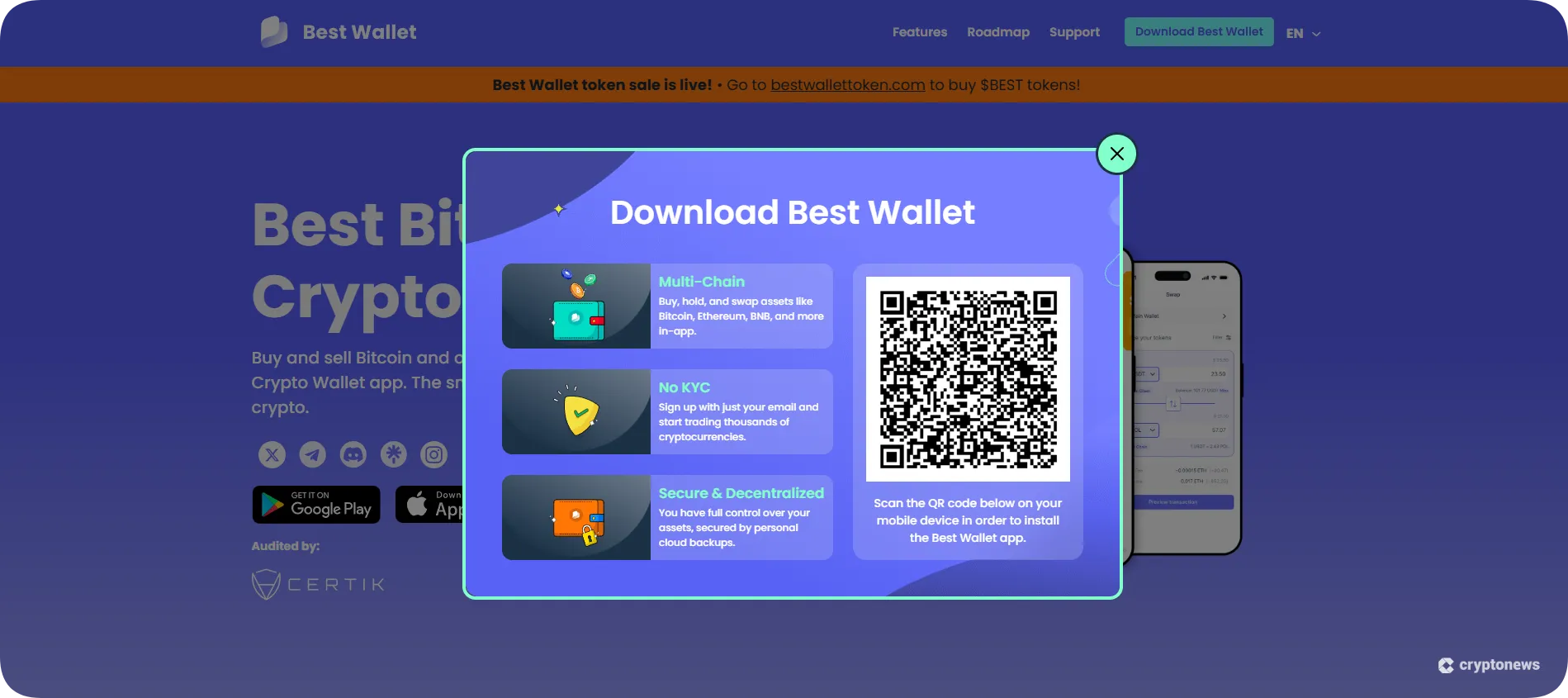
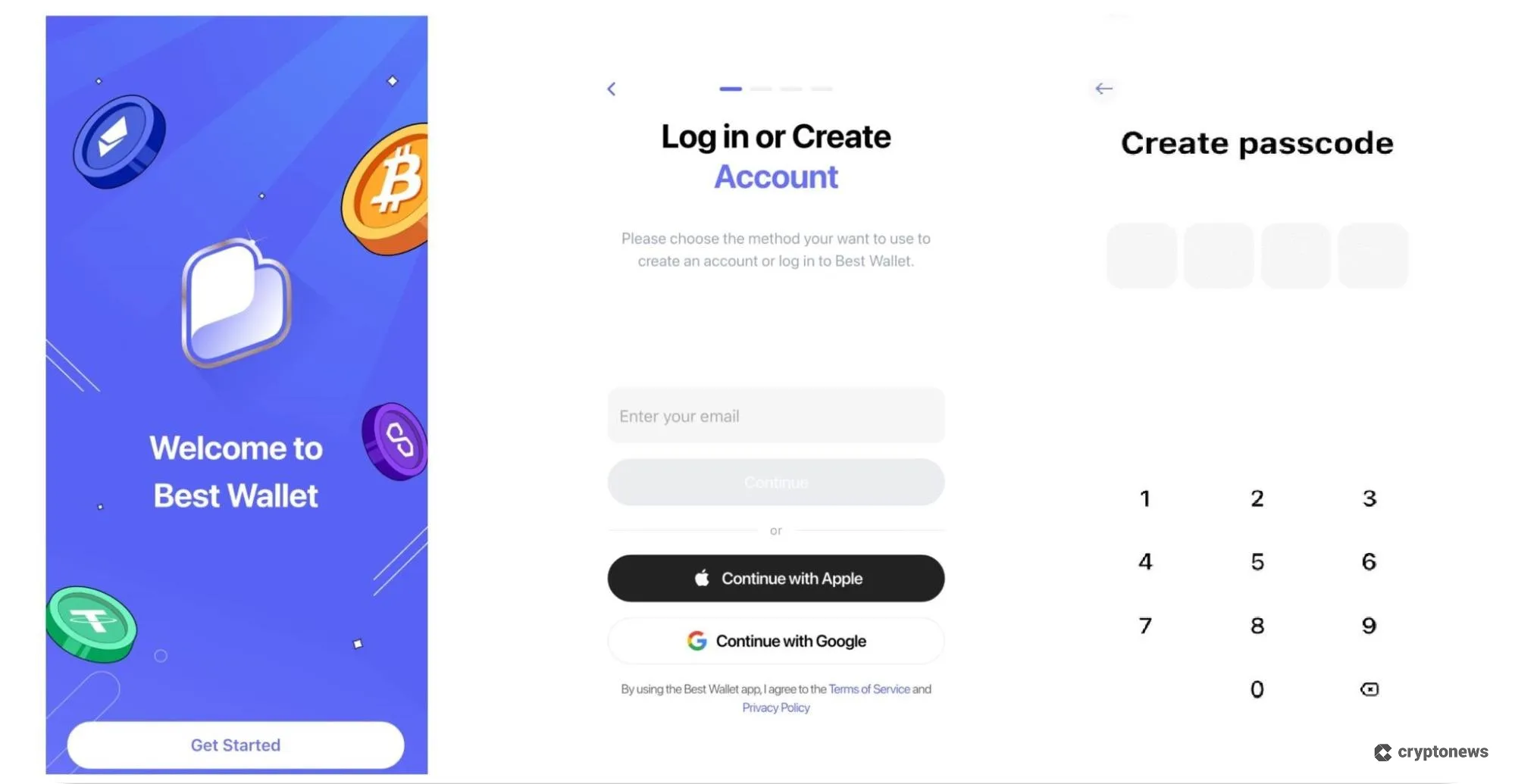
Visit the official Best Wallet website and click the Download button. Then, scan the QR code with your mobile device to download the app. Alternatively, you can go to the Google Play Store or the Apple App Store, search for Best Wallet, and download the app. The installation is quick and completely free.
Step 2: Create an Account
Once you’ve installed the app, open it and enter an email address to set up your account. You’ll receive a verification link that you must click. If you want to maximize your privacy, we recommend using a burner email that isn’t linked to your identity.
Step 3: Secure Your Wallet
The app will prompt you to back up your private key. Since Best Wallet uses Multi-Party Computation (MPC) for decentralized key storage, you won’t get a seed phrase. Instead, the wallet will split your private key into separate parts and securely encrypt them on your device and on the cloud. Best Wallet will also require you to select a passcode and set up 2FA and/or biometric authentication (fingerprint/FaceID login) for added security.
Step 4: Start Using Best Wallet
Once set up, you can now send, receive, and manage your crypto assets directly from the Best Wallet app.
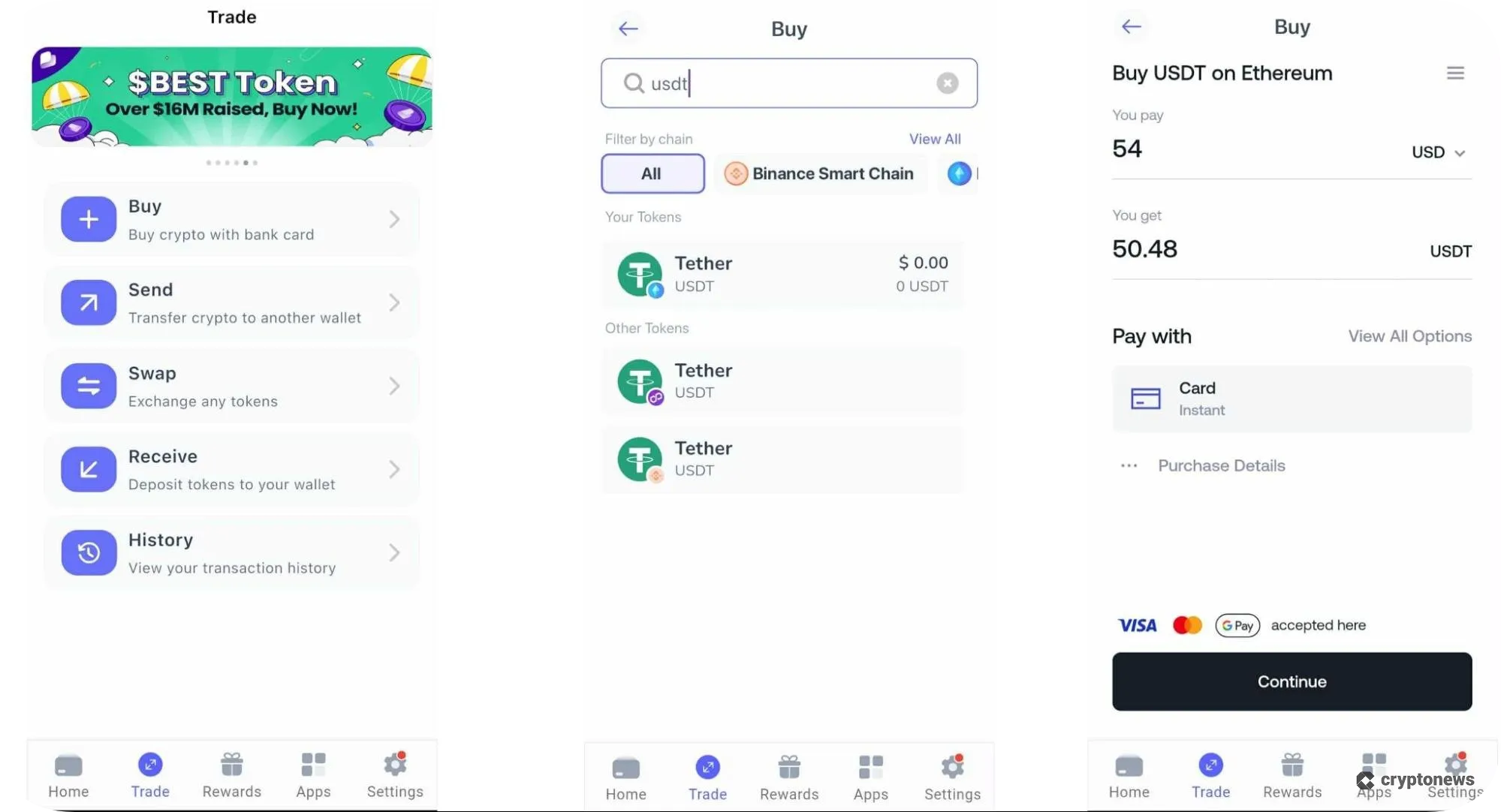
You can also buy crypto with fiat, use various decentralized applications, keep up with the latest crypto news, invest in presales, and more.
Visit Best WalletMethodology: How We Selected the Best Decentralized Wallets
Selecting the best decentralized wallets requires a rigorous evaluation of key factors that impact security, usability, and functionality. During our research, we prioritized security and private key control, ensuring you retain full custody of your assets
We also assessed multi-chain support, as broader compatibility enhances flexibility for trading, staking, and DeFi. Ease of use and UX play a crucial role, while backup and recovery options ensure funds aren’t lost. Finally, smart contracts and DeFi integration determine a wallet’s effectiveness in Web3 interactions. Here’s how we ranked the providers in our list of decentralized wallets:
Security and Private Key Control (25%)
Security and private key control determine whether you truly own your crypto. A decentralized wallet should be non-custodial, meaning only you hold the private keys. If a wallet manages your keys (like centralized exchanges do), you don’t truly own your assets — you trust a third party.
We assessed security by checking open-source code, audit history, and encryption standards. Open-source wallets like Trezor allow public scrutiny, while independent audits from firms such as CertiK, SlowMist, Kudelski Security, and others can provide additional assurance about a wallet’s security practices.
Furthermore, multi-signature support and hardware wallet integration reduce attack risks. If a wallet lacks these, it’s not truly secure. Never use wallets without a verified audit or recovery options.
Smart Contract and DeFi Integration (25%)
Smart contract and DeFi integration determine how efficiently you interact with dApps, DEXs, and staking platforms. A wallet should enable secure, seamless Web3 connections without exposing private keys.
We analyzed dApp compatibility, transaction previews, and contract risk analysis. If a wallet lacks multi-chain support or staking features, DeFi usability is limited. A good DeFi wallet ensures secure, efficient, and flexible Web3 interactions.
Supported Cryptocurrencies and Networks (25%)
A wallet’s supported cryptocurrencies and networks determine what assets you can store, trade, and interact with. A good decentralized wallet supports multiple blockchains, such as Ethereum (ERC-20), Bitcoin, Solana (SPL), and BSC (BEP-20).
To assess this, we checked native asset support, custom token imports, and cross-chain functionality. For instance, Best Wallet supports over 60 blockchain networks, while OKX Wallet supports 70+ networks and is designed around multi-chain Web3 access.
Multi-chain support matters for DeFi, NFTs, and staking. If a wallet doesn’t support Layer 2 networks like Arbitrum and Optimism or custom RPCs, you’ll face higher fees and limited dApp access. A flexible, multi-network wallet ensures better usability and asset management.
Ease of Use and User Experience (UX) (15%)
Ease of use and UX impact how efficiently you manage crypto. A good wallet should be intuitive, responsive, and error-resistant. We evaluated our prospects’ UX by testing transaction flows, gas fee customization, and multi-platform syncing.
Gas control matters; some wallets let you adjust fees manually, while others offer fewer options. Poor fee settings can lead to failed or costly transactions. Multi-platform syncing ensures seamless access across devices — think browser extensions, desktop, and mobile apps.
A clunky UI or missing sync features make Web3 interactions frustrating. We looked for clear signing prompts, minimal approval clicks, and smooth dApp connections. A wallet that confuses users increases risks — one wrong click can drain funds. Simplicity and control are essential.
Backup and Recovery Options (10%)
Backup and recovery options ensure you don’t lose access to your crypto if your device is lost, stolen, or compromised. Without proper recovery, your funds are gone forever. We examined this by checking seed phrase security, encrypted backups, and alternative recovery methods. A strong wallet provides a 12-24 word seed phrase and local encrypted backups.
You should avoid wallets that store keys on centralized servers, as they could expose you to hacks. Multi-device support also matters, particularly when users need to restore or access a wallet across mobile, desktop, or hardware interfaces. Essentially, a good wallet should let you recover access securely without creating unnecessary points of failure.
Conclusion: What Is the Best Decentralized Wallet in 2026?
Choosing the right decentralized wallet is essential for maintaining direct control over your crypto assets. Unlike centralized options, decentralized wallets let you control the credentials used to authorize transactions, reducing third-party risks such as exchange hacks, regulatory seizures, and account freezes.
However, each wallet offers different security measures, blockchain support, and user experiences, making research crucial before selecting one. Security, backup options, and ease of use should be top priorities when selecting a wallet. Based on those factors, we recommend Best Wallet as the top decentralized wallet due to its non-custodial build, integrated DEX, and advanced security features.
However, regardless of the wallet you choose, you should always follow best security practices, including safely storing your seed phrase and avoiding phishing attacks and scams. Crypto security is ultimately your responsibility when utilizing decentralized wallets — choosing a secure wallet is only the first step.
Visit Best WalletFAQs
What is the safest decentralized crypto wallet?
Is Coinbase Wallet decentralized or centralized?
Is Binance Wallet decentralized or centralized?
Can the IRS see your crypto wallet?
Is Tangem a decentralized wallet?
Which cryptos are truly decentralized?
Which is the best decentralized wallet for low fees?
How to get money out of your decentralized wallet?
Can decentralized crypto wallets be used with trading bots?
What is the best decentralized wallet to store XRP?
References
- Does Best Wallet Have a KYC Process? (Best Wallet)
- Supported Coins & Tokens (Ledger)
- Security Incident Report (Ledger)
- Ellipal Cold Wallet Comparison (Ellipal)
- What is Zengo’s Recovery Kit (Zengo)
- Zengo launches support for XRP (Zengo)
2M+
250+
8
70







 in numbers

About Cryptonews
Our goal is to offer a comprehensive and objective perspective on the cryptocurrency market, enabling our readers to make informed decisions in this ever-changing landscape.
Our editorial team of more than 70 crypto professionals works to maintain the highest standards of journalism and ethics. We follow strict editorial guidelines to ensure the integrity and credibility of our content.
Whether you’re looking for breaking news, expert opinions, or market insights, Cryptonews has been your go-to destination for everything cryptocurrency since 2017.