SEC Plan to Scrap Rule 611 Could Be the Biggest Regulatory Unlock Yet for Crypto Tokenized US Stocks



The SEC just removed the single biggest legal obstacle standing between Crypto DeFi and US equity markets. On June 11, the agency formally proposed to rescind Rule 611 of Regulation NMS, the trade-through prohibition that has governed stock order routing since 2005, along with Rule 610(e), which bans locked and crossed quotations.
For tokenized stocks, the structural implications are immediate and profound.
Galaxy Digital’s head of research Alex Thorn called the proposal “one of the biggest unlocks yet for tokenized stocks”, the removal of what he described as “one of the biggest structural barriers to tokenized US equities trading in DeFi.”
The proposal is now open for a 60-day public comment period before the SEC moves toward a final rule.
The move sits inside the SEC’s broader Project Crypto initiative, launched in August 2025 to modernize the regulatory framework for digital assets and blockchain technology in US markets. Rule 611’s repeal, if finalized, would be the most consequential piece of that puzzle yet.
Discover: The Best Crypto to Diversify Your Portfolio
Rule 611 and the Order Protection Rule: Why AMMs Have Been Structurally Illegal
Rule 611, also called the Order Protection Rule, was adopted in 2005 as the centerpiece of Regulation NMS. It prohibits trade-throughs, executing a stock order at a price worse than the best protected quote available on any other registered exchange.
In theory, it hard-wires the National Best Bid and Offer (NBBO) into every equity transaction across all venues.
The problem for tokenized equities is structural and unsolvable under the current framework. A DeFi AMM prices trades algorithmically, against whatever the pool price is at the moment of execution, derived from a constant-product formula rather than by routing to the NBBO.
Thorn put it plainly: any AMM pool offering tokenized US stocks “would commit trade-throughs constantly and arguably be an illegal trading center.” Rule 610(e) compounds the problem – AMMs cannot halt a trade when a better quote exists elsewhere, meaning they would be in continuous violation on that front too.
The SEC’s proposed replacement is a principles-based best execution framework applied at the broker-dealer level rather than on every individual trade across venues.
That shift is what makes AMM-based tokenized equities workable, brokers interfacing with DeFi pools would need to demonstrate policies reasonably designed to achieve best execution for clients overall, without needing to guarantee NBBO compliance on each atomic swap.
Commissioner Hester Peirce, in her supporting statement, argued the existing Order Protection Rule had “helped fuel disorder” by encouraging exchange proliferation and suppressing innovation rather than protecting investors.
Discover: The Best Token Presales
Crypto RWA Tokenization Stakes: The Market This SEC Rule Change Was Blocking
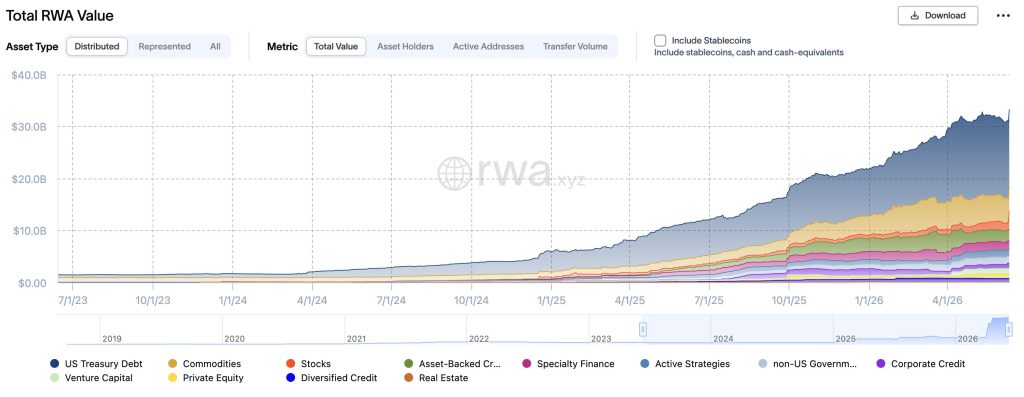
Tokenized equities sit inside the fast-expanding real-world asset (RWA) category, where institutional capital has been steadily building infrastructure for on-chain versions of traditional financial instruments.
Platforms including Robinhood and Kraken have been developing tokenized stock capabilities, and the SEC had reportedly prepared a separate innovation exemption for authentic tokenized versions of exchange-listed US equities, backed 1:1 by underlying shares at a qualified custodian, before postponing its release last month after traditional exchange officials raised execution concerns.
Rescinding Rule 611 resolves the core incompatibility that made that exemption legally fraught in the first place.
Policy analysts at TD Cowen’s Washington Research Group expect a final SEC vote on rescission by Q1 2027, assuming a standard comment-and-reproposal cycle, a timeline that would align with other market-structure reforms under Regulation NMS modernization.
International regulatory movement is also accelerating the pressure: Japan’s recent reclassification of crypto assets as financial instruments signals that competing jurisdictions are not waiting for Washington to act.
The competitive window is real. Wall Street is not debating tokenization anymore, it is building the rails. Citi, DTCC, and a growing roster of prime brokers are already deep into on-chain settlement infrastructure, and the removal of Rule 611 clears the last major regulatory obstacle for AMM-based tokenized US equity trading to operate at scale.
- XRP News: SEC Opens AMM Door for Tokenized Stocks as XRPL Already Has the Tech
- Elon Musk Grok AI Predicts The Price of XRP by The End of 2026
- XRP Price Under Pressure: Spot Selling Overwhelms ETF Demand
- XRP Price Prediction: October is a Weak Month for Ripple, But 3 Metrics Point Bullish
- Elon Musk Grok AI Just Made a Surprisingly Bullish XRP Price Predicts
2M+
250+
8
70





- XRP News: SEC Opens AMM Door for Tokenized Stocks as XRPL Already Has the Tech
- Elon Musk Grok AI Predicts The Price of XRP by The End of 2026
- XRP Price Under Pressure: Spot Selling Overwhelms ETF Demand
- XRP Price Prediction: October is a Weak Month for Ripple, But 3 Metrics Point Bullish
- Elon Musk Grok AI Just Made a Surprisingly Bullish XRP Price Predicts
More Articles

 in numbers