Pons V2 Exemptions Put Robinhood Chain Memecoins Under Scrutiny



A reported $18.43M pulled from 53 memecoin launches sounds like a network-wide failure. The documented evidence, however, sits almost entirely in token-launch mechanics, wallet funding trails, and anti-sniping exemptions on a single launchpad, not in the Robinhood Chain base layer.
Pseudonymous onchain analyst Wazz published a thread on Sunday alleging that one coordinated operation extracted at least $18.43M from 53 token launches on Robinhood Chain between July 10 and September 21.
The Block reviewed the claims and confirmed the sniping pattern on 10 of the listed launches, plus one of the fund flows Wazz used to link the launches. It did not independently replicate the $18.43M headline figure.
The Robinhood Chain Memecoin Boom Created the Setting for the Allegations, But How?
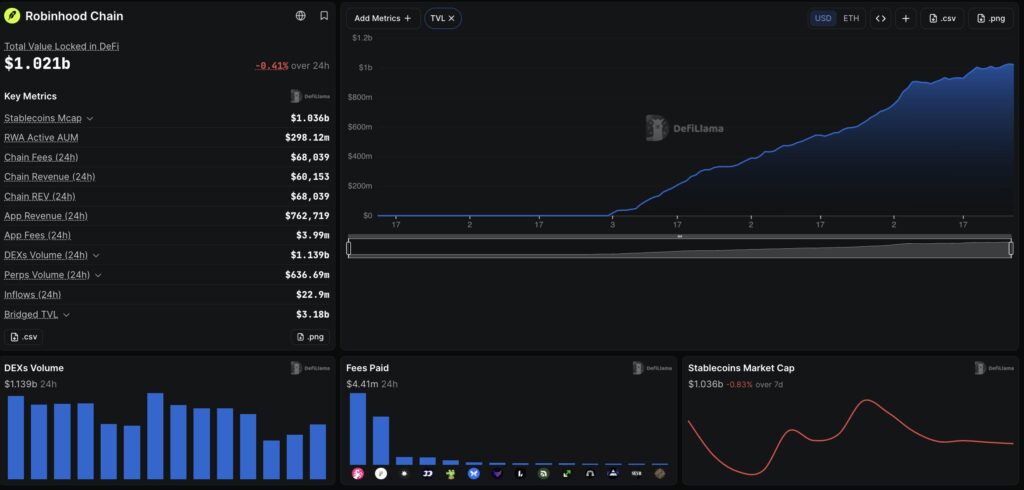
Robinhood launched Robinhood Chain, an Ethereum layer 2 built with Arbitrum’s tech stack, on July 1. Memecoins and stock-linked tokens have driven the bulk of the network’s trading activity since, with fees from the Pons launchpad pushing the chain to a record $6M in fees in a single day earlier this month.
Robinhood’s decision to subsidize gas costs on the chain has kept deployment cheap and consistent, which is exactly what makes a 53-launch, two-and-a-half-month extraction scheme mathematically plausible.
High-volume, low-friction token issuance is not itself evidence of an exploit. It is the terrain on which this kind of operation gets built.
The Evidence Points to Coordinated Launches, Not a Base-Layer Exploit
Wazz says nearly every launch on the list was sniped for 70% or more of supply by bundles of 70 to 200 wallets, most of them deployed through Pons V2.
The analyst linked 45 launches by tracing payments from one launch’s collection wallet directly into the next token’s funding wallet, four more through private keys used to sign batch funding transactions, and another four through a shared collector wallet.
CRUMBS topped the list at $3.12M, followed by LEGS at $2.9M and PINK at $1.44M. Wazz says two additional serial deployers extracting funds from Robinhood Chain couldn’t be linked to this group, meaning total exposure across the ecosystem could exceed the headline number.
None of this establishes who was behind the wallets. Wazz’s attribution rests on transaction patterns, shared keys, recurring funding routes, and common collector addresses, which is strong circumstantial evidence of coordination but not proof of a real-world identity or legal responsibility.
How Pons V2’s Anti-Sniping Mechanism Was Used on Robinhood Chain
Pons V2 sells new tokens along a bonding curve and, per its own documentation, charges a 99% snipe tax on buys in the first seconds after launch, falling to zero within about five seconds.
Creators can waive that tax by bundling opening buys across up to 32 wallets, a legitimate feature for coordinated launches that becomes a liability the moment it’s abused.
In nine launches from late August onward reviewed by The Block, creators exempted 15 to 25 wallets from the tax, and a single transaction one to three blocks later bought tokens for every one of them at once.
That transaction emptied the bonding curve and pushed the token straight into a Uniswap v4 pool, leaving the creator and exempt wallets holding 82% to 86% of supply before public buyers had a chance.
All nine opening buys ran through one unverified contract created on August 28. Of the 53 launches on Wazz’s list, 25 used it. Wazz described it as a commercial bundling tool with many unrelated users.
A looser version of the same pattern appeared earlier, on August 12, when EQUITY’s creator exempted 31 wallets, and 21 of them bought within about a second of launch, leaving the group with 65.7% of the supply.
DEED Shows How One Launch’s Proceeds Could Fund Another
The fund-flow investigation centers on DEED, which Wazz claims initiated the inquiry. On September 14, 98 wallets holding the earlier token DRAFT transferred 179.88 ETH to one address in under three seconds, then moved it to another wallet starting with 0x9d06.
On September 21, this wallet routed funds to a wallet beginning with 0xf268, which sent 15.98 ETH to 50 addresses, including DEED’s creator and other exempt wallets. DEED launched 40 minutes later, with these wallets holding 86% of the supply.
The Block tracked the sale of 130.75 ETH from 92 wallets funded through 0xf268 and an additional 69.06 ETH in creator fees, totaling around 199.8 ETH (approximately $535,000). Wazz’s count shows slightly different totals due to varied wallet inclusion, estimating 228.92 ETH for DEED after adjustments.
On September 24, the 0x9d06 wallet deposited roughly 86.5 ETH into the Relay bridge, converting it to about 231,000 DAI and keeping most funds in ETH, which is hard to freeze.
Earn $50 and Enter $300K Prize Draw on EdgeX- XRP News: Ripple’s Multi-Asset Payments Model Predates Resurfaced XRP Remarks
- XRP News: Ripple Takes Aim at SWIFT, Pantera CEO Says
- Quant Crypto Blasts 3x in a Week Following Huge US Bank Deal
- Bitcoin Price Never Closed Below Expectation in 2026 Bear Market
- Elon Musk Grok AI Predicts a Bold Move for Ethereum in 2026
2M+
250+
8
70





- XRP News: Ripple’s Multi-Asset Payments Model Predates Resurfaced XRP Remarks
- XRP News: Ripple Takes Aim at SWIFT, Pantera CEO Says
- Quant Crypto Blasts 3x in a Week Following Huge US Bank Deal
- Bitcoin Price Never Closed Below Expectation in 2026 Bear Market
- Elon Musk Grok AI Predicts a Bold Move for Ethereum in 2026
More Articles


 in numbers