Ethereum’s Decentralization Questioned as Block Builders Censor Transactions Tied to US Sanctions




A pillar of Ethereum’s original vision was decentralization—the idea that its blockchain would operate outside constraints from centralized entities like governments and corporations. Recent data indicates this ideology is being tested, however, as key Ethereum players increasingly censor transactions linked to US sanctions.
The Turn Toward Censorship
A major turning point came last year when the US Treasury Department’s Office of Foreign Assets Control (OFAC) sanctioned Tornado Cash, an Ethereum mixing service that enabled private transactions. OFAC claimed the tool was utilized by terrorists and other illicit actors.
In response, Tornado Cash’s code was added to the same US blacklist containing bad actors like North Korea and Hamas. Supporters decried the targeting of Tornado Cash as government overreach and censorship. Ethereum has not proven immune, however.
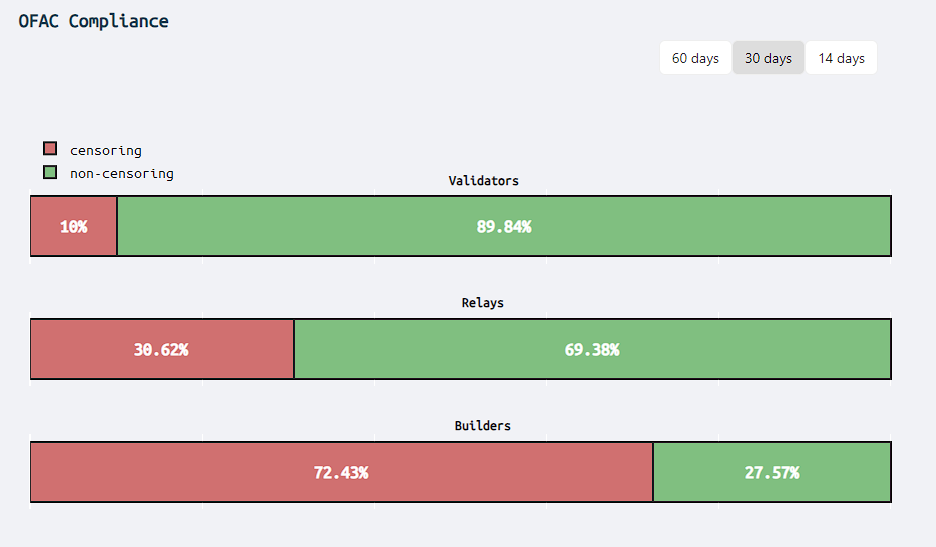
In recent months, censorship of transactions tied to US sanctions has markedly increased on Ethereum, according to new research from Ethereum Foundation researcher Toni Wahrstätter. A metric measuring “censored” blocks on Ethereum surged from around 25% in November 2022 to approximately 72% currently.
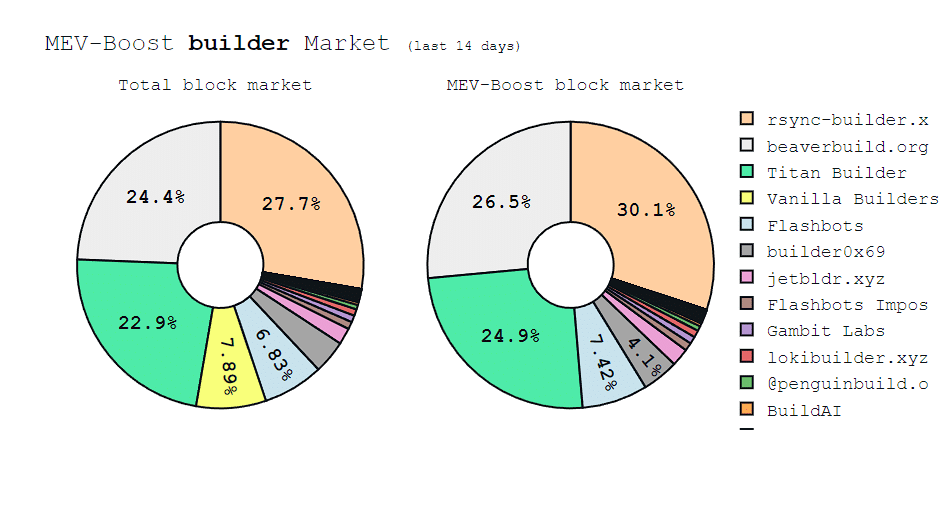
This spike stems largely from block builders, who assemble transactions into blocks and provide them to validators to add to Ethereum’s blockchain. Five major block builders now contribute over 90% of Ethereum blocks. Of those, only one major builder, Titan Builder, claims it does not filter transactions in this manner.
The lone block builder still processing all transactions claims over 20% of blocks. If Titan began engaging in censorship as well, per Wahrstätter’s analysis, overall Ethereum censorship could immediately jump to over 90%. Such reliance on a few builders contradicts the decentralized ethos blockchain promised.
Impacts on Ethereum’s Core Values
For many in the Ethereum community, such censorship represents a betrayal of the network’s founding principles. The technology’s decentralized appeal rests on it being uncontrolled and unfettered by real-world biases. Yet block builders now hold immense power over which transactions end up on Ethereum, granting them the power to selectively exclude addresses flagged by OFAC.
Some builders defend this censorship as merely prudent compliance with US regulations. However, critics argue it sets a dangerous precedent of centralized entities overriding Ethereum’s core coding to meet external rules. It also limits full access to the blockchain for individuals sanctioned by the US government.
F2Pool was filtering (censoring) OFAC Bitcoin transactions recently and everyone got mad and then they stopped almost immediately.
Can Ethereum do the same with censoring builders? As in, just ask that they stop. Like is this a corollary would you say or no? pic.twitter.com/6NUBmoEWuF
— Gwart (@GwartyGwart) November 29, 2023
Centralization Creeping In
Beyond censorship, the centralization of key transaction functions into a few dominant block builders could pose security risks, according to experts. Further, these players gain privileged access to pending transaction data, potentially allowing them to maximize profits through trading strategies before transactions are added to the blockchain. This raises additional questions about fairness and transparency.
Ethereum was designed as a decentralized network not beholden to external constraints. Block builders processing transactions increasingly censor addresses tied to US sanctions, however, calling Ethereum’s decentralization into question. While some view this censorship as prudent legal compliance, critics see it as contradicting Ethereum’s core values.
In response to these concerns, Ethereum’s leadership is exploring ways to curb censorship trends. Vitalik Buterin has proposed updates that inhibit transaction blocking by validators and builders.
This challenge to Ethereum’s decentralized ethos may prove to be a defining one, forcing the community to confront difficult questions about the limits and future direction of the technology. The answers could shape Ethereum’s ability to evolve while retaining the core principles on which it was founded.
- XRP News: AI Payments Integration With Stripe Driving Ripple Toward $1.50
- XRP News: Exchange Churn Surges, Binance Reserves Barely Move
- XRP Price Prediction: XRP Could Flip Ethereum as It Targets $3,000
- Contrarian Crypto Analyst Who Predicted 2026 Perfectly Calls for Caution and Q4 Crash
- Apple Pay Crypto Hiring Fuels New Stablecoin Speculation
2M+
250+
8
70





- XRP News: AI Payments Integration With Stripe Driving Ripple Toward $1.50
- XRP News: Exchange Churn Surges, Binance Reserves Barely Move
- XRP Price Prediction: XRP Could Flip Ethereum as It Targets $3,000
- Contrarian Crypto Analyst Who Predicted 2026 Perfectly Calls for Caution and Q4 Crash
- Apple Pay Crypto Hiring Fuels New Stablecoin Speculation
More Articles
 in numbers