

13 Best Coinbase Alternatives in 2026
We believe in full transparency with our readers. Some of our content includes affiliate links, and we may earn a commission through these partnerships. However, this potential compensation never influences our analysis, opinions, or reviews. Our editorial content is created independently of our marketing partnerships, and our ratings are based solely on our established evaluation criteria. Read More





If you’re looking for a Coinbase alternative, this guide will give you 11 excellent options, based on their transaction fees, trading tools, and regional availability. Our list contains exchanges that are well-suited for all types of traders, whether you want to keep things simple or you need an advanced trading platform.
After testing over 60 crypto exchanges, we came to the conclusion that Best Wallet is currently the best alternative to Coinbase. It supports 1000+ coins and 60+ blockchains and has an integrated DEX, which lets you swap tokens without centralized intermediaries. You’ll also pay lower transaction fees and gain access to new crypto presales.
With that in mind, keep reading to find out which platforms made it onto our list of the best alternatives to Coinbase and why.
Top 13 Best Coinbase Alternatives Listed
Here are our best Coinbase alternative platforms in 2026 ranked:
- Best Wallet – Non-custodial wallet with an integrated DEX and fiat-to-crypto onramp aggregator.
- Gemini – Centralized exchange offering crypto credit cards with various rewards
- Kraken – Global crypto exchange that supports tokenized stocks
- MEXC – Over 2,000 tradable cryptos with no KYC requirement for trading.
- OKX – Low trading fees combined with trading bots and other advanced trading tools.
- ByBit – User-friendly exchange with high leverage
- PrimeXBT – Non-KYC derivatives trading platform that supports 100+ CFD markets.
- Binance – $8 billion in daily trading volume makes Binance the world’s largest exchange.
- Zengo – Buy and store your crypto in this self-custody wallet. Over 1 million users.
- KuCoin – Advanced trading for 930+ cryptocurrencies.
- Margex – Low fees and up to 100x leverage for futures trades.
- eToro – Crypto exchange with 30 million customers and beginner-friendly tools.
- Poloniex – Gain access to over 10 million NFTs on the APENFT marketplace.
The Best Coinbase Competitors Reviewed
Let’s take a look at each in more detail and see how they compare to Coinbase.
1. Best Wallet – Best Coinbase Alternative Overall
Best Wallet is currently the best alternative to Coinbase for several reasons. First, it’s one of the best crypto wallets with built-in exchanges. Namely, its integrated DEX lets you swap crypto across 90 blockchains, 330 DEXs, and 30 bridges. Secondly, the wallet is integrated with Onramper, which means you can buy tokens at the best exchange rates and the lowest processing fees. This makes Best Wallet more suitable for active traders, given that Coinbase charges relatively high trading and transaction fees.
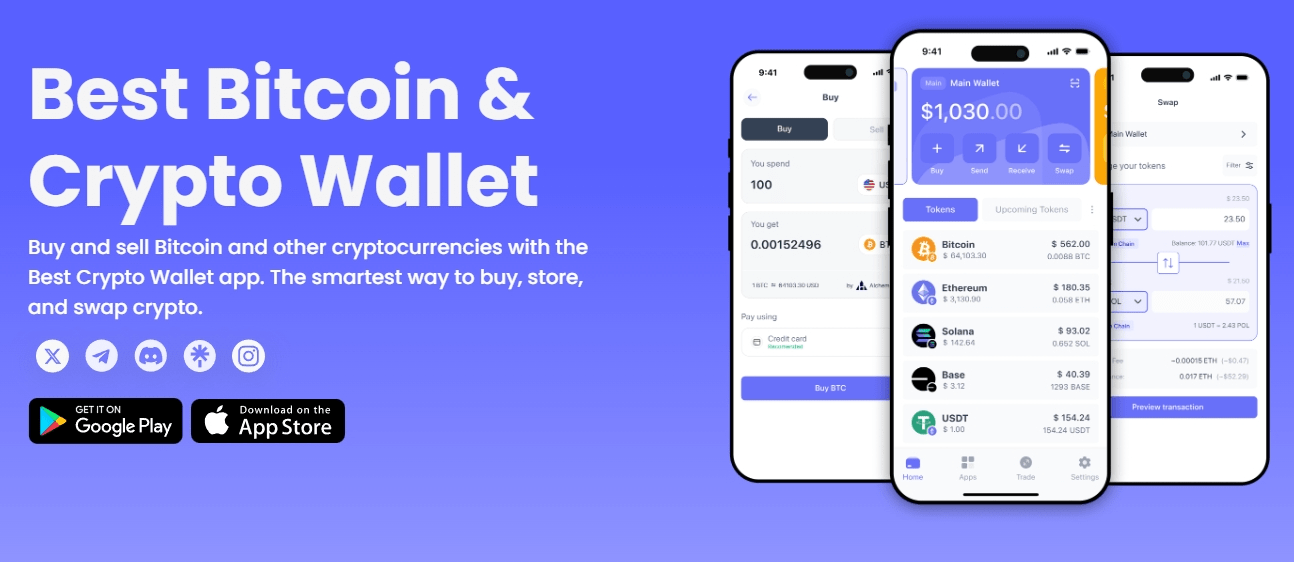
What’s more, if you hold its native token, $BEST, you’ll pay lower transaction and swap fees, earn higher staking rewards, and gain access to new crypto presales. Coinbase uses a custodial model, which means you don’t have access to your private keys, while Best Wallet uses a non-custodial model, which allows you to control your private keys, making it a safer choice.
Unlike Coinbase, which requires its users to go through KYC verification, this is not mandatory for Best Wallet, making it an attractive option for traders who prioritize privacy. The only downside of using Best Wallet is that some of its best features, like portfolio management, derivatives trading, and staking aggregator, are still in development.
Pros
- Built-in DEX
- Highly secure crypto wallet
- Swap crypto across 60 blockchains, 330 DEXs, and 30 bridges
- Integrated with Onramper
- $BEST token holders pay lower transaction and swap fees
- Uses a non-custodial model
Cons
- Some of its best features are still in development
2. Gemini – Best Coinbase Alternative for Crypto Cards Users
If you’re looking for the best crypto credit cards, look no further than Gemini. Gemini is a centralized exchange that, like Coinbase, issues its own crypto card. The Coinbase card is issued by Visa, and it functions as a debit card. The Gemini card is issued by Mastercard, and it operates as a credit card. Both cards are available in the US. However, Gemini’s card offers more lucrative rewards.
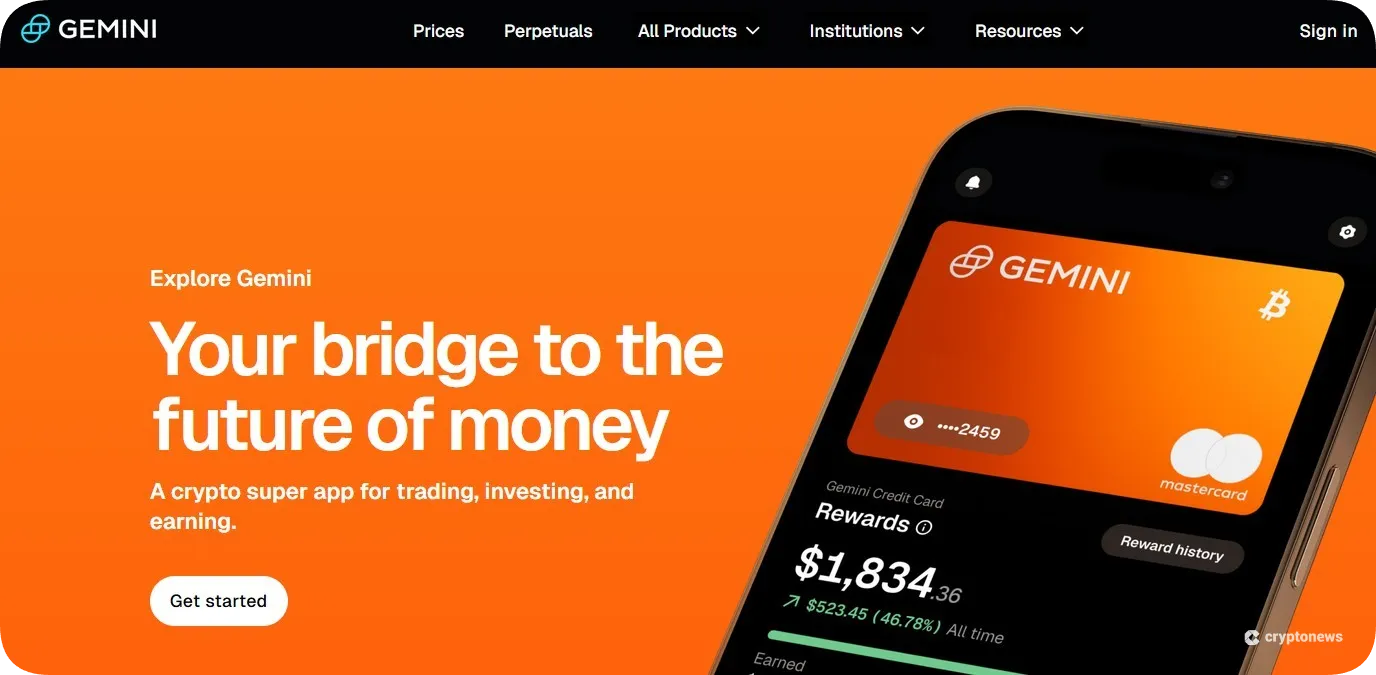
Gemini cardholders earn up to 4% back on every purchase, 4% cashback on gas and EV charging stations, 3% on dining, 2% on groceries, and 1% on all other transactions. In comparison, Coinbase cardholders get 4% back in BTC if they hold $200,000 or more assets on Coinbase. Moreover, Gemini cardholders earn rewards in BTC and 50 other cryptocurrencies, whereas Coinbase cardholders earn rewards only in BTC.
On the downside, the Gemini card charges high interest rates (between 18.99% to 34.99% APR). It also requires a good or excellent credit score.
Pros
- Gemini cardholders earn up to 4% back on every purchase
- Earn rewards in BTC and 50 other cryptocurrencies
- Available in all 50 US states and Puerto Rico
- No foreign exchange or annual fees
Cons
- High interest rates (between 18.99% to 34.99% APR)
- Requires a good or excellent credit score
- Not available outside of the US
3. Kraken – Best Coinbase Alternative for xStocks
At the time of writing, Coinbase doesn’t support xStocks. So, if you want to invest in xStocks, opt for Kraken. This centralized exchange lets you trade 60 U.S. stock tokens, such as TSLAx, AAPLx, and GMEx, for as little as $1. Moreover, if you use USDG or USD to buy xStocks, you won’t have to pay trading fees.
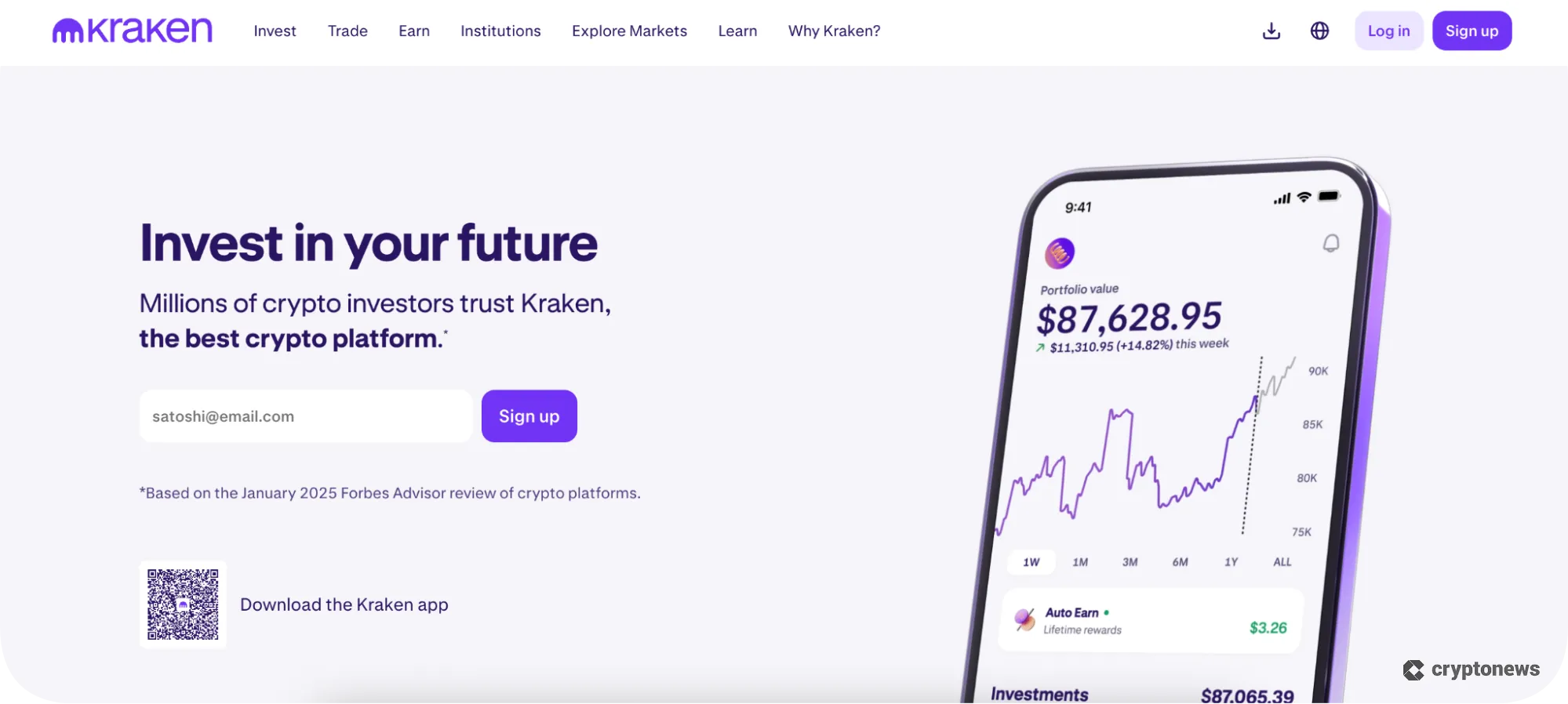
xStocks can be traded 5/24, from 8:00 PM ET on Sunday through 8:00 PM ET on Friday. However, Kraken Pro users can trade selected xStocks, like TSLAx, QQQx, SPYx, NVDAx, CRCLx, AAPLx, HOODx, MSTRx, GLDx, and GOOGLx 24/7. You can also withdraw xStocks to a compatible Ethereum or Solana wallet.
Another factor that makes Kraken a better option than Cinbase is its fees. The fees on Kraken Pro are much lower than those on Coinbase Advanced. On Kraken Pro, the fees for spot trades start at 0.25% (maker) and 0.40% (taker), while on Coinbase Advanced, the fees start at 0.4% (maker) and 0.6% (taker). Kraken also supports more cryptos – 690 vs 298. On the downside, xStocks are unavailable to US residents. They can only trade traditional stocks and ETFs.
| Kraken | Coinbase | |
| Trading Fees | 0.25% (maker) and 0.40% (taker) for spot / 0.0200% (maker) and 0.0500% (taker) for derivatives trading | Simple trades: Variable based on trade amount ($3.84 for $100 trade)
Coinbase Advanced: 0.4% maker, 0.6% taker |
| Number of Cryptos | 690 | 298 |
| KYC Required | Yes | Yes |
| Spot Trading | Yes | Yes |
| Derivatives Trading | Yes | Yes, futures are supported for qualified accounts |
Pros
- Trade 60 U.S. stock tokens, such as TSLAx, AAPLx, and GMEx
- Invest in xStocks with as little as $1
- Kraken Pro users can trade selected xStocks 24/7
- The fees on Kraken Pro are much lower compared to Coinbase Advanced
Cons
- xStocks are unavailable to US residents
- Weekend trading availability is still in development
- SWIFT withdrawals come with a $35 fee
4. MEXC – Coinbase Alternative for Crypto Selection
MEXC offers the largest selection of cryptocurrencies in this roundup, boasting over 2,275 available crypto assets. This compares extremely well against Coinbase, which currently offers about 298 cryptocurrencies. MEXC also charges low fees, which amount to 0.000% and 0.050% for spot trading and 0.000% and 0.020% for futures. However, if you hold its native token, $MX, you’ll get up to a 50% discount on your trading fees.
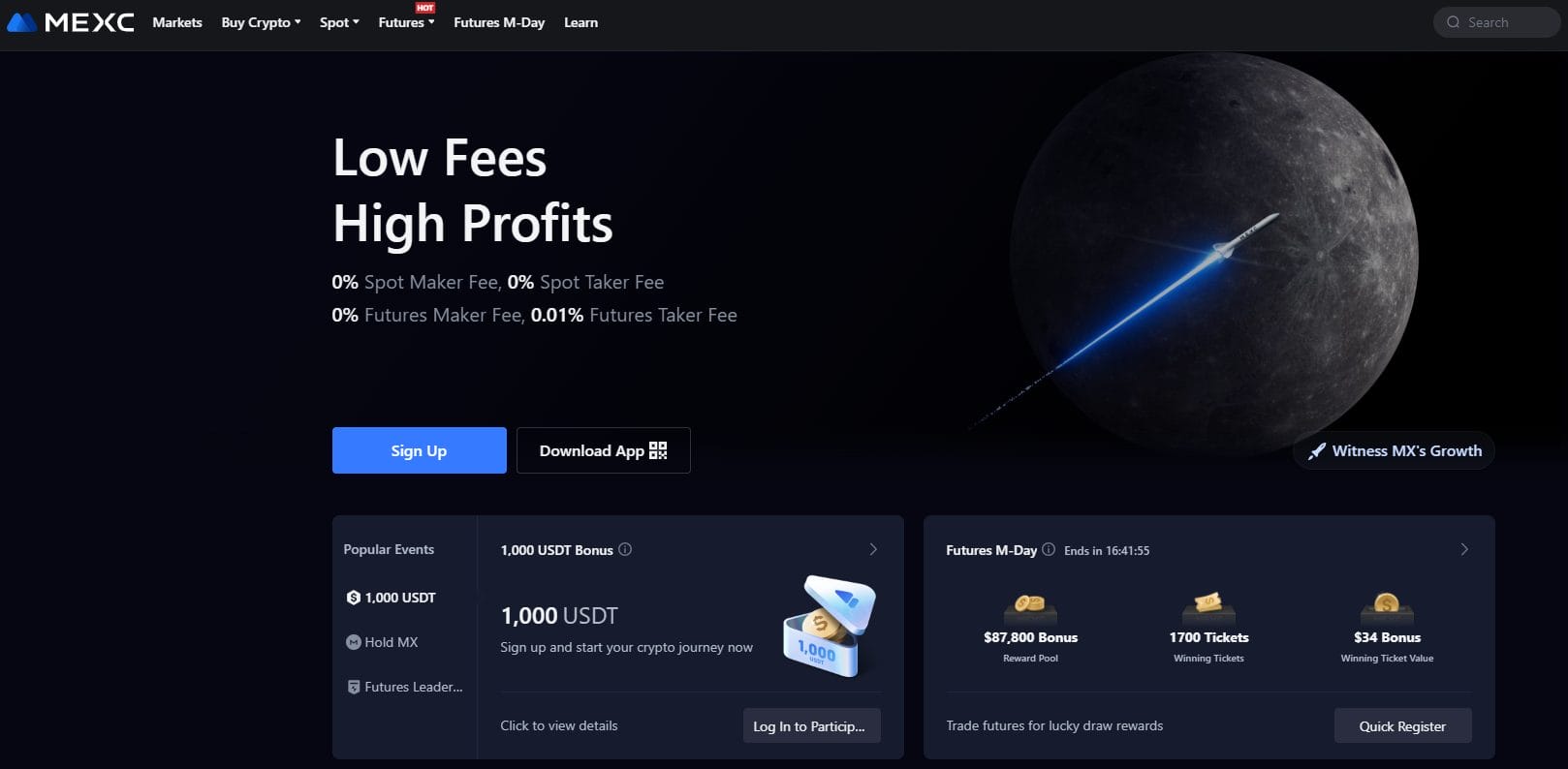
As a Coinbase alternative, MEXC brings three main advantages: low fees, a massive selection, and no KYC requirements. KYC refers to identity verification, a common requirement for crypto exchanges. Privacy-conscious traders flock to MEXC for this reason. There is also an unrivaled selection of cryptocurrencies, allowing users to trade hard-to-find cryptos and newly listed tokens that aren’t available elsewhere.
MEXC offers both spot trading and futures trading, making the platform well-suited to intermediate and advanced traders. As a caveat, you can’t buy crypto with a bank transfer, and you’ll need to complete KYC before buying crypto with a debit or credit card.
| MEXC | Coinbase | |
| Trading Fees | Spot trading: 0.000% (maker), 0.050% (taker) Futures trading: 0.000% (maker), 0.020% (taker) | Simple trades: Variable based on trade amount ($3.84 for $100 trade)
Coinbase Advanced: 0.4% maker, 0.6% taker |
| Number of Cryptos | 2275+ | 298 |
| KYC Required | No (only for buying crypto with a debit/credit card) | Yes |
| Spot Trading | Yes | Yes |
| Derivatives Trading | Yes | Yes, futures are supported for qualified accounts |
Pros
- Excellent futures trading platform for advanced traders
- A massive selection of over 2,200 cryptocurrencies
- Some of the lowest trading fees on the market
- Optional KYC verification
Cons
- Not available in the US
- Direct bank deposits aren’t supported.
5. OKX - Best Coinbase Alternative for Advanced Traders
The OKX exchange dates back to 2017, when it was called OKEx. Over the past several years, this Seychelles-based exchange has added new features and is now the world’s second-largest crypto derivatives trading exchange. While OKX offers many features optimized for advanced traders, OKX also provides tools to help newer traders find their way. These include a useful demo account and copy trading.
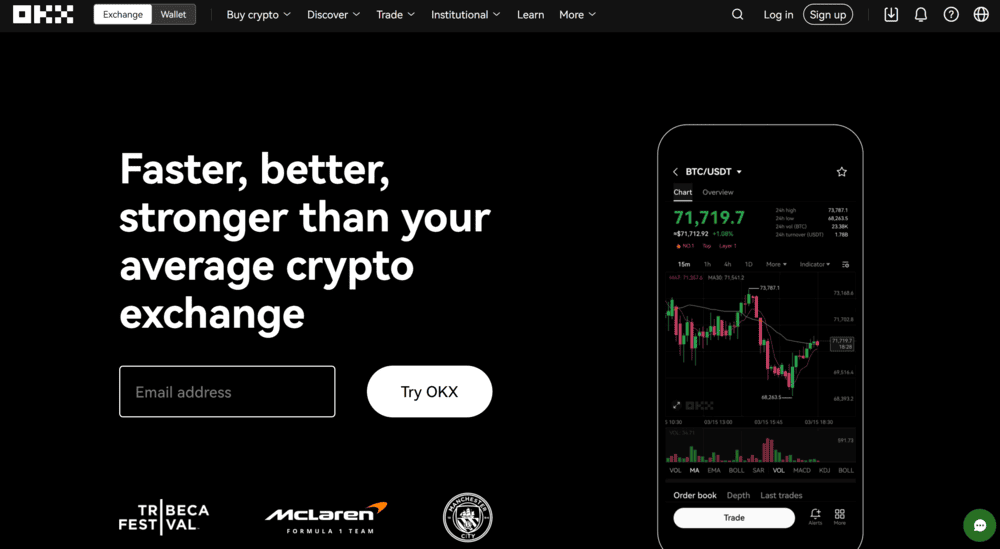
With more than 345 cryptocurrencies available for trading, OKX offers a wider selection of crypto assets compared to Coinbase. OKX's fees for spot trades start at 0.080% (maker) and 0.100% (taker). However, your trading fees will decrease as you progress through the fee levels. For example, Level 5 users pay a maker and taker fee of 0.060%. For comparison, Coinbase Advanced charges a 0.4% taker and a 0.6% maker fee.
Additional features of the OKX exchange include futures trading, with both dated futures and perpetual futures, as well as options trading, which is a rare find. OKX also provides a full-featured demo account that lets newer traders learn the ropes or allows experienced traders to test trading strategies.
Pros
- Demo account to test trading strategies in real time
- Versatile copy trading functionality
- Low fees for spot and derivatives
- Offers a self-custody wallet
Cons
- Not available to US or Canadian traders.
- The trading interface can be overwhelming to newer crypto traders
6. Bybit - Top Coinbase Competitor for High-Leverage Trading
ByBit is a comprehensive trading platform that offers features that suit all types of crypto traders. One of its main draws is its Smart Leverage feature that offers up to 200x leverage for selected coins. You'll also be able to trade gold and FX with up to 500x leverage via its MetaTrader 5 (MT5) platform. In comparison, on Coinbase, the maximum leverage for perpetual futures stands at 20x.
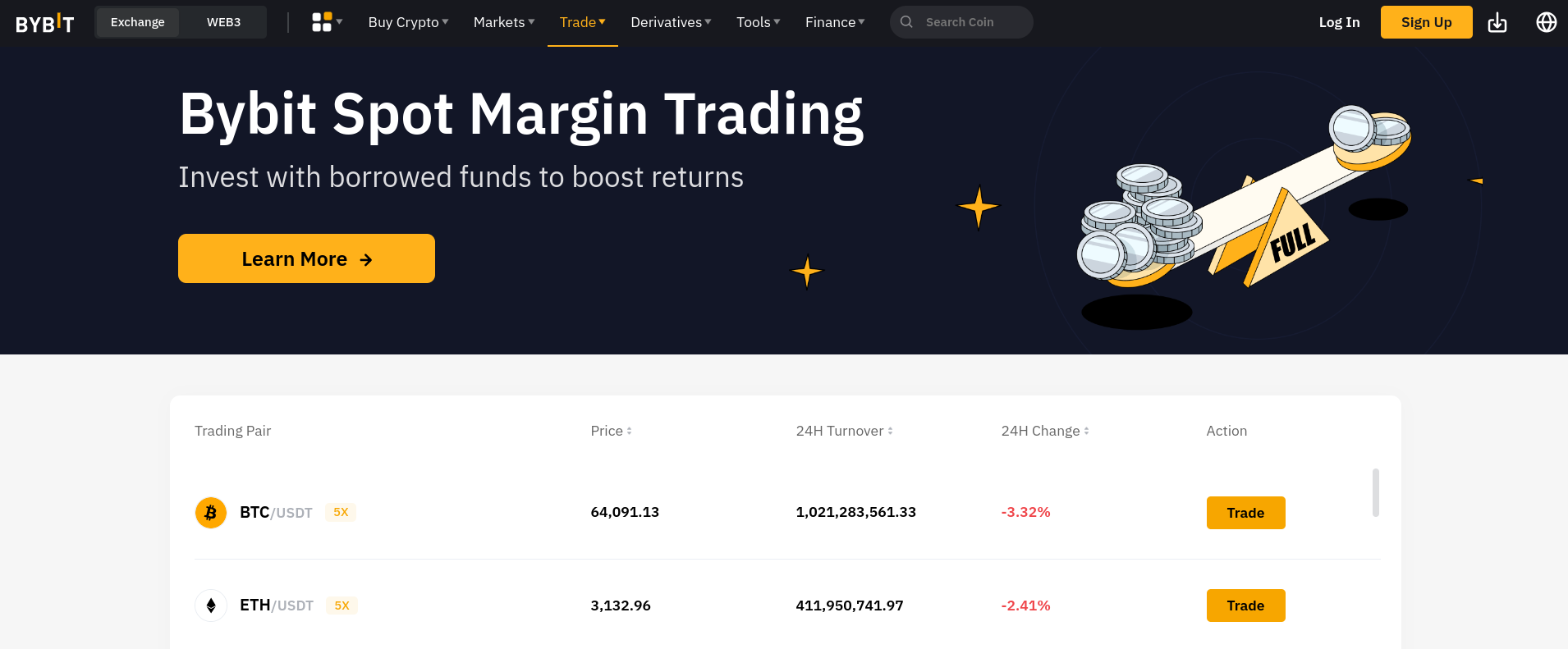
Moreover, Bybit offers some of the best AI trading bots that will automate your trades, while Coinbase doesn't provide native trading bots. Its spot trading fees start at 0.1000%, while fees for perpetual futures start at 0.0200% (maker) and 0.0550% (taker). Bybit uses a tier-based fee structure, which means that your fees will decrease as you progress through the tier levels.
What we liked most about Bybit is its Learn section, which offers a wide range of educational resources and video tutorials. This section is better than Coinbase's Learn section because it's aimed at both beginners and advanced traders, while Coinbase Learn is more geared towards novice traders.
Pros
- High leverage options on derivatives
- AI-based trading bots
- Trade gold and FX with up to 500x leverage
- Competitive fees
- Deep liquidity, over $50 billion traded daily
Cons
- Availability and coin support vary across countries
- The exchange was hacked in February 2025 (no lost user funds, though)
7. PrimeXBT - Best Coinbase Alternative for CFD Trading
The PrimeXBT exchange supports 100+ CFD markets, cryptocurrencies, FX, shares, indices, and commodities. You can trade FX, shares, indices, and commodities for zero fees, while crypto trades come with a fixed fee of 0.5%. At the time of writing, Coinbase doesn't support FX and CFDs trading, although it recently acquired a CIF license, which means that this could change in the future.
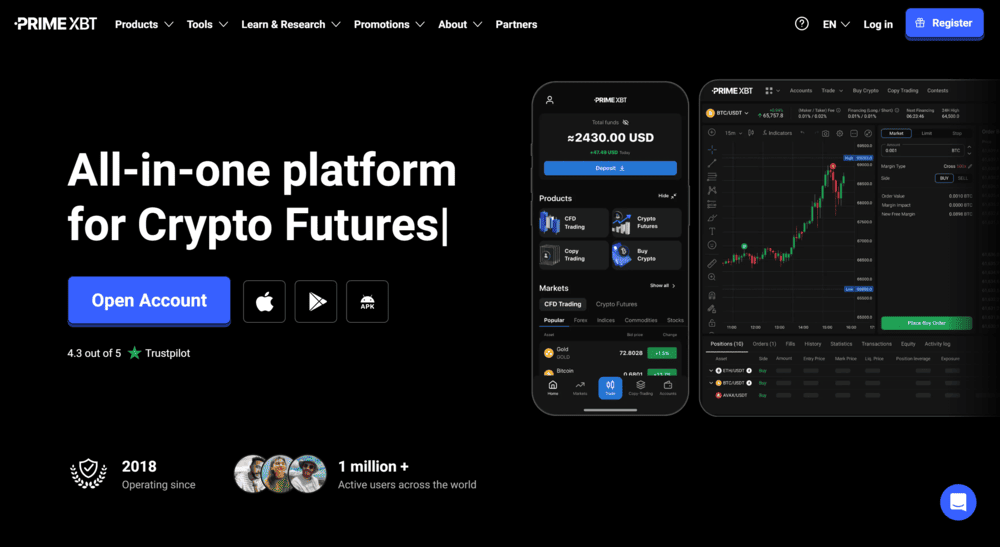
Active traders can take advantage of its weekly trading contests, which enable them to earn rewards. What's more, you can compete in as many trading competitions as you like. However, you won't be able to withdraw your rewards because they come in the form of tradable bonuses.
PrimeXBT is also known for its crypto futures trading service, which comes with a fixed maker fee of 0.01%, while the taker fee ranges between 0.045% and 0.02%. You can trade 45+ forex pairs and 24+ commodities on mobile using its award-winning app, which is compatible with Android and iOS devices.
Pros
- Supports 100+ CFD markets, cryptocurrencies, FX, shares, indices, and commodities
- Zero commission and spreads as low as 0.1 pips when trading CFDs
- Offers up to 200x leverage for crypto
- Weekly trading contests
Cons
- Limited number of crypto trading pairs
- No demo account available
8. Binance - Best Alternative to Coinbase for Deep Liquidity
Binance is still the 800-pound gorilla of the crypto world, with more than $8 billion in daily trading volume, making it one of the largest cryptocurrency exchanges. This worldwide exchange offers over 480 cryptocurrencies for trading, giving traders access to a wider range of assets compared to Coinbase. Binance also differentiates itself as a Coinbase alternative in several other ways, centering around advanced trading features.
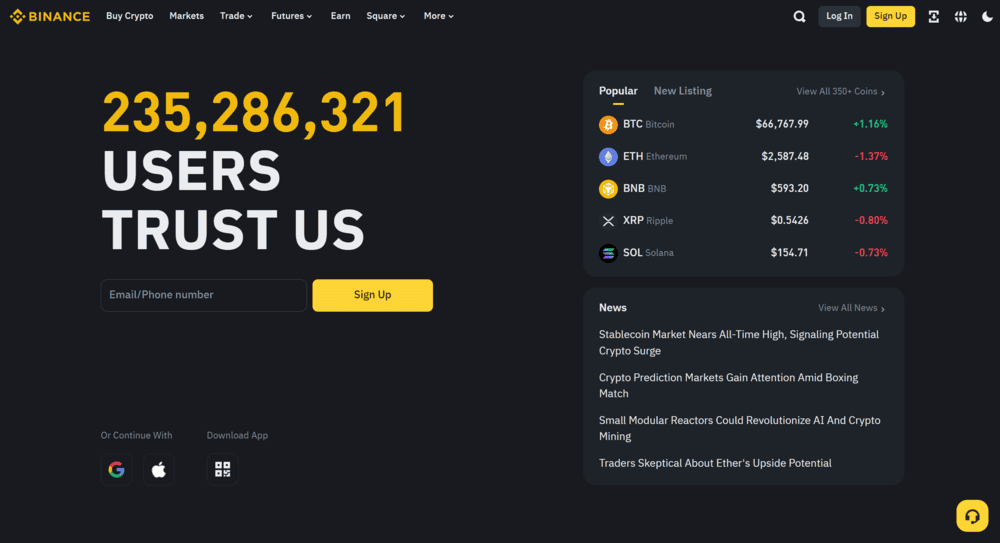
That said, you can choose between spot trading, futures trading with perpetual contracts, dated futures, and crypto options. Binance also offers several popular options for power users, including trading bots that allow you to use pre-programmed bots or customized bots to trade according to rules you define 24/7. This feature is becoming more common for exchanges, including Binance and OKX, but is not available through Coinbase.
As one of the world’s largest crypto exchanges by trading volume, Binance’s key strength comes from its liquidity. A massive worldwide market provides more efficient trading, whether you’re trading top names like BTC and ETH or lesser-known cryptocurrencies. Low trading fees help enhance trading profits as well. Binance charges 0.1% for spot trades, compared to 0.4% maker and 0.6% taker fees on Coinbase Advanced.
Pros
- High liquidity and volume for instant trade execution
- Offers more than 480 cryptocurrencies
- Learn & earn opportunities
- Solid trading bot support
Cons
- Not available to traders in the US or Canada
- Moderate learning curve
9. Zengo - Best Coinbase Wallet Alternative for Security
While not an exchange, per se, Zengo offers a newbie-friendly option for both secure crypto storage and purchasing crypto. The easy-to-use wallet removes the mystery from crypto wallets and supports purchases for over 320 cryptocurrencies.
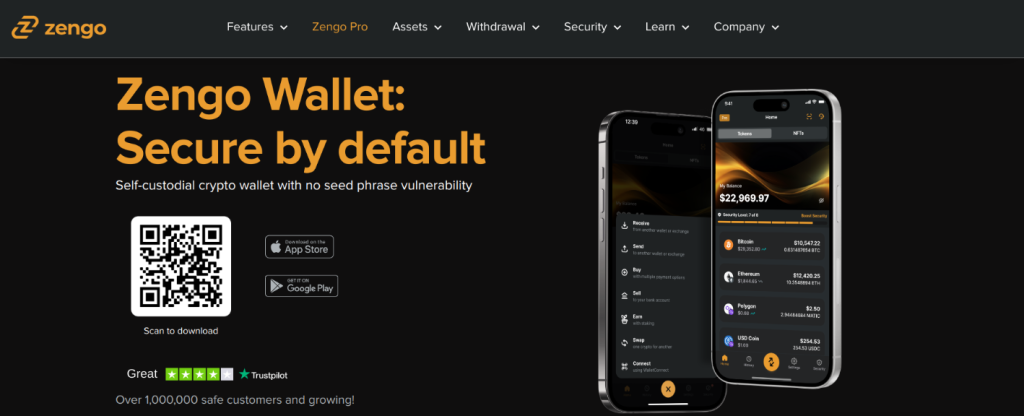
The never-been-hacked Zengo Wallet uses a unique approach to crypto storage that’s designed to be easier to use. Traditional wallets center around mind-numbing private keys, a long string of letters and numbers, or easily misplaced 12 to 24-word recovery phrases. Instead, Zengo uses a two-part hidden key with one part saved on the Zengo servers and the other on your device. If you lose access to your account, you can regain access using 3-factor authentication.
Buying crypto through Zengo is equally easy. The wallet app connects you to your choice of third-party providers, where you can easily buy crypto with your debit card or bank account. Payment options vary by region. The crypto you purchase is deposited directly into your self-custody Zengo Wallet, saving a step compared to Coinbase and similar exchanges.
Pros
- Anonymous, self-custody wallet
- Suitable for both beginner and seasoned investors
- Combined buying, selling, and storage
- Three-factor authentication and wallet recovery
Cons
- Purchase fees can be higher compared to Coinbase’s simple trades.
- Limited access to newly launched cryptocurrencies
10. KuCoin - Best Coinbase Competitor for Staking Yield Opportunities
The KuCoin exchange is one of the largest in the world, serving over 200 countries worldwide and offering over 930 tradable cryptocurrencies. Trading veterans value KuCoin for its advanced trading features and access to newer cryptocurrencies that you won’t find on Coinbase.

KuCoin stands out with its Earn service that supports 400+ assets. For comparison, Coinbase's Earn service supports only 132 assets. The APY on Coinbase goes up to 14%, while on KuCoin, the APY ranges between 0.7% and 12%, depending on the asset. Coinbase charges a commission fee based on your rewards, which ranges between 26.3% and 35%, while Kucoin doesn't charge a staking fee. What's more, if you use its native token, KSC, to conduct trades, you'll get a 20% discount on your trading fees.
KuCoin provides spot trading, margin trading, and futures trading with up to 100x leverage. Integrated TradingView charts provide more than 100 trading indicators to guide your next moves. Low trading fees on par with OKX, Binance, and MEXC come in at just 0.1%, a fraction of the cost of trading on Coinbase Advanced, depending on trade type.
Pros
- A wide range of staking opportunities
- 930+ tradable cryptocurrencies and frequent new listings
- On-chain staking and daily interest payouts
- TradingView integration
Cons
- Doesn’t support trading for US residents.
- Occasional lack of clarity for the staking program
11. eToro - Top Alternative to Coinbase for Beginners
eToro is a popular platform that offers various trading tools, while its clean interface is easy to use for beginners and advanced traders alike. A feature that makes eToro very appealing to new traders is its innovative copy trading function, which replicates the orders of experienced investors automatically. You can also choose to invest using Smart Portfolios, which are pre-selected collections of assets. In addition to that, you can fund your account with debit/credit cards, bank transfers, or e-wallets. Note that credit cards and PayPal options are not available for users under UK and FCA regulations.

Another stand-out feature when comparing eToro to Coinbase is that its fees are some of the lowest in the industry, with a flat 1% commission fee to buy or sell crypto. On the other hand, Coinbase can have quite high fees across the board.
eToro supports dozens of new cryptocurrencies and offers staking services for certain tokens, providing an option to earn passive income on your holdings. However, those using eToro in the US can only trade Bitcoin, Bitcoin Cash, and Ethereum. It's important to note that both eToro and Coinbase were included in our list of best Binance alternatives.
Pros
- Copy trading and social trading tools
- Active customer support
- Flat 1% fee
- Supports Bitcoin and top altcoins
- Mobile app for Android and iOS
Cons
- Non-USD payments attract a 0.5% deposit fee
- Limited crypto support in the States
Don’t invest unless you’re prepared to lose all the money you invest. This is a high-risk investment and you should not expect to be protected if something goes wrong.
12. Margex - Best Alternative to Coinbase for Non-KYC Margin Trading
As its name suggests, Margex is a popular choice for crypto margin trading. Trade with up to 100x leverage using futures markets. The derivatives exchange works with 12+ liquidity providers to help ensure vibrant trading markets for top assets like BTC, ETH, and more than 30 other cryptos.
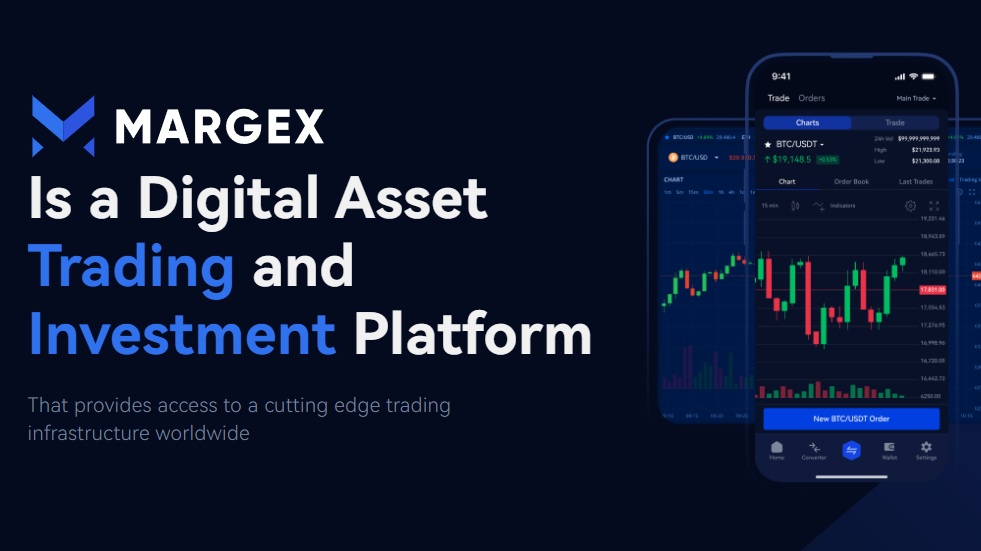
Margex provides advanced functionality with an intuitive trading interface and offers tools to help newer traders get started with futures trading. A live demo of the platform provides a preview without registration. Registered users can use a demo account with virtual funds to practice trading against live-market price action. This lets you test your trading strategies without risk.
That said, Coinbase no longer supports margin trading, which is a big downside. On the other hand, Margex doesn’t offer spot trading yet. However, you can fund your account with any of a dozen cryptocurrencies available from third-party providers using more than 150 payment methods. You can also deposit cryptocurrency from other platforms or self-custody wallets. Moreover, the platform supports copy trading, which is a popular way to mirror the trades of profitable traders.
Pros
- Start trading with as little as $10
- No KYC identity verification
- MP Shield System reduces the risk of price manipulation
- Leverage of up to 100x
Cons
- Doesn’t support fiat withdrawals
- Spot trading is not available
- Comparatively few coins on offer
13. Poloniex - Coinbase Alternative for NFT Trading
Poloniex is a crypto exchange with an integrated NFT marketplace. Its partnership with APENFT allows you to access over 10 million NFTs on the APENFT marketplace. In addition to being able to buy and sell NFTs, you’ll also be able to create them. The APENFT marketplace runs on multiple networks, such as Ethereum, TRON, and BSC, which gives you access to a diverse range of NFTs.
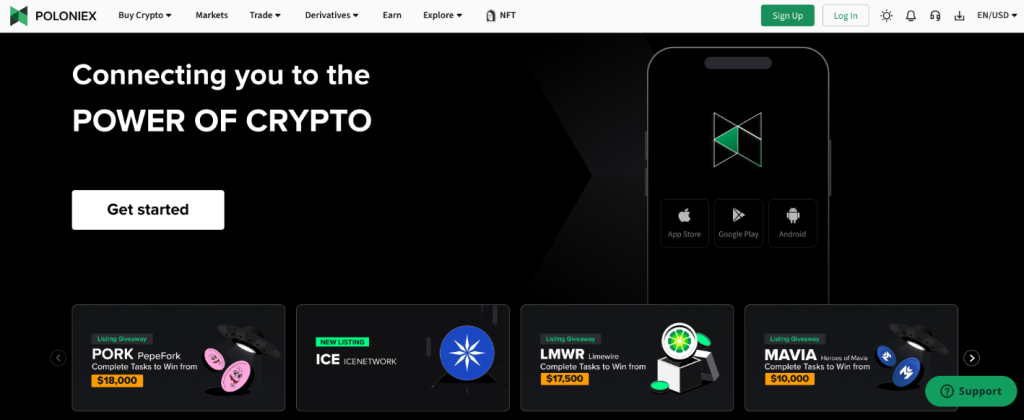
Coinbase launched its own NFT marketplace in 2022. However, as of summer 2024, the Coinbase NFT marketplace has migrated into the Coinbase Wallet. Moreover, Coinbase supports only Ethereum-based NFTs. While both exchanges support NFT trading, Poloniex is more suitable for individuals who prefer to trade NFTs on multiple blockchains.
Besides NFT trading, Poloniex supports spot, margin, and futures trading. You can also earn passive income via its Earn service, which supports flexible and fixed staking options. What's more, Poloniex stands out in terms of future copy trading services, while Coinbase doesn't support copy trading services. Unlike Kucoin and several other exchanges in our roundup, Poloniex does not require KYC for basic access, including withdrawals of up to $10,000 per day, staking, and futures trading.
Pros
- Gain access to 10 million NFTs on the APENFT marketplace
- Create and trade NFTs on multiple blockchains
- Futures copy trading service
Cons
- Not available in the US
- High fees for funding accounts through third-party crypto providers
- Relatively high spot trading fees
Reasons to Look for Alternatives to Coinbase
Coinbase provides a comparatively safe and easy way to start your crypto journey, but more experienced traders may want additional choices. Reasons to look elsewhere include lower fees or increased selection. Some traders may be in a region not supported by Coinbase or may prefer not to provide identity verification, as is required by Coinbase.
Lower Fees
One common criticism of Coinbase revolves around fees. The exchange uses two distinct fee structures: simple trades and advanced trades. Of the two, advanced trades are less expensive, but Coinbase's advanced trading fees are still higher than those of many alternatives to Coinbase.
Simple Trades
Coinbase's simple trades follow a fixed fee structure for trades up to $75 in value, with the highest fee in this range at $2.99. Above that tier, Coinbase uses a percentage-based fee structure. For example, a $100 BTC purchase costs $3.84 in trading fees (about 4%) using simple trades.
In addition, simple trades utilize a spread to lock in price quotes for your trade. Generally, you can expect spread fees to add about 1% to your trading costs.
Coinbase Advanced
To save on trading fees and access charts, you can use Coinbase Advanced instead. Both platforms utilize your Coinbase balances, so switching between the two platforms is as simple as clicking a button.
Fees for Coinbase Advanced follow a maker/taker model.
- Maker fees cost 0.4% of the order value and apply to fixed-priced limit orders on the platform.
- Taker fees cost 0.6% of the order value and apply to market orders on Coinbase Advanced.
By comparison, many Coinbase competitors offer much lower fees. For example, both Binance and OKX offer 0.1% or lower for spot trading fees, with additional discounts based on trading volume.
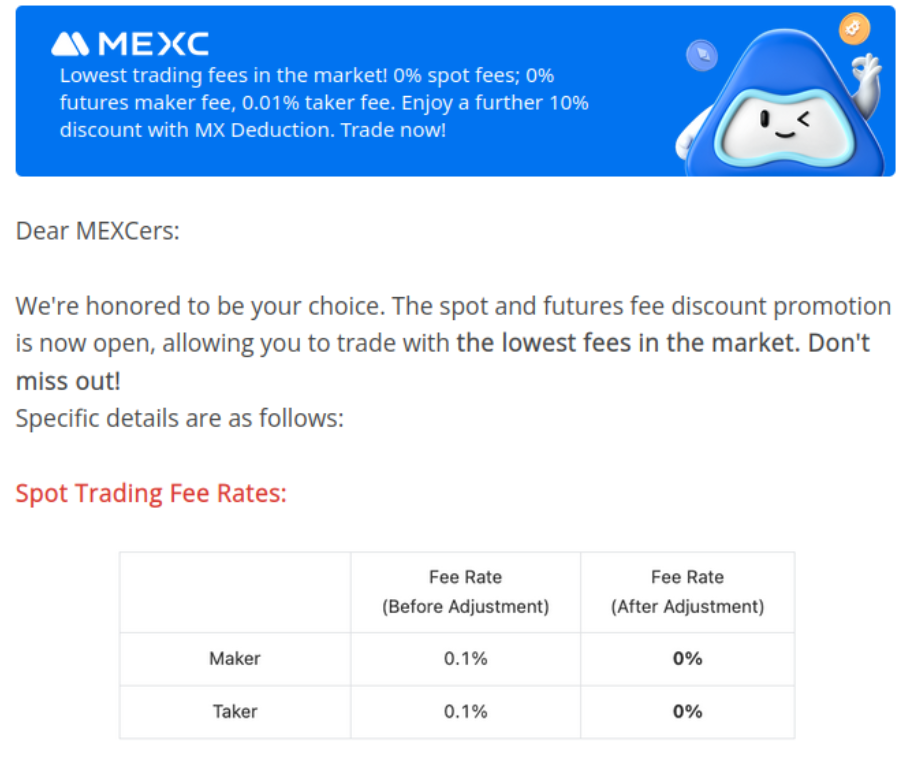
However, MEXC currently offers the lowest fees, with no-fee trading for spot trades as of this writing. In recent months, MEXC spot trading fees ranged between 0.0% and 0.1%, with a promotional “fee adjustment” bringing fees down to 0.0%.
Note: Coinbase Advanced has replaced Coinbase Pro, so if you’re looking for the best Coinbase Pro alternative, MEXC is a great solution.
More Trading Pairs
Coinbase offers 298 cryptocurrencies and 445 trading pairs as of this writing. However, many Coinbase competitors offer a larger selection. For example, MEXC offers 2,275+ cryptocurrencies and more than 2,750 trading pairs.
In this roundup of Coinbase alternatives, MEXC is the clear winner when comparing selection. As another consideration, other exchanges may be faster in offering new crypto coins and tokens. By the time new tokens reach Coinbase, many have already seen 2x or greater gains, reducing your opportunity to maximize returns.
Both MEXC and Kucoin provide a wide selection of newer coins and tokens, allowing you to get in earlier on the next big thing.
No KYC
KYC stands for Know Your Customer and refers to identity verification required to comply with regulations for banking and financial institutions.
Coinbase requires users to complete KYC, including name, address, phone number, email address, proof of address, and proof of identity.
Many crypto traders prefer to trade anonymously and may seek Coinbase alternatives in the interest of financial privacy. Fortunately, some platforms don’t require KYC, although you may face other restrictions. In some cases, daily withdrawals are limited to a specified amount.
In other cases, you might not be able to access advanced trading features such as leverage trades. Platforms that require KYC most often ask for identity verification at the deposit stage.
Although fewer non-KYC exchanges are available now, a handful of platforms still offer trading access without identification, including MEXC and Margex.
Regional Availability
Coinbase supports trading in over 100 countries worldwide. However, Reddit users in South Africa recently reported account restrictions based on their country of residence. South Africa isn’t specifically listed on Coinbase’s Prohibited Regions, but trading access was reportedly denied.
In this situation, withdrawals were still supported, allowing the users to transfer their funds and crypto assets elsewhere.
Several countries appear frequently in prohibited regions for exchanges, often including China, Cuba, Iran, Venezuela, and Syria. Other platforms reference countries subject to Office of Foreign Assets Control (OFAC) sanctions.
If you’re in a region prohibited from trading with Coinbase, you’ll need to choose a Coinbase alternative. We didn’t find any exchanges that offer worldwide access for every country.
However, a platform such as MEXC may be an option because the exchange does not require personal identification for trading (some restrictions apply).
Be aware that many exchanges restrict access based on IP address location, and many also disallow VPN access in their terms of service. A VPN is a Virtual Private Network, a common way to access online services from another region.
Other Factors We Considered in Our Rankings
Each trader may have different reasons to look for Coinbase alternatives, but we looked at several key factors in our rankings. These include withdrawal times, support, user reviews, and liquidity.
Average Withdrawal Speed
As a caveat, not all crypto exchanges offer fiat withdrawals, and some only offer fiat withdrawals through third-party providers. We considered the ease of withdrawals, whether by fiat or crypto, as well as the speed and any hurdles along the way.
Customer Support
While phone support is a rarity amongst crypto exchanges, we considered response time via chat or email, as well as the availability of multiple support channels. Most issues and questions can be answered through the help pages, so we also weighed the thoroughness of documentation for exchanges, typing questions a new user might have into the provided search box.
App Store Ratings
App store ratings offer an overview of community sentiment regarding the app or the trading platform itself and whether users encountered difficulties. However, comments often prove more illuminating because they provide specific features, questions, or issues to research. In some cases, we found a quick answer, whereas other topics required more research or a chat with support.
Highest Trading Volume
Liquidity refers to the ability to trade in or out of a position easily. We looked for exchanges with higher trading volume on popular assets, with the understanding that less-commonly traded assets would not have the same liquidity as BTC or ETH. Higher trading volumes can indicate a more trustworthy exchange and a greater ability for traders to enter or exit a position with minimal price impact.
Conclusion
Reasons to look for a Coinbase alternative vary based on the features you need and the assets you want to trade. Trading costs can play a role as well, with Coinbase being one of the pricier places to trade crypto due to its fee structure. We found Best Wallet to be the best overall crypto exchange compared to Coinbase due to its integrated DEX and fiat-to-crypto on-ramp aggregator, which enables you to buy crypto at the best exchange rates and lowest fees.
If you need a wide selection of cryptocurrencies, the next best alternative to Coinbase is MEXC or Kucoin. Traders who value privacy can choose a non-KYC exchange, such as MEXC, Margex, PrimeXBT, or Poloniex. With the proliferation of trading platforms, there’s a crypto exchange for nearly any type of trader — and you might even decide to use more than one.
Visit Best WalletFAQs
What is a better option than Coinbase?
Is there an app like Coinbase?
What is the safest crypto exchange?
What is the best Coinbase alternative in the US?
Who is Coinbase’s biggest competitor?
Is Kraken better than Coinbase?
References
- Biggest crypto exchanges 2024 (statista.com)
- Definition of Margin Trading (coingecko.com)
- Proof of Reserves (coinmarketcap.com)
- ‘‘Know Your Customer’’ (federalreseve.gov)
- Sanctions Programs and Country Information (treasury.gov)
2M+
250+
8
70





 in numbers

About Cryptonews
Our goal is to offer a comprehensive and objective perspective on the cryptocurrency market, enabling our readers to make informed decisions in this ever-changing landscape.
Our editorial team of more than 70 crypto professionals works to maintain the highest standards of journalism and ethics. We follow strict editorial guidelines to ensure the integrity and credibility of our content.
Whether you’re looking for breaking news, expert opinions, or market insights, Cryptonews has been your go-to destination for everything cryptocurrency since 2017.