Bitcoin Core Developer Claims Runes Protocol Exploits Bitcoin Blockchain’s Design Flaw



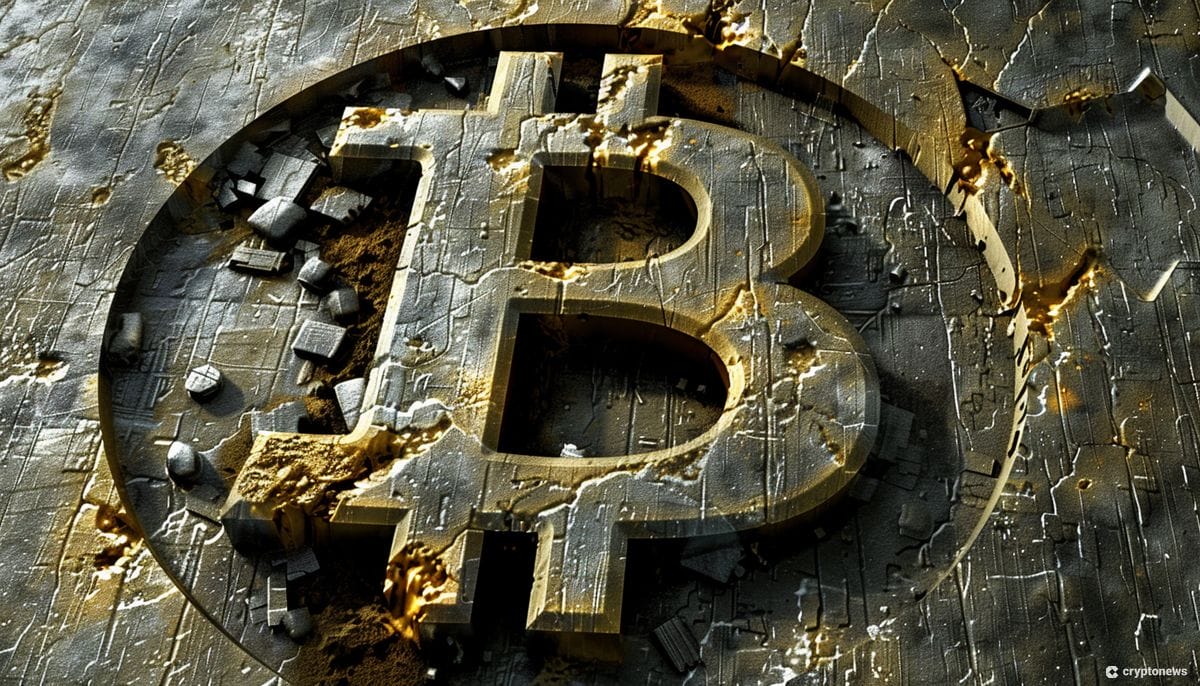
Bitcoin core developer Luke Dashjr criticized the Runes protocol in a Friday X post, suggesting it exploits a fundamental design flaw within the Bitcoin blockchain network.
In his post, Dashjr highlighted the contrasting nature of Ordinal Inscriptions and the Runes protocol in their interactions with the network.
Ordinals exploits vulnerabilities.
Runes merely exploit design flaws.
— Luke Dashjr (@LukeDashjr) April 26, 2024
He explained that while Ordinals exploit vulnerabilities within Bitcoin Core, the Runes protocol operates within the existing framework of the network’s design flaws.
Runes Draw Criticism After Causing Congestion
Ordinals allow for the inscription of data onto satoshis (the smallest units of Bitcoin), creating a concept similar to non-fungible tokens (NFTs).
Their introduction last year marked Bitcoin’s entry into the NFT space and attracted considerable interest within the crypto community.
On the other hand, Runes are fungible tokens introduced on the day Bitcoin completed its fourth halving.
However, following their launch, these tokens caused major network congestion, leading to a surge in transaction fees.
Dashjr has long criticized both asset types, arguing that they deviate from Bitcoin’s core principles and contribute to blockchain spam.
In fact, he previously referred to Ordinals as a bug and spearheaded initiatives to address them through bug fixes.
In response to his opposition to Runes, Dashjr suggested methods for filtering out transactions related to the protocol.
He recommended adjusting the “datacarriersize” setting in the bitcoin.conf file to zero, which would effectively block Runes’ spam. However, early indications suggest that miners are not following this advice.
Ocean Mining, a decentralized mining pool where Dashjr serves as the CTO, recently mined its first post-halving block, with over 75% of its transactions originating from the Runes protocol.
We don't dictate what blocks our miners mine.@OCEAN_mining's mission is in fact the exact opposite: to empower miners to be the ones making these decisions.
Toward that end, we do offer a data-free template for miners who wish to exclude Runes, and I personally encourage miners…— Luke Dashjr (@LukeDashjr) April 26, 2024
“That being said, while it’s unfortunate that many scammy Runes got mined, they did meet the policies OCEAN has recommended from the start,” he wrote. “While Ordinals are a 9-vector attack that exploits vulnerabilities in Bitcoin Core, Runes are ‘only’ a 5-vector attack that actually technically follows the ‘rules.'”
Bitcoin Transaction Fees Plummet After Halving
Bitcoin transaction fees have experienced a substantial drop just one day after reaching an all-time high average of $128 on April 20, coinciding with the fourth Bitcoin halving. As of April 21, the average fees for medium-priority transactions on the Bitcoin network ranged from $8 to $10.The preceding day had witnessed a surge in total fees, with Bitcoin recording $78.3 million in fees, surpassing Ethereum by over 24 times.
Notably, the Bitcoin halving block at block height 840,000 included a record-breaking 37.7 bitcoins (equivalent to $2.4 million) in transaction fees paid to Bitcoin miner ViaBTC. This block included 3,050 transactions, resulting in an average fee of nearly $800 per user.
The demand for block 840,000 was largely driven by enthusiasts of meme coins and NFTs competing to inscribe and etch rare satoshis using the Runes protocol.
- Mark Zuckerberg Meta AI Predicts an XRP Surge Few Saw Coming
- Google Gemini AI Predicts Most Likely Bitcoin Price by End of 2026
- Microsoft Copilot AI Predicts the Price of XRP by The End of 2026
- ChatGPT AI Predicts XRP Could Be Quietly Setting Up a Big Move
- CLARITY Act Senate Vote Locked In, But 60-Vote Hurdle Looms Large


2M+
250+
8
70





- Mark Zuckerberg Meta AI Predicts an XRP Surge Few Saw Coming
- Google Gemini AI Predicts Most Likely Bitcoin Price by End of 2026
- Microsoft Copilot AI Predicts the Price of XRP by The End of 2026
- ChatGPT AI Predicts XRP Could Be Quietly Setting Up a Big Move
- CLARITY Act Senate Vote Locked In, But 60-Vote Hurdle Looms Large
More Articles


 in numbers