ECB Addresses Banking Industry’s Concerns on Digital Euro



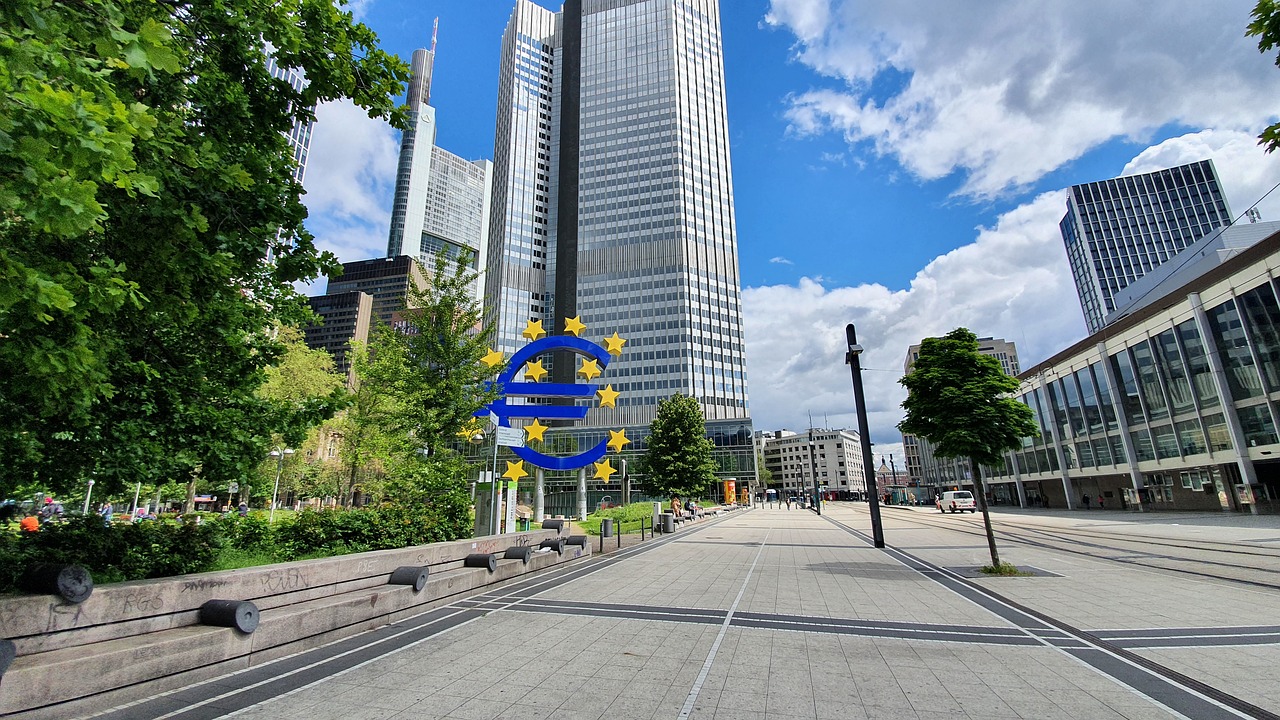
The European Central Bank (ECB) has responded to concerns from financial institutions regarding the central bank digital currency’s (CBDC) role. ECB’s report emphasized that “a digital euro will be designed as a means of payment and not for investment.”
Three ECB Executive Board members Piero Cipollone, Ulrich Bindseil and Jürgen Schaaf cleared banks’ fears on disintermediation. The report stressed that a digital euro is designed not to replace banks.
Per a Tweet from ECB colleague Georgina, a digital euro could boost European payment service providers and banks. She said that payments service providers would distribute a digital euro and be the main point of contact.
A digital euro could simplify and unify how we pay digitally in Europe, online and offline, and offer new opportunities for businesses that handle payments.
Our colleague Georgina explains its benefits for companies managing payments.
Find out more https://t.co/n9Y9FiYWgP pic.twitter.com/afphHHMyZ7
— European Central Bank (@ecb) February 19, 2024
She also emphasized that there would be fair compensation models for providers distributing a digital euro. Also, there would be a digital euro holding limits to safeguard the financial stability.
Stablecoins, e-Money Institutions Pose Greater Risks than CBDCs: ECB
Furthermore, the central bank noted that new disruptive payment methods such as stablecoins and e-money institutions might pose a greater risk to bank funding rather than a digital euro.
“Banks are barking up the wrong tree when they rely on studies that overlook the outlined design features of a digital euro.”
By doing so, banks ignore other challenges that needs to be addressed, ECB added. Instead of mitigating to “new and powerful” private competitors, banks should offer attractive products and services that incentivize customers. This way, customers would hold their deposits with them. It added.
Additionally, the Executive Board members also revealed that ECB is advancing its work on developing a digital euro. “It will continue to refine design choices, address potential risks and optimize benefits.”
Furthermore, ECB is “seriously” taking banks’ concerns on funding by proposing holding limits, access constraints, no remuneration and reverse waterfall.
“A digital euro would harmonize European standards, enabling payment service providers to expand their services across borders to cover the entire euro area.”
On an overall note, Georgina said that a digital euro would make EU payments system more competitive and innovative.
2M+
250+
8
70





More Articles

 in numbers