

10 Best Low Cap Crypto Gems to Surge in 2026
We believe in full transparency with our readers. Some of our content includes affiliate links, and we may earn a commission through these partnerships. However, this potential compensation never influences our analysis, opinions, or reviews. Our editorial content is created independently of our marketing partnerships, and our ratings are based solely on our established evaluation criteria. Read More





In 2026, low-cap crypto is where the real speculation still lives. Bitcoin is effectively an institutional asset now; nearly 20% of its supply is locked in ETFs and government treasuries, so the outsized moves have migrated downstream. Traders chasing triple-digit returns are increasingly parking capital in coins with market caps under $100 million, before wider exchange liquidity arrives.
The catch is obvious: since 2021, over 50% of all new crypto projects have failed or turned out to be scams. Anyone can launch a token and hype it for a week. That failure rate is precisely what makes diligence pay. Below, we break down the ten best low-cap projects we found after analyzing 120+ tokens, explain what separates a gem from a ghost coin, and walk through how to buy without getting careless.
- In This Article
-
- 1. Bitcoin Hyper (HYPER) – Bitcoin Layer 2 Scalability Network
- 2. LiquidChain (LIQUID) – Best Market Cap Opportunity Under $50M
- 3. Maxi Doge (MAXI) – Doge-Themed Meme Coin for Degen Investors
- 4. BMIC Token (BMIC) – Upcoming Quantum-Resistant Wallet Token
- 5. Divine Ray (DRC) – Social Media Platform Built on Its Own Cosmos Blockchain
- 6. SUBBD (SUBBD) – AI-Powered Web3 Creator Token
- 7. Celer Network (CELR) – Cross-Chain Interoperability Protocol
- 8. Moonbeam (GLMR) – Low-Cap Project Bringing Ethereum Compatibility to Polkadot
- 9. Seedify.fund (SFUND) – Web3 Launchpad and Incubator
- 10. Bio Protocol (BIO) – DeSci Network for Tokenized Biotech IP
- In This Article
- Show Full Guide
-
- 1. Bitcoin Hyper (HYPER) – Bitcoin Layer 2 Scalability Network
- 2. LiquidChain (LIQUID) – Best Market Cap Opportunity Under $50M
- 3. Maxi Doge (MAXI) – Doge-Themed Meme Coin for Degen Investors
- 4. BMIC Token (BMIC) – Upcoming Quantum-Resistant Wallet Token
- 5. Divine Ray (DRC) – Social Media Platform Built on Its Own Cosmos Blockchain
- 6. SUBBD (SUBBD) – AI-Powered Web3 Creator Token
- 7. Celer Network (CELR) – Cross-Chain Interoperability Protocol
- 8. Moonbeam (GLMR) – Low-Cap Project Bringing Ethereum Compatibility to Polkadot
- 9. Seedify.fund (SFUND) – Web3 Launchpad and Incubator
- 10. Bio Protocol (BIO) – DeSci Network for Tokenized Biotech IP
Low-Cap Crypto – Key Takeaways
- A low market cap cryptocurrency has a market capitalization of less than $100 million. This is determined by multiplying the number of circulating coins by the current price.
- They are often referred to as low-cap gems, as they have more upside potential than large-cap coins and usually receive less attention.
- Investing in low-cap crypto carries more risk due to increased price volatility and a higher probability of failure. For this reason, they are usually considered high-risk, high-reward cryptocurrencies.
- Low-cap cryptocurrencies are often completely new projects, coins in an emerging sector, or coins with limited utility in their current state.
Best Low Market Cap Crypto Shortlisted
According to our analysis, some of the best low market cap projects to invest in span across three key sectors. These include cryptocurrencies in presale, Layer 2 networks, and GameFi.

- Introducing the first Bitcoin L2 solution
- Allows users to trade BTC almost instantaneously
- Enhanced transaction security with ZK-proofs
 USDC
USDC- ETH
- usdt


- Layer 3 unifying Bitcoin, Ethereum, and Solana
- Promises deeper liquidity, faster trading, and safer flows
- Combines a high-performance VM with trust-minimized verification
- ETH
- usdt
- USDC
- +3 more



- Meme-powered Dogecoin derivative with the focus on 1,000x leverage trading
- Maxi Doge will feature community contests and partner events to engage with its audience
- The project offers high staking rewards to its early supporters
- ETH
- usdt
- USDC
- +2 more

- Already live social media app for spiritual communities
- Powered by Cosmos blockchain to enable payments and fundraising
- Helping raise consciousness around the world
- USDC
- Next-gen platform merging live content, AI tools, staking, crypto payments and more
- SUBBD holders get access to AI-optimized content and experiences
- Loyalty is rewarded with staking bonuses, XP boosts, and daily creator drops
- Bank Card
- ETH
- bnb
- +1 more
Best Low-Cap Coins: Overview
Here is a quick comparison of our top low-cap coin picks, broken down by their utility and current status, as well as some market data to give you a general idea of the project:
| Project | Symbol | Niche / Utility | Market Cap/Amount Raised | Price |
|---|---|---|---|---|
| Bitcoin Hyper |  HYPER +18.98% HYPER +18.98% |
Bitcoin Scaling / SVM L2 | $32.97M | $0.01368320 |
| LiquidChain |  LIQUID +26.82% LIQUID +26.82% |
Cross-Chain L3 (Bitcoin, Ethereum, and Solana) | $579K | $0.01395 |
| Maxi Doge |  MAXI +13.14% MAXI +13.14% |
Meme / Leverage Trading | $4.83M | $0.00028285 |
| BMIC |  BMIC +2.04% BMIC +2.04% |
Quantum Protection | $463K | $0.049474 |
| Divine Ray | DRC | Social Media / Cosmos Blockchain | Soft cap: $750K / Hard cap: $3M | $0.0000015 |
| SUBBD |  SUBBD +4.77% SUBBD +4.77% |
AI Content Creation Platform | $1.57M | $0.05762500 |
| Celer Network |  CELR 2.37% CELR 2.37% |
Cross-Chain Interoperability | $17.15M | $0.0017 |
| Moonbeam |  GLMR 0.33% GLMR 0.33% |
Ethereum-Compatible Smart Contracts on Polkadot / EVM | $10.11M | $0.0088 |
| Seedify.fund |  SFUND 29.37% SFUND 29.37% |
Web3 Gaming Launchpad | $342.40K | $0.0034 |
| Bio Protocol |  BIO 0.59% BIO 0.59% |
DeSci Funding and Governance | $92.10M | $0.027 |
Some of these tokens are in their early presale stages with potential upside, while others are already established but overlooked. Early presale bets like HYPER, MAXI, BMIC, and DRC come with the highest upside potential but also the highest execution risk.
While established coins like CELR, GLMR, and SFUND have real usage and history, they are overlooked by the market. The success of these projects depends heavily on the broader ecosystem to which they are tied.

Top 10 Low-Cap Gems for 2026 (Tested Rankings)
To narrow our list to the best low-market-cap crypto coins to buy in 2026, we analyzed 120+ small-cap tokens based on four research criteria: development team, technology and innovation, market potential, and community.
1. Bitcoin Hyper (HYPER) – Bitcoin Layer 2 Scalability Network
The best low-cap crypto to buy right now with 100x potential in the next crypto bull run is Bitcoin Hyper HYPER +18.98%. It earned the top spot because of its focus on the main problem in Bitcoin’s ecosystem: speed. This Web3 project introduces the very first Bitcoin Layer 2 ecosystem that supports smart contracts.
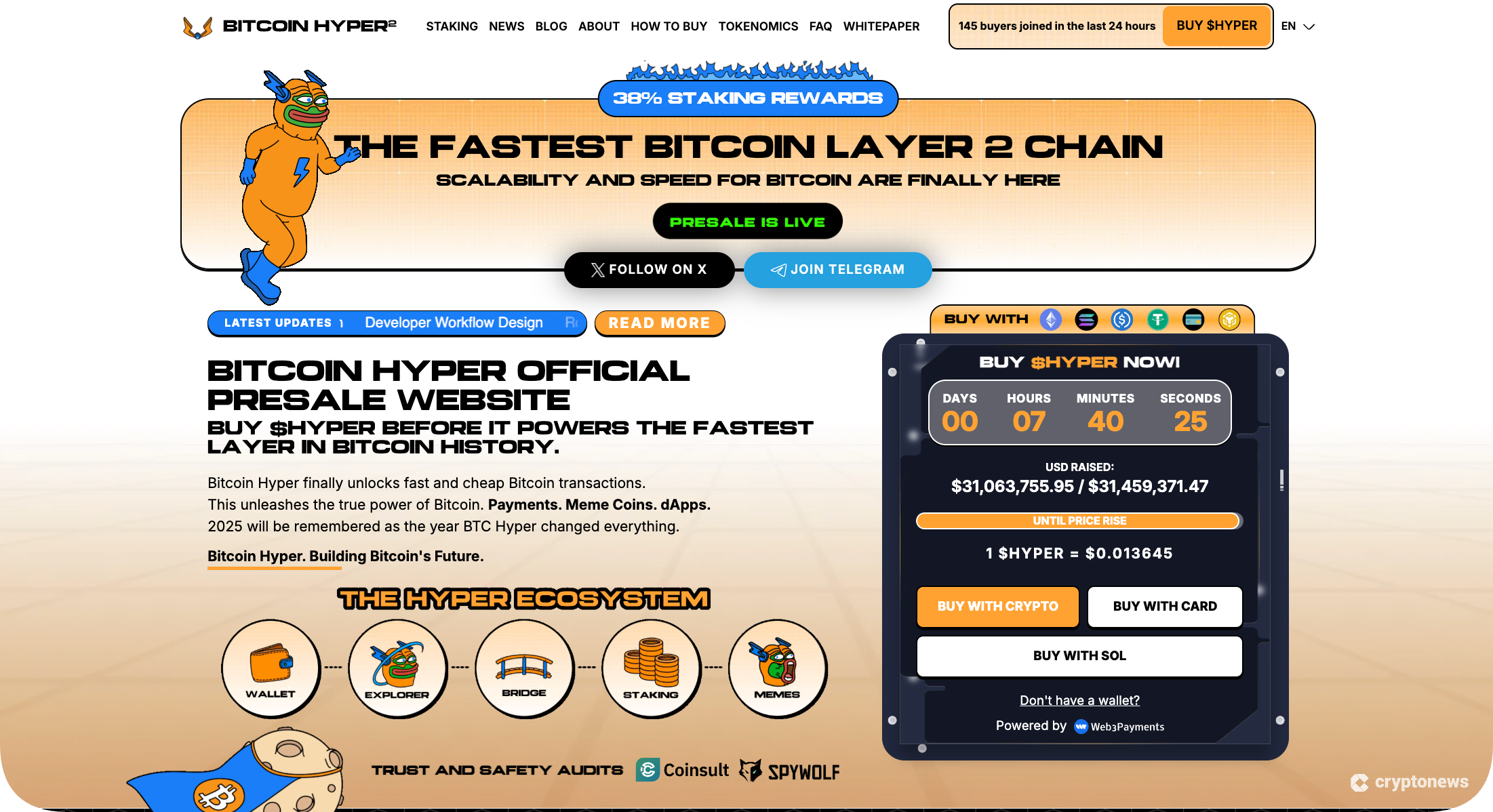
Powered by the highly efficient Solana Virtual Machine (SVM), Bitcoin Hyper enhances BTC scalability by reducing network fees and enabling hyper-fast transactions. This makes it a unique addition to the low-cap coins. The L2 chain’s native token, HYPER, will be used for network transaction payments, future tokenized governance, and staking.
Users can purchase HYPER through the Bitcoin Hyper presale, which raised over $32.97M. At the mainnet launch, Bitcoin Hyper will activate its Canonical Bridge for seamless BTC native deposits and withdrawals.
| HYPER Launch Date | Q3 2026 |
| Chain | Ethereum |
| Current Price | $0.01368320 |
| % Price Change Since Start | HYPER +18.98% |
| Raised So Far | $32.97M |
Smart Contract Risk: Low– Bitcoin Hyper has been audited by SolidProof, Coinsult, and SpyWolf and found to have no major vulnerabilities.
Next Price Increase In:2. LiquidChain (LIQUID) – Best Market Cap Opportunity Under $50M
LiquidChain’s LIQUID +26.82% token drives a Layer-3 network, which is attempting to smush Bitcoin liquidity, Ethereum DeFi, and Solana speed into a single smooth layer of execution. It is all about unified pools and hassle-free proofs, and you are able to swap, fork tables, and bet on markets on the spot across chains.
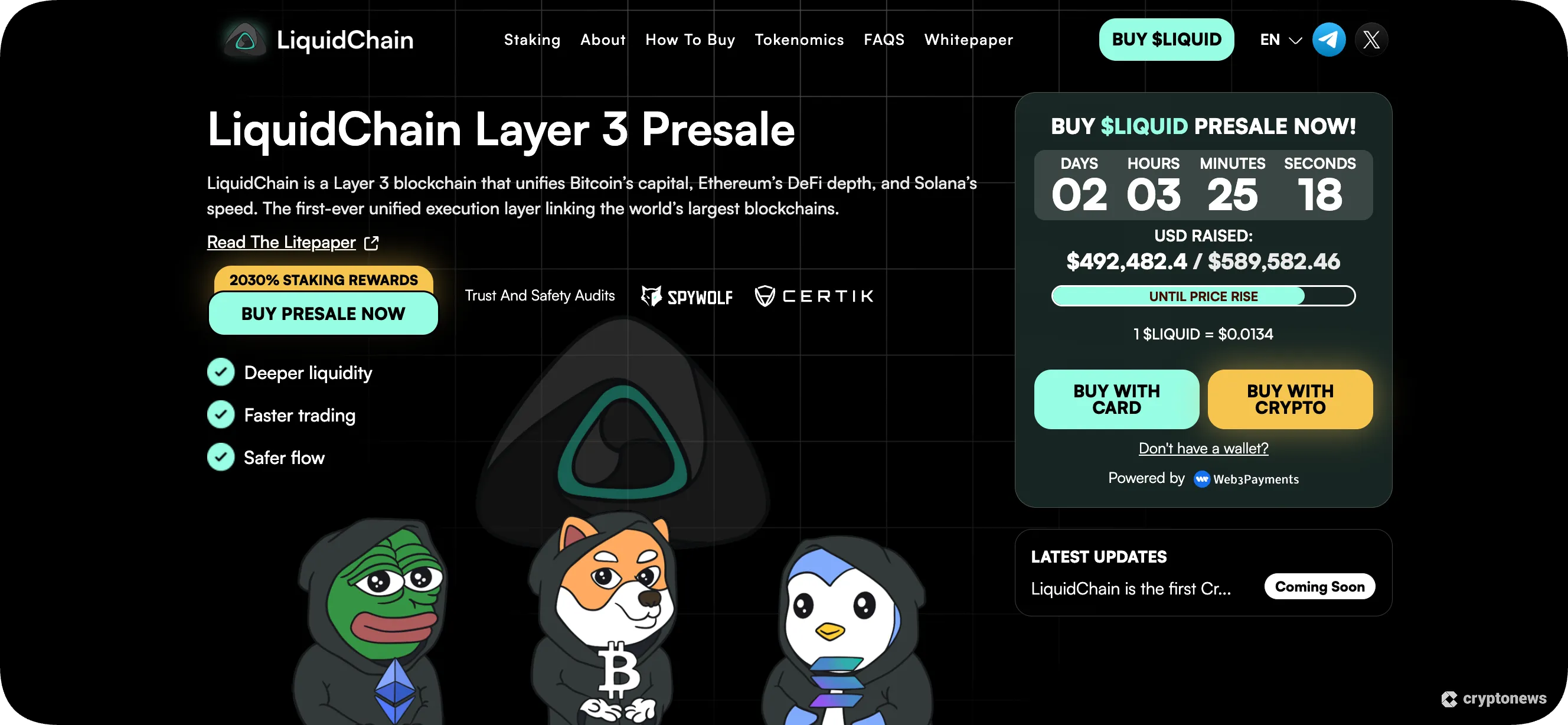
The presale has raised about $579K so far, with LIQUID priced at $0.01395. The pitch is simple: builders deploy once and reach users across multiple ecosystems, while traders get deeper liquidity and faster routing without juggling bridges or wrapped assets. Launch timing targets Q3 2026.
On the contract side, audits from SpyWolf and CertiK describe a non-upgradeable ERC-20 using OpenZeppelin, with all supply minted at deployment, zero taxes, and no blacklist or owner backdoors. Risks sit elsewhere: the team isn’t doxxed, supply looks concentrated, and front-end security gaps increase phishing risk.
| LIQUID Launch Date | Q3 2026 |
| Chain | Bitcoin, Ethereum, and Solana (Layer 3) |
| Current Price | $0.01395 |
| % Price Change Since Start | LIQUID +26.82% |
| Raised So Far | $579K |
Smart Contract Risk: Low– LiquidChain has been audited by industry leaders CertiK and SpyWolf, with no critical vulnerabilities found.
Next Price Increase In:3. Maxi Doge (MAXI) – Doge-Themed Meme Coin for Degen Investors
Maxi Doge MAXI +13.14% is a new Doge-themed meme coin fueled with vibes and light-hearted humor. The project features a jacked Doge mascot that is trying to max out 1000x leverage, down a can of pre-workout, and blow the speakers out with bull market energy.
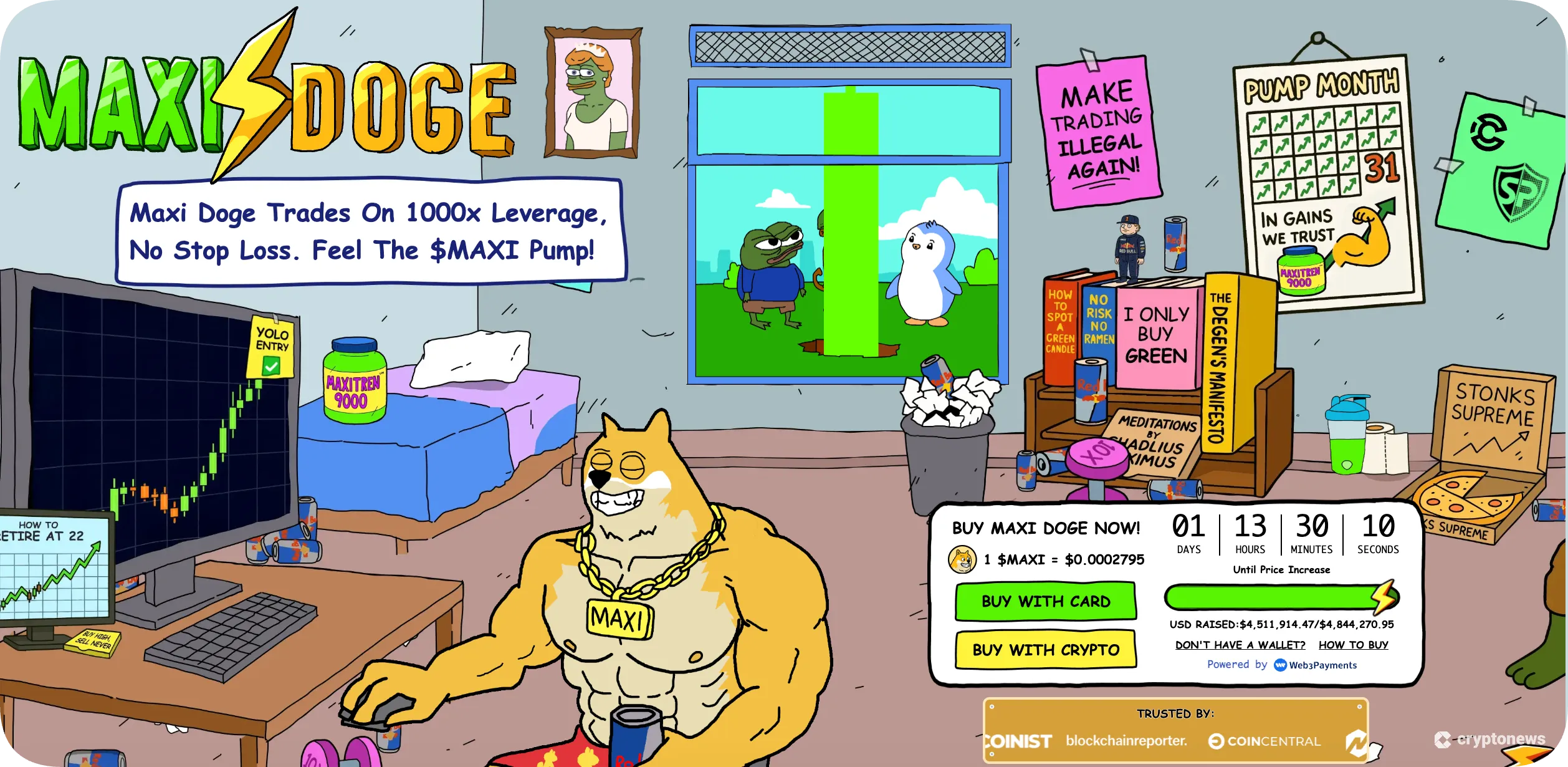
MAXI is everything about that gym-core feel that you get in Telegram trader chats. If you want yield, you can lock your tokens and earn staking rewards, with an advertised APY of up to 67%. All you have to do is keep in mind that the rate is not fixed.
The presale has raised a little more than $4.83M so far. That is still low-cap, and thus there will be large swings and low liquidity once the market kicks in, so watch it, but only bet it to the extent that you can afford to risk and the period you are willing to wait around.
| MAXI Launch Date | Q3 2026 |
| Chain | Ethereum |
| Current Price | $0.00028285 |
| % Price Change Since Start | MAXI +13.14% |
| Raised So Far | $4.83M |
Smart Contract Risk: Low- MaxiDoge has been audited by Coinsult and SolidProof and has no critical vulnerabilities or risks found.
Next Price Increase In:4. BMIC Token (BMIC) – Upcoming Quantum-Resistant Wallet Token
BMIC BMIC +2.04% is a utility token tied to a quantum-resistant wallet service built for long-term security. The core idea is simple: store crypto with stronger protection as computing power grows. It positions itself as a first-mover in the post-quantum wallet sector, a niche that’s expected to gain more attention by 2028.
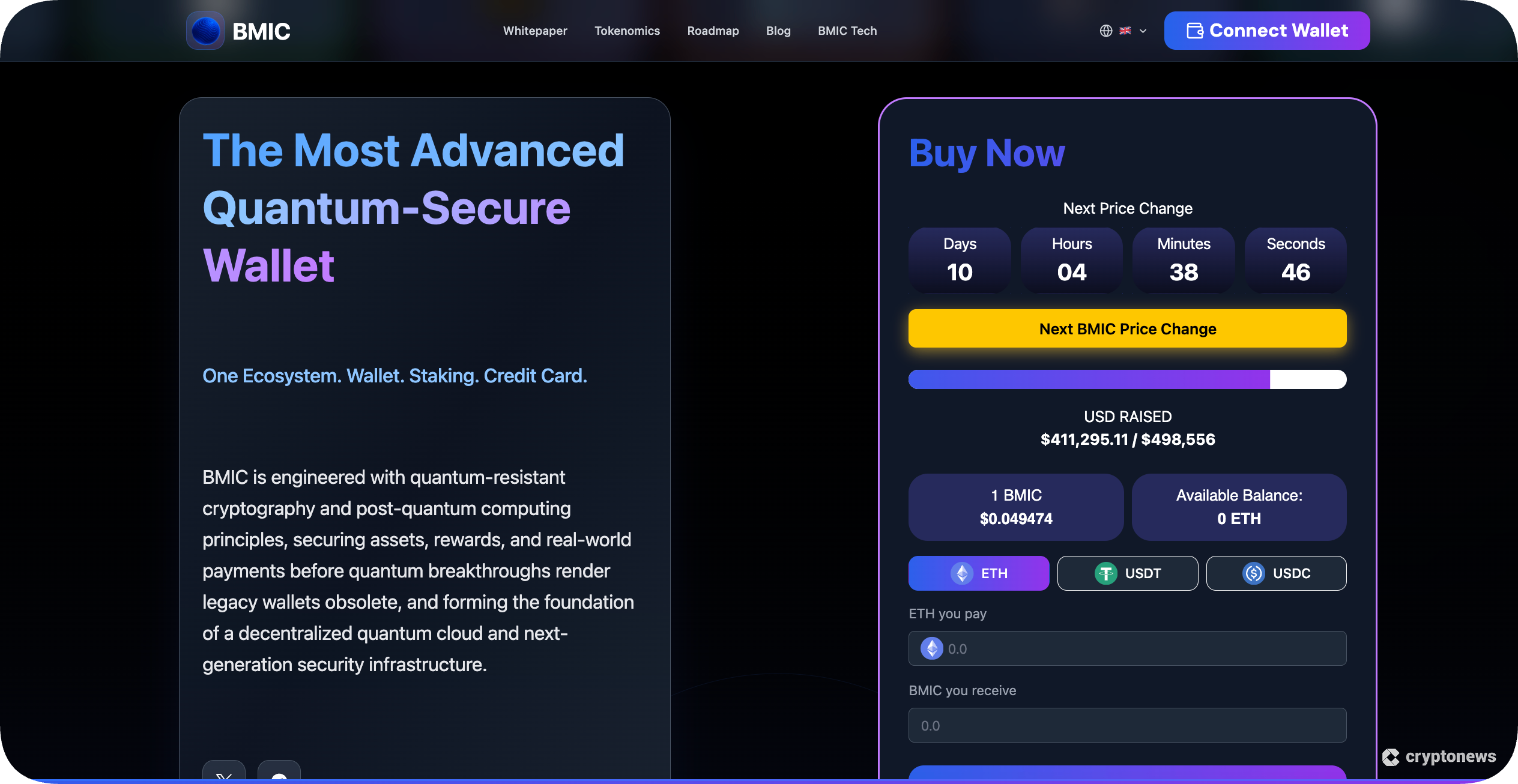
BMIC focuses on practical use inside its wallet ecosystem. Holders can unlock wallet features, stake tokens, and vote on upgrades as the project moves toward DAO governance by 2028. It also uses a deflationary model where burned tokens convert into compute credits, which the network uses to fund future computing workloads.
BMIC is still early. The presale has raised close to $463K, and the token price sits around $0.049474, which keeps it in penny-token territory. The upside is the clear security narrative, but there’s no MVP yet, and the €40 million fundraising goal is steep, so you need to research carefully.
| BMIC Launch Date | TBA |
| Chain | Ethereum |
| Current Price | $0.049474 |
| % Price Change Since Start | BMIC +2.04% |
| Raised So Far | $463K |
Smart Contract Risk: Medium– An extensive audit has been passed, which covered token distribution, vesting mechanisms, and quantum-secure signing verification by VCAudits, but we would like to see a second audit performed by another company.
Visit BMIC5. Divine Ray (DRC) – Social Media Platform Built on Its Own Cosmos Blockchain
Divine Ray already operates a live social media platform available through the Apple App Store, Google Play, and web, while running its own Cosmos SDK-based blockchain. Its native token, Divine Ray Coin (DRC), sits inside that social network rather than float beside it.
The platform is aimed at creators, spiritual organizations, retreat centers, and conscious communities that want a dedicated place to publish, build audiences, and use blockchain tools without starting from scratch. Divine Ray’s chain is integrated with the Inter-Blockchain Communication network, placing it inside the wider Cosmos ecosystem and giving DRC a route into interoperable on-chain activity.
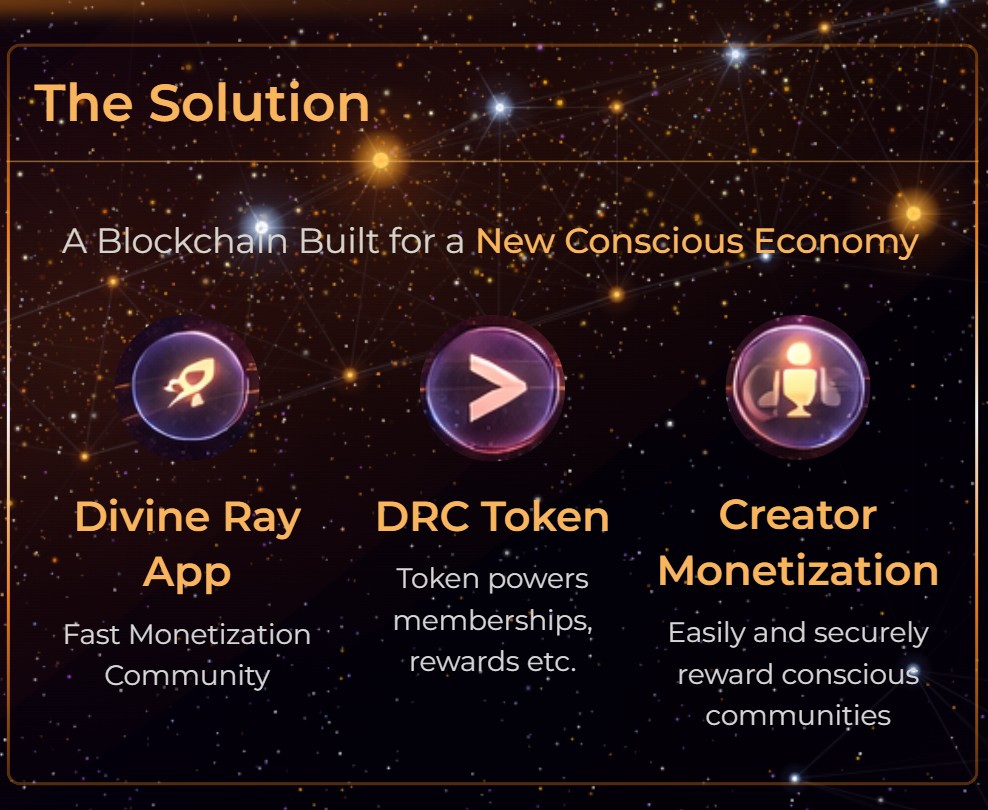
DRC is listed on the Osmosis decentralized exchange, giving the token live market access before the ICO cycle finishes. Inside the Divine Ray ecosystem, the token is intended for memberships, advertising, NFT minting, creator rewards, and community growth. Phase 1 pricing starts at $0.0000015, with the ICO structured around a $750,000 soft cap and a $3 million hard cap.
| DRC ICO Start Date | March 23, 2026-Now Live |
| Chain | Cosmos SDK |
| Current Price | $0.0000015 |
| Accepted Currencies | USDC Noble, ATOM, MATIC, Ethereum, and Avalanche |
| ICO Hard Cap | $3 million |
Smart Contract Risk: Medium-High – No third-party smart contract audit has been independently verified for DRC at the time of review. While the team is public and the token trades live on Osmosis, unaudited contracts carry elevated exploit risk. Proceed with proportionally small position sizes.
Visit Divine Ray6. SUBBD (SUBBD) – AI-Powered Web3 Creator Token
SUBBD SUBBD +4.77% is the native token of the SUBBD platform by the same name, which aims to transform the $85 billion content industry. The token gives holders special privileges on the platform, such as access to premium creator content, governance voting rights, and staking rewards.
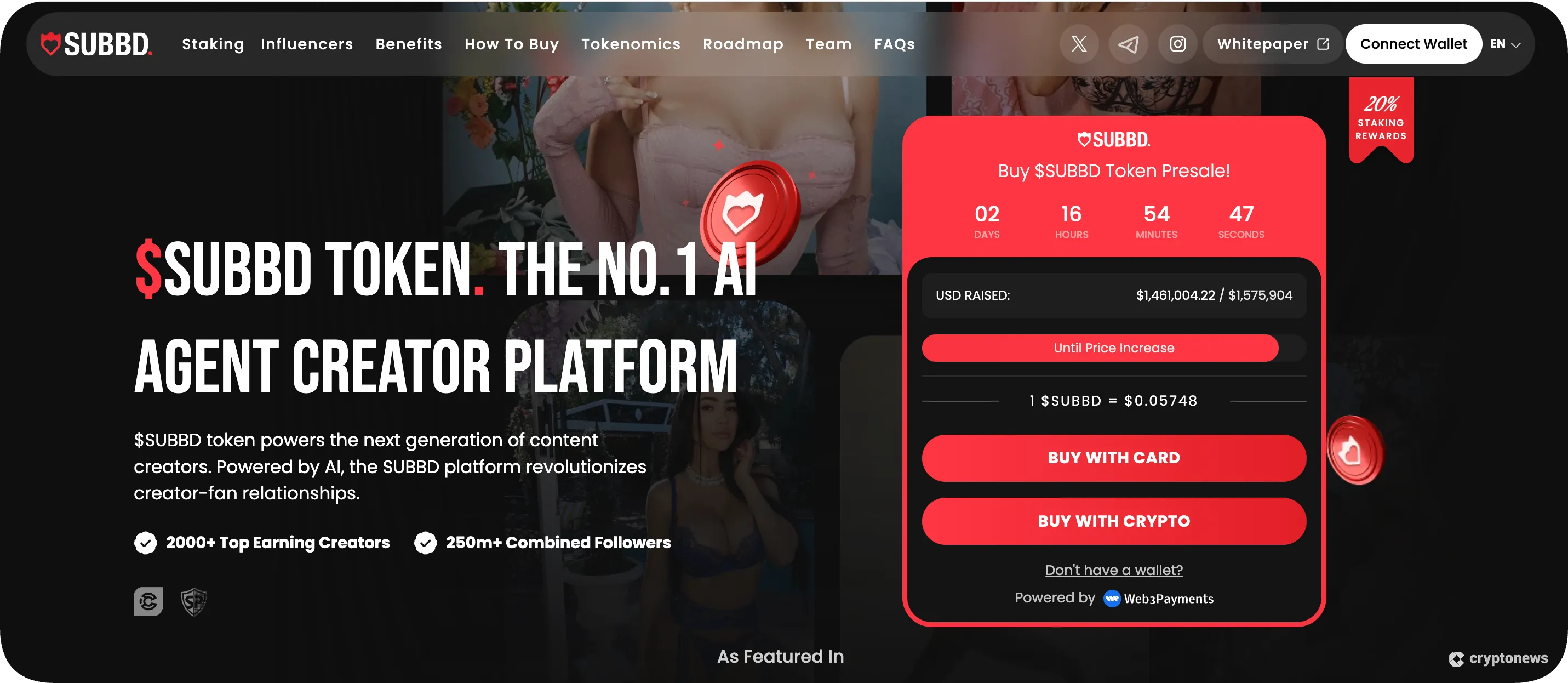
SUBBD combines AI features with Web3 payments to address creator pain points: high platform fees and scattered tools for subscriptions, tips, and community management. The idea is to let creators keep more revenue and run everything from one place, without relying on a single platform.
In the presale, buyers can stake for rewards and get beta access to features still in development. Total supply is 1 billion tokens, with 30% of funds set for marketing and 20% for product development. Holders also receive voting rights on platform decisions over time.
| SUBBD Launch Date | Q3 2026 |
| Chain | Ethereum |
| Current Price | $0.05762500 |
| % Price Change Since Start | SUBBD +4.77% |
| Raised So Far | $1.57M |
Smart Contract Risk: Low– Audited by SolidProof and Coinsult with no major vulnerabilities or risks identified.
Next Price Increase In:7. Celer Network (CELR) – Cross-Chain Interoperability Protocol
Celer Network CELR 2.37% is a Layer-2 platform launched in 2019 to make blockchain apps faster and cheaper. It moves activity off-chain using generalized state channels and sidechains, so dApps can run high-throughput interactions without clogging the base layer. It supports multiple chains, including Ethereum and Solana.
Celer’s cBridge has processed over $13 billion in cumulative cross-chain volume since launch, and its inter-chain messaging layer (IM) supports more than 40 chains including Ethereum, BNB Chain, Arbitrum, and Polygon. The honest caveat: CELR has dropped more than 95% from its 2021 peak and hasn’t recovered. This isn’t a recovery story yet, it’s a bet that cross-chain infrastructure becomes essential plumbing again as multi-chain DeFi expands. Watch protocol fee revenue and monthly active addresses as the metrics that actually matter.
As of July 2026, CELR trades near $0.0017 with roughly a $17.15M market cap. It is already far below its 2021 peak, but the fully diluted value is close to the circulating supply, so token inflation is limited.
| Launched | March 2019 |
| Chain | Celer Network |
| Current Price | $0.0017 |
| 24h Price Change | CELR 2.37% |
| Market Cap | $17.15M |
Smart Contract Risk: Low– Celer Network has undergone multiple security audits by top firms like CertiK and PeckShield. These audits cover smart contracts, cross-chain messaging logic, and security, with reports publicly available on their documentation sites
8. Moonbeam (GLMR) – Low-Cap Project Bringing Ethereum Compatibility to Polkadot
Moonbeam GLMR 0.33% lets developers use familiar Ethereum tools while deploying on Polkadot’s connected networks. That matters more in 2026 as Polkadot’s interoperability and modular design regain developer attention. Picture Ethereum-style Lego bricks snapping into a larger Polkadot set. It reduces friction when linking the ecosystems directly.
GLMR is the network’s utility token. You spend it on transaction fees, stake it to help secure the chain, and vote on upgrades. To get GLMR, you can buy it with fiat or crypto on exchanges such as Kraken, then withdraw it to a compatible wallet easily.
Moonbeam’s niche is being a practical bridge between Ethereum users and Polkadot’s broader interoperability stack. If Polkadot keeps expanding cross-chain messaging and shared security, Moonbeam can capture that flow. But adoption still depends on app demand and competitive EVM chains. It’s worth monitoring through 2026.
| Launched | 2021 |
| Chain | Polkadot, compatible with Ethereum |
| Current Price | $0.0088 |
| 24h Price Change | GLMR 0.33% |
| Market Cap | $10.11M |
Smart Contract Risk: Low- Moonbeam has active security partnerships with SR-Labs and NCC Group plus an ongoing bug bounty, and has passed multiple audits.
9. Seedify.fund (SFUND) – Web3 Launchpad and Incubator
Seedify.fund SFUND 29.37% is a launchpad focused on blockchain gaming. It uses community staking and voting to decide which projects get support, plus funding tools to help teams raise capital. If you follow Web3 games, think of Seedify as a filter and a funding rail in one place.
SFUND is the token that makes the system work. You stake it to qualify for allocations, earn rewards, and take part in governance decisions. You can also use SFUND to back new gaming projects on the platform. In practice, your access depends on rules like tiers and snapshots.
Seedify has launched over 100 IDOs since 2021. Early SFUND stakers accessed allocations in projects like SHRAPNEL, Pixels, and GUNZ before public listing, some returned 5–20x for day-one sellers, others dropped to zero. The risk is straightforward: if Web3 gaming’s contraction from 2024–2025 continues, demand for Seedify allocations shrinks with it. SFUND is a pipeline bet, not a game bet.
| Launched | 2021 |
| Chain | Binance Smart Chain |
| Current Price | $0.0034 |
| 24h Price Change | SFUND 29.37% |
| Market Cap | $342.40K |
Smart Contract Risk: Low- SFUND has undergone multiple audits by firms like Hacken and CertiK covering its staking, vesting, and bonding curve contracts on BNB Chain and Ethereum.
10. Bio Protocol (BIO) – DeSci Network for Tokenized Biotech IP
Bio Protocol BIO 0.59% is the science of decentralization. It also allows scientists and communities to fund and direct biotech initiatives by creating BioDAOs and BioAgents to handle repeatable knowledge tasks. In essence, it is a coordination layer that transforms research ideas into actual funded projects.
Everything is powered by the token BIO. You can vote on governance, stake, and receive rewards based on BioAgents and research work. It also introduces liquidity to tokenized IP, thereby allowing funding and ownership to move on-chain. As a matter of fact, you can access it depending on the regulations and configuration of each BioDAO.
Bio Protocol’s ecosystem includes active BioDAOs — VitaDAO (longevity research), HairDAO (androgenic alopecia), ValleyDAO (synthetic biology), each with its own treasury and research token. BIO itself coordinates across them: stake it to participate in governance and receive yield from the DAO network. Binance Labs backing adds credibility, but DeSci is still proving its product-market fit. This is a 2–3 year position on whether tokenized science funding becomes a real capital market, not a 6-month trade.
| Launched | 2024 |
| Chain | Ethereum |
| Current Price | $0.027 |
| 24h Price Change | BIO 0.59% |
| Market Cap | $92.10M |
Smart Contract Risk: Medium- Bio Protocol has passed one audit performed by CertiK with no vulnerabilities found, but we typically like to see secondary and tertiary audits performed.
What Is a Low Market Cap Crypto (Market Cap vs. Price)?
A low-cap crypto is any token with a circulating market cap below $100 million, calculated by multiplying circulating supply by the current price. That’s the threshold where the market hasn’t fully discovered a project yet, and where institutional capital hasn’t arrived to compress the upside.
Some sources stretch the definition to $300M or even $1B, but for this list we use the stricter $100M ceiling. Below that level there are three meaningful sub-tiers:
| Tier | Market Cap Range | Risk Profile |
| Micro-cap | Under $10M | Extreme risk/reward |
| Small-cap | $10M-$50M | Very high risk/reward |
| Low-Cap | $50M–$100M | Elevated risk/reward |
Price alone tells you nothing. A coin at $0.001 can have a $500M market cap if enough tokens exist. Always check market cap, not price, before deciding whether something qualifies.
[/su_note]How to Size a Low-Cap Position
| Portfolio Size | Max Low-Cap Allocation | Per-Project Limit |
|---|---|---|
| Under $5,000 | 10–15% | $100–$300 |
| $5,000–$25,000 | 8–12% | $250–$750 |
| Over $25,000 | 5–8% | $500–$1,500 |
Spread across 3–5 projects, not one. Presale tokens, which carry the highest execution risk, should represent no more than half of your low-cap allocation. Set your exit criteria before you buy: if a token drops 60% after listing and the fundamentals haven’t changed, that’s information. Know what that information means to you in advance.
Why Low-Cap Crypto Assets Are Expected to Outperform Mid-Caps in 2026
In 2026, the crypto market has split into two very different worlds. Bitcoin and Ethereum have basically become the “safe” anchors of the space. Because they’re now wrapped up in ETPs and corporate treasuries, their wild price swings have largely vanished. This is great for stability, but it’s killed the massive gains traders used to rely on. As a result, the real speculative energy has moved downstream.
The Volatility Vacuum
As of mid-2026, Bitcoin’s dominance sits near 56% and institutional inflows into crypto products have averaged roughly $4.4 billion per week. That capital concentration in BTC has a direct downstream effect: mid-cap altcoins are stuck in no-man’s land, not safe enough for institutional mandates, not small enough for explosive discovery gains. The result is a pattern many traders describe as mid-caps “bleeding against Bitcoin,” with speculative capital jumping directly from BTC into high-conviction low-cap bets.
We’re seeing a similar pattern in traditional stocks, where the Russell 2000 has started outstripping the S&P 500 as investors hunt for growth.
Real Revenue Over Pure Hype
We’ve finally moved past the era where a clever narrative was enough to pump a coin (RIP memecoin euphoria). The 2026 market is obsessed with “Fat Apps”, protocols that actually make money.
Many mid-caps from the last cycle are suffering from valuation fatigue; they have massive market caps but very little to show for it. In contrast, a new wave of low-cap projects is building “Internet Capital Markets” on high-speed chains like Solana. These aren’t just memes; they’re businesses with fundamental value and real-world revenue. Specifically, projects in DePIN (decentralized infrastructure) and AI are catching a massive bid because they provide the actual power and cooling needed for the AI boom.
Why Low-Caps are Winning the “RWA” Race
Mid-caps are currently trapped. They’re too big for 100x gains and too small to be included in the big institutional ETP baskets. Low-caps, however, are the main playground for the tokenization of real-world assets (RWA).
By targeting niche, asset-rich sectors that aren’t tied to the broader tech slowdown, these smaller projects are showing much clearer earnings and better margins. In a market that’s growing more professional by the day, those are the only two metrics that actually seem to matter.
How to Find the Best Low Market Cap Cryptocurrencies
There are several important factors you should consider when looking for the best small-cap crypto. While it’s true that crypto is volatile and unpredictable, having a checklist may improve your chances of finding the best low-cap crypto gems in 2026. Here are some crucial factors to consider:
- Define your goals and scrutinize tokenomics: Know how much you can/want to invest in the project after you’ve done thorough research.
- Test liquidity rigorously: Use CoinMarketCap to track the liquidity of the project by focusing on projects that have less than $5M trading volume.
- Vet fundamentals for real-world survival: Focus on the project’s fundamentals and utility rather than hype. Research the team and verify if the project has undergone an audit.
Here’s a detailed outlook on each tip.
1. Define Your Goals & Scrutinize Tokenomics
Determining your investment goals and researching tokenomics is the first and most important step to finding low-cap cryptos. With this step, you have two options: accept high volatility for quick gains, or choose more stable long-term cryptos for gradual growth.
- Short-term targets: Prioritize tokens with catalysts like exchange listings within 3-6 months.
- Long-term holds: Look for projects with frequent GitHub activity, established roadmaps, and actual utility.
- Dissect tokenomics: Search for projects with a reasonable total supply, inflation rates, and vesting schedules. Good tokenomics proves that the team is not only competent, but isn’t attempting to profit from parasitic token mechanics.
2. Test Liquidity Rigorously
Liquidity pool levels directly impact trade execution. Thin liquidity causes high slippage (losing 5-10% on trades) and enables whale manipulation. Protect yourself:
- Track daily volume: Target less than $5M across over 3 exchanges (you can use CoinMarketCap).
- Check order book depth: Ensure selling $1,000 moves prices less than 2%.
- Compare liquidity against peers: Avoid tokens with stagnant volume. Deep pools signal contenders for the next big crypto coin.
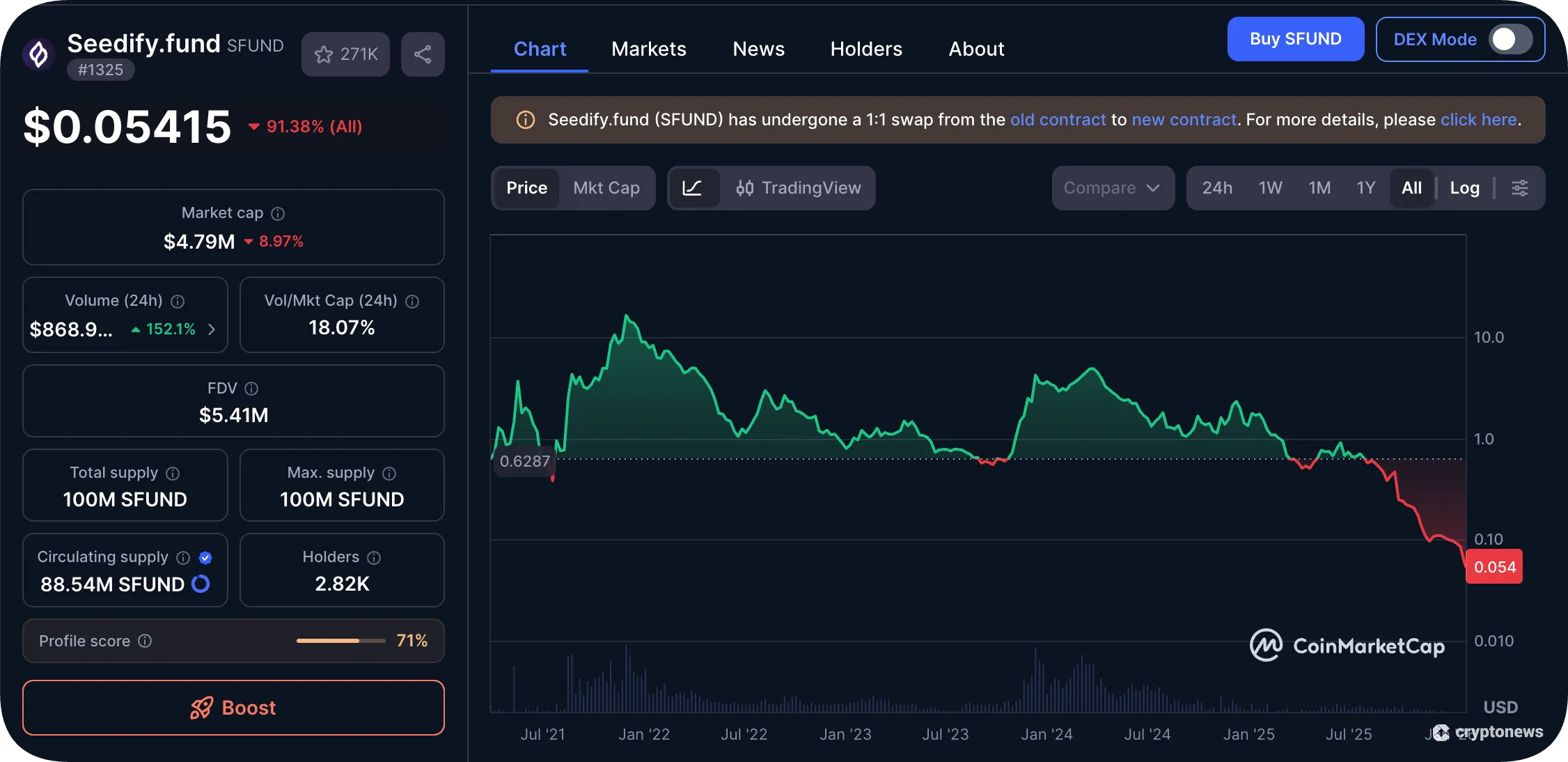
If you look in the top right corner of the image below from CoinMarketCap, you can see that Seedify.fund has less than $1 million in daily trading volume. You can also use CoinMarketCap to track the order book depth of any cryptocurrency as well.
3. Vet Fundamentals for Real-World Survival
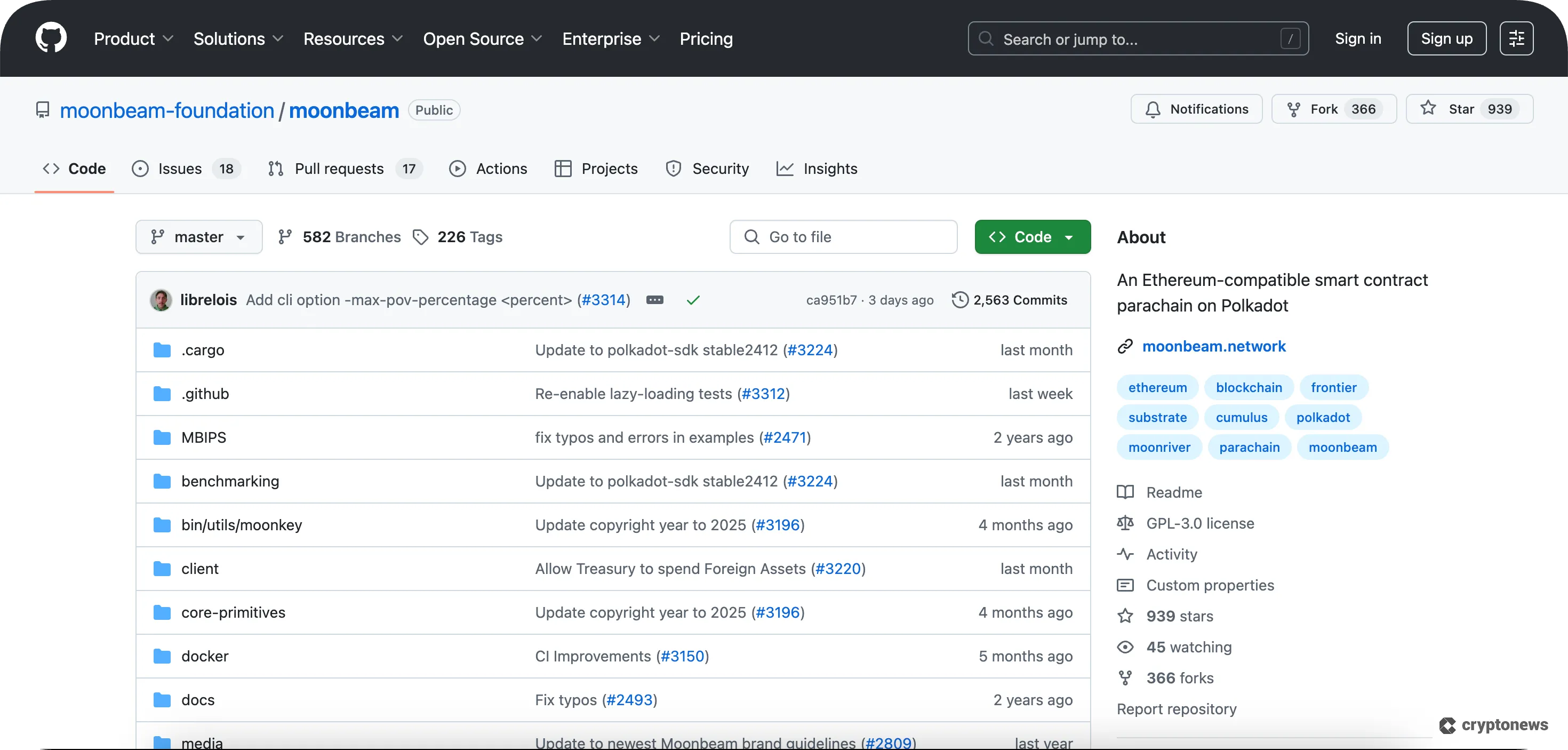
Ignore hype. Validate fundamentals systematically. Start with the team: Confirm members have shipped real products (LinkedIn/Portfolio checks). Audit the technology: Open-source GitHub repos with weekly commits signal active development.
Crucially, real-world applicability is demanded — projects must solve concrete problems. For example, a DeFi tool reducing loan processing time from days to minutes has clear utility. Finally, verify adoption metrics: user growth, transaction volume, and partner integrations. Projects that clear these checks withstand bear markets.
In the following example, Moonbeam has 366 forks, 2,563 commits, 582 branches, and 226 tags. These are all good examples of an active and popular project.
Risks Every Low-Cap Investor Should Understand
Low market cap coins carry risks that don’t apply, or apply less severely, to Bitcoin and Ethereum. Before you allocate, be clear on what you’re actually signing up for.
- Liquidity gaps. A daily trading volume under $1M means selling even a $5,000 position can move the price against you. Check order book depth on CoinMarketCap before sizing in.
- Whale concentration. On many low-cap projects, 5–10 wallets hold 30–50% of supply. A single large sell order can wipe 20–40% off the price in minutes. Always check the token distribution on a block explorer.
- Team execution risk. Most low-cap failures aren’t scams — they’re just teams that ran out of runway, lost key developers, or pivoted. Weekly GitHub commits and a public team with verifiable track records are non-negotiable signals.
- Regulatory exposure. Low-cap projects with no legal entity or jurisdiction clarity are the first to get delisted if regulators tighten rules in your country. Check the project’s Terms of Service for where it’s based.
- Position sizing. A sensible starting point for speculative low-cap exposure is 5–10% of a crypto portfolio, kept across 3–5 different projects rather than concentrated in one.
How to Buy Low-Cap Crypto in 3 Steps
Most low-cap gems on this list are available through presale websites or decentralized exchanges, not on Coinbase or Binance at launch. Here’s the fastest path:
Step 1 — Set up a non-custodial wallet
Download Best Wallet or MetaMask. Write down your seed phrase offline and never share it. Best Wallet supports presale purchases directly inside the app, which removes two steps from the process.
Step 2 — Fund with ETH or BNB
Most presales on this list accept ETH on the Ethereum network. Buy ETH on Coinbase or Kraken, then send it to your wallet address. Allow 5–15 minutes for the transfer to confirm on-chain.
Step 3 — Connect to the presale or DEX
For presale tokens (HYPER, LIQUID, MAXI, BMIC, SUBBD): go to the official presale site, connect your wallet, enter your amount, and confirm. For live tokens (CELR, GLMR, SFUND, BIO): go to Uniswap or the chain’s native DEX, paste the contract address from CoinMarketCap, and swap.
Always verify contract addresses from CoinMarketCap or CoinGecko, never from social media or Telegram.
Is It Worth Investing in Low-Cap Cryptocurrencies?
Low-cap and micro-cap cryptocurrencies offer massive upside potential and lower barriers to entry for high returns, especially heading into the 2026 bull run. Investing early—such as during a presale discount—can yield significant gains.
However, these assets are typically new, unproven, and highly volatile. Because many of these projects will fail, they carry extreme risk. Approach them with strict caution and only invest capital you can afford to lose.
How to Avoid Low-Cap Crypto Scams
When investing in less well-known crypto projects, some scams can be a risk, so follow these tips to make sure you and your investments are safe:
- Analyze the whitepaper critically: Legitimate projects have detailed whitepapers explaining the project. Avoid documents that add no value or utility.
- Verify the development team: Check the team’s backgrounds on LinkedIn and coding activity on GitHub/GitLab.
- Ignore excessive marketing hype: Be skeptical of promises of high returns or “free” tokens and focus on utility.
- Never share private keys: Any request for your private keys is a definite scam tactic.
Investing in low market cap cryptocurrencies can offer significant returns, but it also comes with higher risks of scams. Here’s how to navigate these waters safely.

Methodology: How We Rated the Best Small-Cap Crypto Projects
For this article, we created a rating system for evaluating low-cap cryptocurrencies where we considered various factors that can affect their potential for success and risk. Below, you’ll find an explanation of the key criteria and how they were weighted.
Development Team (25%)
We examined the development team’s experience, track record, and whether they had successfully completed any other projects. We also noted their transparency and communication with the community, the quality of the code, and whether updates were meaningful and valuable to the project’s users.
Technology and Innovation (25%)
Having a unique and innovative project was an important factor when we decided how to rank these low-cap coins, as each project had to fill a specific niche in the market. We also looked at technological features, scalability, and how the team was adopting the latest tech.
Market Potential (25%)
We also examined each project’s competitors and differentiation in the market, what made it stand out from others attempting something similar, and whether there were any partnerships and collaborations in place that could enhance its market potential.
Community and Social Presence (25%)
How big is the community surrounding the project, and how engaged is it? Does the project have an active social media presence? Do its followers talk about it positively? What about community-driven initiatives and projects? Are there any incentives for token holders? All of these could be indicators of how low market cap coins will perform in the future. The more boxes they ticked, the higher they went on this list.
Conclusion: What’s the Best Low Market Cap Crypto Coin to Buy in 2026?
Crypto coins under a $100M market cap represent new projects with untested potential. Bitcoin Hyper stands out as a top contender due to its innovative L2 solution for Bitcoin, which is becoming increasingly more important now that Bitcoin has hit a new all-time high of $126,173.18.
If Bitcoin Hyper can successfully launch its L2 solution, follow its roadmap, and achieve a significant level of adoption, it could have considerable upside in the current market that values scalability solutions and infrastructure around Bitcoin.
Next Price Increase In:
FAQs
What low-cap cryptocurrency is the best?
Which cryptocurrency has the lowest market capitalization?
Is there any low market cap crypto on Coinbase?
Are there any low-cap altcoin gems with 1000x potential?
Are low market cap currencies a good investment?
Can low-cap crypto coins get listed on major exchanges like Coinbase?
How low is a low-cap crypto?
What size crypto coin to invest in with $10 to 100x
2M+
250+
8
70






 in numbers

About Cryptonews
Our goal is to offer a comprehensive and objective perspective on the cryptocurrency market, enabling our readers to make informed decisions in this ever-changing landscape.
Our editorial team of more than 70 crypto professionals works to maintain the highest standards of journalism and ethics. We follow strict editorial guidelines to ensure the integrity and credibility of our content.
Whether you’re looking for breaking news, expert opinions, or market insights, Cryptonews has been your go-to destination for everything cryptocurrency since 2017.